[Max] was happy to see that the PlayStation 3 Eye has support in the newer Linux kernels. Having sat in his closet for quite some time, this would give the camera another chance at usefulness. Unfortunately, the driver doesn’t include framerate selection and color correction so he set about writing a patch to control the color settings. As you can see above, his success greatly improves the image quality you get from the device.
We get the feeling that the camera peripherals for Sony’s gaming devices seem like a good idea but don’t have much staying power as a realistic gaming interface. With contributions like [Max's], they can be re-purposed. The PS2 had its own, the EyeToy, which has long enjoyed driver support for Linux. The NUI Group does a lot of work with multi-touch and recommends the PS3 Eye for use with their projects because they’re inexpensive with high frame rates and decent picture quality.
Great work [Max]. It looks like he’s sent this patch upstream to be considered for incorporation into the kernel’s webcam module.
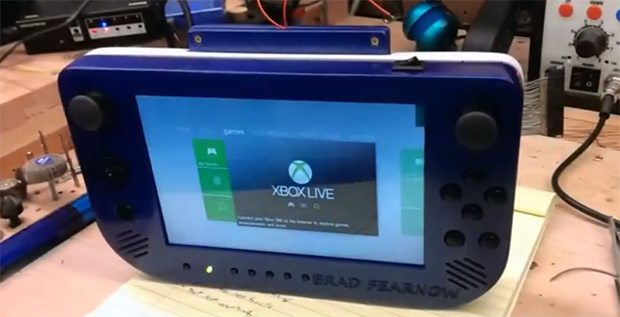
[Ben Heck] may be the coolest person ever (take that [Adam Savage]). You would think that after producing so many laptop versions of gaming consoles he would grow tired or we would be bored of them. But no! We love each and every new production – including his latest laptop-ified Ps3. Not too much in the terms of ‘new’ comes from his latest article, but it does reaffirm some things including: why make what you can buy, cheap foam sheet should be purchased by the ton, and use the screws from an overheated Xbox 360 when you lose the Ps3 originals. Oh, and [Adam] we were just kidding, you know we will always love you. Check out a video after the break.
The new PS3 Slim has just been released, and ifixit has already posted a teardown. First, they easily removed the included 120GB hard drive, suggesting that upgrading it shouldn’t be too hard. In order to get inside the cover, however, they needed to use a security Torx screwdriver. In the end, the Blu-ray drive turned out to be the bulkiest component, followed by some surprisingly gigantic fans. Hopefully this means that Sony won’t have to deal with overheating issues.
We may have all been eagerly awaiting the arrival of the PS3 slim, but don’t get too excited yet. According to an official press release from Sony, the PS3’s slimmer counterpart is dropping the ability to install Linux or another operating system. It’s always a shame when new products come packed with less features, but this time, it’s preventing us from doing things like cracking SSL using 200 of the consoles, or running emulators from an Ubuntu install on the console. For those of us that still plan on keeping our “old” PS3s, Yellow Dog Linux has been released on a USB stick and allows you to run without having to do a full installation.
Look at this awesome glove. This awesome glove is used to control tetris. Yes, you read that right, it controls tetris. This was a final project at Cornell in the summer of 2008. They built this glove to do gesture controlled tetris. With all the announcements of the PS3 motion device and Microsoft’s project Natal, it’s nice to look back to our very recent past and see some alternative user input. These people are using accellerometer data only, sent to the computer wirelessly.
[kero905] sent in this project he’s working on. It is an open source hardware converter to connect Wii controllers via USB. It uses an Arduino for its brains. It is still in development, the only controllers that work are the nunchuck and the classic. He notes that there are enough extra pins left to adapt to an arcade controller fairly easily. The code is available on the site, as well as a rough parts list.
Gizmodo has done us all a favor by wading through many forum posts and condensing them into a handy guide to installing Ubuntu on your Playstation 3. It covers some of the caveats of going this route. You have to backup all of your game data before starting since the system repartitions the drive. Ubuntu installs without any problem, but because the cell processor is a PowerPC architecture it means not everything has been ported to it. There are a few things you need to install to get the Sixaxis controller to be recognized as a joystick. Super Nintendo emulator SNES9X is available and works, mostly. It doesn’t support fullscreen and cries if you reconfigure the buttons.
Supporting developers through alternate operating systems isn’t new to Sony. With the original Playstation, they released Net Yaroze, a consumer grade dev kit. The Playstation 2 was the first time they officially supported Linux on a game console (our first Linux machine). The ground breaking thing about the Playstation 3 was bundling in Linux support with every single console; no specialized hardware needed. Unfortunately they’re not near as open with the PSP.
Recently, a Japanese coder on the DCEmu Forums released Windows drivers for DualShock 3 controllers. While the drivers only support using the controllers over USB and not bluetooth, they do include force feedback and Sixaxis support. Included with the drivers is a configuration tool, and though it appears to be in Japanese there is some explanation of how to use it included in the forum post. We have not tested these personally, but you can try out the drivers for yourself by downloading them from the forum here.
On the off chance that you want to program a microcontroller to play your games for you, you should check this out. Near Future Laboratories has made a dongle that can allow an Arduino to operate as a PS2 or PS3 controller. You can see the Arduino running a random path generator in Katamari Damacy in the video above. They wanted to see how long it would take to clear a room. It managed to get almost all of them in about 70 minutes, only missing those that you have to cross a narrow bridge for. Actually, this could be quite useful in allowing people to create alternative input methods. You may recall reading about their early progress back in June 2008.
Last week Sony launched the public beta of Home, their virtual world for the PlayStation 3. It wasn’t met with much fanfare and has proven to be quite buggy. Many were less than charmed by scarcity being ported to the virtual world. Others took it upon themselves to hack the service. Connections between the user’s home console and Sony’s server are unencrypted. You can sniff the requests and responses off the wire and modify them live. It seems you need the console to establish the initial connection, but after that you’re free to use builtin tools like Download.jsp, UploadFileServlet, and Delete.jsp to modify any file on the host server. You can also set up a proxy server to modify content, but that will only affect what your console sees.