Aquarium overflow sensor saves your fish and your floors

aquarium_pump_shutoff

If you’ve ever had a water leak in your home, you know the sinking feeling that comes over you as you walk through the door to the sound of running water. [Greg] knows this feeling quite well, having returned home to a sopping wet floor and an overflowing reef aquarium on more than one occasion.

Both of the overflows he … Read the rest

Fertilizing a planted aquarium using air freshener hardware

Keeping live plants in an aquarium happy can be quite a chore. One of the frequent rituals is adding fertilizer, which is called dosing. [Majstor76] came up with a creative way to automatically dose using an air freshener. He got rid of the canister that holds the scent and re-purposed a hand soap pump to move the nutrient-rich liquid. … Read the rest

Aquarium water exchanger

If you want happy fish you’re going to need to do regular aquarium maintenance. Part of this is exchanging a portion of the tank’s water on a regular basis. [Bill Porter] came up with a water exchanger that means less manual labor, but makes the process just a bit more complicated.

So, what he would do before is fill … Read the rest

Quick, cheap, and simple vacuum tweezers

[Ken] found that using traditional tweezers is a good way to lose tiny surface mount parts and so set out to make his own vacuum tweezers (PDF). He already had a small aquarium pump that he used as a bubbler for etching circuit boards. After opening up the case he found it was possible to connect tubing to the input … Read the rest

Halloween props: puking pirate

With everyone’s favorite free-candy holiday approaching, [Slouriesr] set to work building a vomiting ghoul for his Halloween display. He’s calling it a puking pirate and it centers around a pump and some simple plumbing fixtures.

First, the vomit receptacle was made by adding a sink drain with a pop-up stopper to the bottom of a kitty litter bucket. The … Read the rest

Laser cut pumps

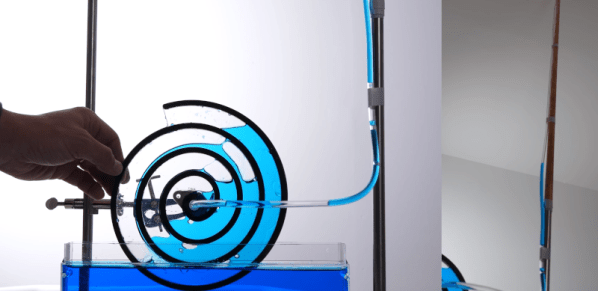
As the video above shows, [Zach Hoeken] is continuing to improve on his peristaltic pump design. The moving parts in peristaltic pumps never contact the fluid being moved. Instead, they interact with the outside of the tubing that’s carrying the liquid. In [Zach]‘s design, multiple skate bearings roll across the outside of the silicon tubing, squeezing the liquid through. … Read the rest