Cooling LEDs By Heating The Water Saves On Electricity

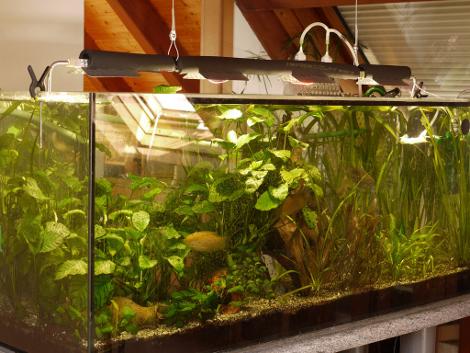
[Matthias] swapped out his twin-tube florescent aquarium lights for LEDs. By running tank water through the aluminum LED mounts he’s transferring excess heat into the water in the tank, in turn saving some of the electricity that would have been used to heat the tank. Couple this with roughly 35 Watts saved by moving away from fluorescent tubes and he’s got a great energy-saving hack. The LEDs used in the last aquarium light conversion were cooled by heat sinks and fans. We’d love to see this concept incorporated into that design.
Nokia USB Cable Is USB-to-Serial In Disguise

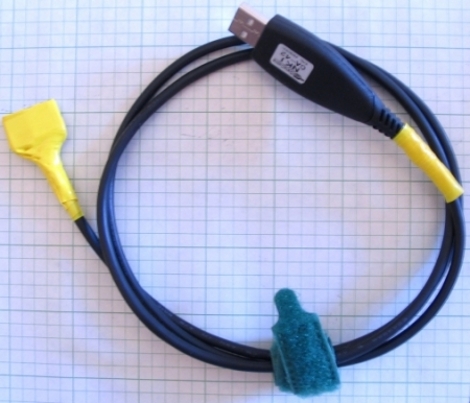
[Jethomson] worked out a way to use a Nokia USB cable at a USB to Serial cable. He was able to pick up one of these cables for less than $3 delivered. A little probing worked out which conductors go with the appropriate signals and from there he developed a way to protect the 3.3v signal levels with a voltage divider.

It’s not surprising that this works, having seen [Will O’Brien’s] post covering serial communications on Nokia phones. In that post we learned that the Nokia phones are using TTL communications. Once you’ve completed [Jethomson’s] modifications to the cable you can follow his examples for using this in conjunction with an Arduino.

Python IR Tracking For The Handicapped

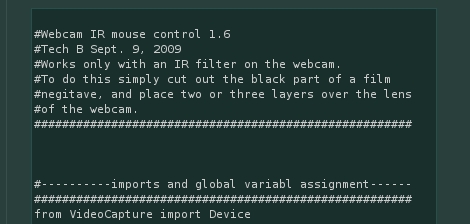
[Techb] had a friend who was paralyzed after an accident and could no long use a computer. He rigged up an amazingly simple mouse interface using python to implement infrared tracking. The controller was built from an old hat by adding an IR LED and wireless mouse modified so that the button could be clicked by the user’s mouth. A webcam with exposed film used as a filter can track the IR LED and take input from the wireless mouse buttons.

This setup, which draws inspiration from Wii Remote white boards,  is much simpler than the Eyewriter (and doesn’t shine an IR LED into your eye). Although [Techb] wants to add facial recognition to the system, there’s something to be said for such a simple implementation.

[Thanks Wolfmankurd]

RoboThespian: Chuck E. Cheese Entertainment Comes Home

Remember your eighth birthday party when the animatronic band at Chuck E. Cheese sang happy birthday just for you? Now you can enjoy this any day of the year with RoboThespian. The complete animatronic platform has been modeled in Blender 3D. Animating the robot is as easy as producing an animation from its digital model. Lip syncing is generated automatically, with the handles to the right of the model’s head controlling facial expression.

Using Blender as a choreography tools is brilliant.  We’re hoping someone will incorporate this technique in their Halloween shows this year.

[Thanks Rob via BlenderNation]

Shiftbrite Coffee Table

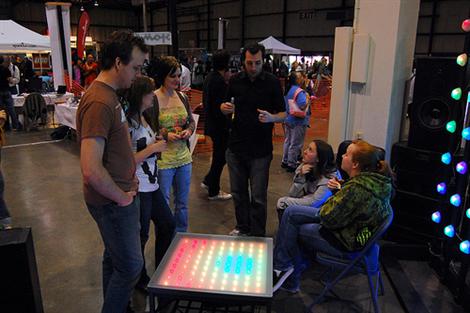
Here’s a project we’ve been wanting to do for a while. Over at macetech.com they’ve posted an LED coffee table that uses a 9×9 RGB LED grid. For the LEDs, they used the shiftbrite modules we’ve seen before. The table is capable of displaying pre written patterns as well as accepting patterns from a computer via bluetooth. They’ve set it up to connect to a twitter feed and display to a live cam on their site. Though we would love to reproduce this, we need a little more justification than “ooooh, shiny”  for the funds involved. Anyone want to donate 100 shiftbrights?

10-bit Rotary Precision For Servos

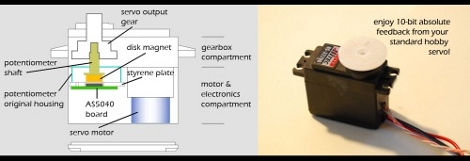
[Antonb] added 10-bit encoding to a standard servo. He’s removed the potentiometer, separated its shaft and used it to rotate a small magnet. By sandwiching an AS5040 rotatory encoder IC into the servo’s housing he can now measure the precise orientation of the servo horn. This is made easier by his tiny breakout board for the chip. If you want to layout your own PCB you can download the EagleCAD files for this device. Take a look at the final product in the clip after the break.

Continue reading “10-bit Rotary Precision For Servos”

A Second Life For Dead Hard Drives

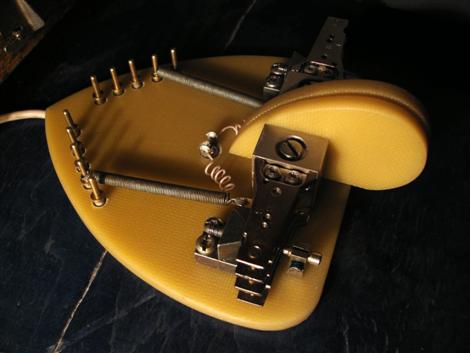
[AndyUU1CC] has put together directions on how he built an Iambic Paddle out of some old hard drives. The iambic paddle is a device for telegraphy. More specifically, it is that piece that you always see people clicking with their finger when they send a telegraph. We hadn’t seen an iambic or “dual lever” style before, but we now know that this is not an uncommon design. While it is ultimately just a fancy set of switches, we can’t help but be impressed with the looks of it.

[via instructables]