Hackaday Links: February 21 2010

Powerplant control room panoramas:
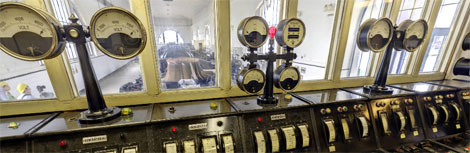
There are two power plants presented in 360 degree panoramas here. All those dials and switches just get us giddy. The one pictured above was built in 1918 and is still in operation. Not only are the control rooms here, but several other locations around the facility too.

Energy recycling prosthetic foot:
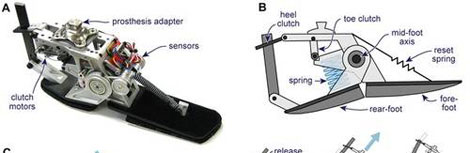
At first, we thought that this energy recycling prosthetic foot was going to be a power generating device to harvest some energy using our weight in the heel compression. Actually, it is showing off a fancy micro controller based system for reproducing our naturally springy step.

Translating in real time with google:

Google is working on a system to do real time translation of text on your phone. It is integrated into the “google goggles” software which allows you to search the internet using images from your phone. This is pretty cool, but with google translate and OCR being readily available for quite some time now, we have to wonder; why didn’t we think of that?

Exploded images of everyday objects:

[Adam Voorhes] has put together a small collection of exploded views of everyday objects. While they aren’t laid out great for reference, they look good and might make nice artwork in your workshop.
Controllable LEDs Spice Up The Living Room

[youtube=http://www.youtube.com/watch?v=YyjDcAzNJQ0]

[Sprite_tm] brings us another great hack by lighting up the living room. Unsatisfied with just replacing incandescent bulbs with an LED alternative he went with strips of LEDs to illuminate the length of a wall. Starting with a seven-meter strip of the lights, he cut it down to fourteen pieces in order to make the RGB devices individually controllable. [Sprite_tm] whipped up a design for controller boards using RS-485 to communicate with each, and sourcing an ATtiny2313 for the PWM necessary to generate any color. As you can see in the video above, the finished project is brilliant. Oh, and the Lounge Music as a background is nice too.

Steorn Orbo Motor Replica

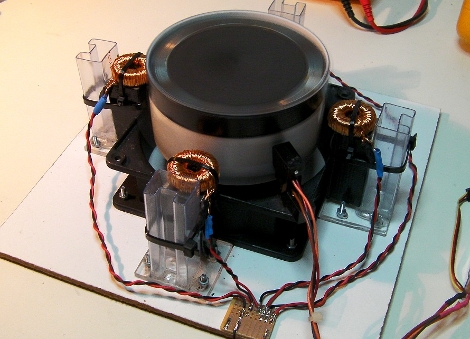
Reader [Hjhndr] ran across an interesting set of tests and wanted to know if they’re brilliant or just a load of bull. We’re not making the call on that, but the tests on a Steorn Orb motor replica are worth looking at.Keep in mind, people used to think the earth was flat and scientists of the time would have sworn up and down that’s the way things were.

The Steorn Orbo is a motor that generates more power than is put into it. At least according to Steorn Limited that’s what it does. An independent panel of scientists said otherwise a few years back but that didn’t stop the company from showing off the concept a few more times, most recently a showing in Dublin ended this month.

So anyway, [Jean-Louis Naudin] took what he saw from those demonstrations and built a replica. He’s made several papers about the principle as well as his testing available online. There’s a lot of math, a little bit of smoke and mirrors, and several videos. Take a look and let us know what you think in the comments.

RFID Tracking System

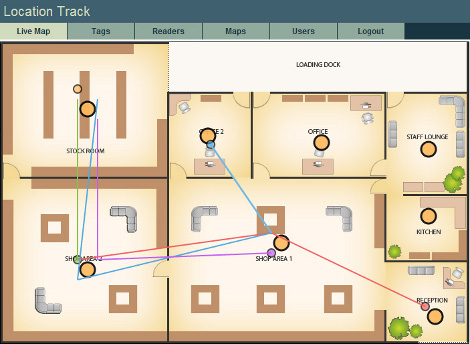
[Nicholas] built an active tracking system using RFID tags. The system’s tags operate in the 2.4 GHz band and are used to track either people or assets. The readers are on a mesh network and can triangulate the location of any tag for display on a map. His system is even set up to show the travel history of each tag. [Nicholas] shared every detail in his writeup including some background about available hardware options and how he made his final decisions on what devices to use for the job. His conglomeration of software that ties the whole project together is also available for download.

Sausage Gun 19mm

[youtube=http://www.youtube.com/watch?v=frtQXzt1_E0]

If you are anything like us, you find yourself needing, on occasion, to fling sausages at high velocity. [F00] sent in his solution, the SG19. While the details are glazed over pretty quickly, we get the point. This is basically a smaller diameter spud gun, meant to shoot sausage. While it may not be remarkable in its design, we have to wonder who came up with the idea to use sausage as the ammunition.

Rube Goldberg FTW

This video was on its way to a links post until we saw the game of chess right in the middle of it (bishop to H5). [Tom] and [Ben] put their Master of Manufacturing Engineering degrees to use by jam-packing every conveyance method possible into a Rube Goldberg machine. There’s violin bows, a polo mallet, a rolling candle, a ball-popping umbrella, texting cell phones, toppling jewel cases, and plenty of ball-on-tracks implementations. All of that setup and all that the device does is… well, you’ll have to see for yourself.

[Thanks Phil via DVICE]

High Speed Video From Cheap Digital Camera

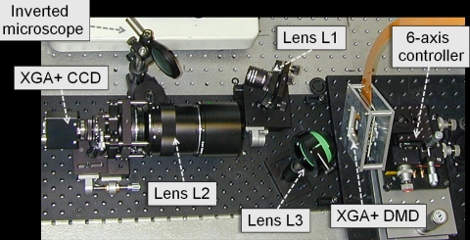
Some researchers from Oxford University have come up with a way to produce high-speed video from a one mega-pixel camera. They’re calling the method Temporal Pixel Multiplexing. This method adds a digital micromirror device in line with the camera lens. These chips house over a million mirrors and can be found in home theater projectors. By placing one in front of the digital camera, a longer exposure can be used while the DMD redirects the light. This way, one high-resolution image actually contains multiple frames of lower-resolution video. The video is still decent quality and, at a far lower cost than common high-speed video equipment, this is a worthwhile trade off.

[Thanks Andrew via NewScientist]