If there’s one category among those we see here at Hackaday that has something for everyone, it’s retrocomputing. Spanning everything from relay-based machines that fill a wall through to modern machines with a retro twist, there must be few of us who haven’t seen such a project as been impressed. Our most recent contest challenged you to come out with your best retrocomputing projects, and we’re extremely pleased to say that you didn’t disappoint us. Here are the results, both the outright winners, and the honourable mentions.
As difficult as it may be to believe, it’s not possible to adjust the time on a 2014 Renault Latitude’s in-dash navigation system unless you have an original SD card with valid map data on it. If you lose that card, or never had it in the first place because you’re not the original owner of the vehicle, you’re out of luck.
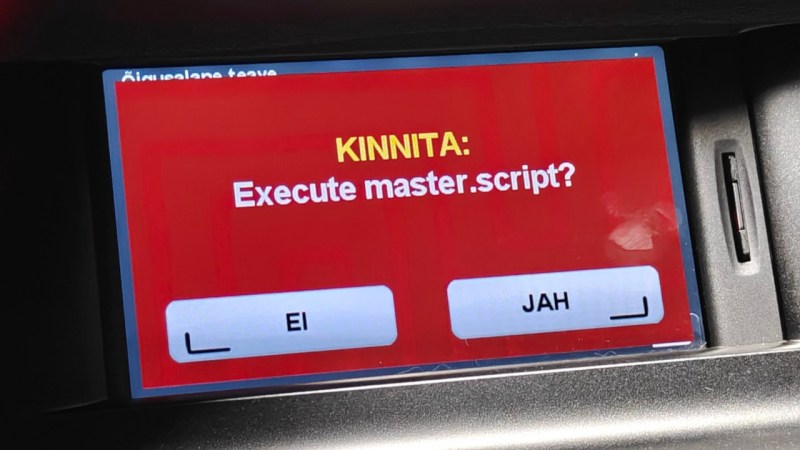
That is, unless you’re [Rasmus Moorats]. Not willing to pay for an original Renault SD card just for the privilege of adjusting the time on his vehicle’s dashboard, he set out to hack the navigation system so he could fiddle with its parameters manually.
You might think that the end result of this hack is really only interesting if you happen to own a Renault of a similar vintage, and to a point you’d be right. The part that’s worth sticking around for even if you don’t have an applicable vehicle is the fascinating process of poking and prodding at the car’s embedded Linux operating system which [Rasmus] was kind enough to document for us.
There’s a lot of ground covered in the write-up, but the short version is that while the navigation system has the ability to load scripts from the SD card, as designed there are pretty strict limits on what said scripts can actually do. The trick for [Rasmus] was to find a way to break out of the limited sandbox.
After a number of only partially successful attempts, he finally found the solution by using the script’s built-in logging functions to overwrite the operating system’s core_pattern string which is executed whenever a process crashes. By then using a different function of the scripting language to intentionally crash a binary, he was able to execute commands of his choosing, and in turn modify the configuration file that held the time data.
If you’ve ever found yourself trying to hack your way through a locked down embedded Linux system, we’re willing to bet at least a few of the tricks [Rasmus] outlines here could come in handy. As for hacking obstinate in-dash navigation and entertainment systems, it gets even harder on more modern vehicles.
Given the modern trend of interconnecting anything and everything, we have no doubt that somebody sells a blood pressure monitor that will push its measurements out to all sorts of cloud services on your behalf. We’re equally sure that doing so requires you to sign up for some new account or service, and that there may even be a subscription cost hiding in there as well.
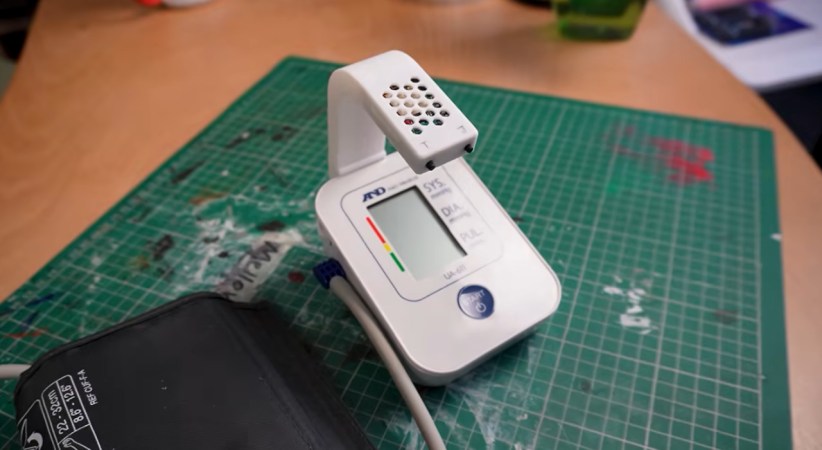
Looking to record his vitals on his own terms, [Tomasz Burzy] set out to modify a basic blood pressure monitor so that it would send its data out over WiFi. He succeeds in the end, but as is so often the case around these parts, the journey ended up being just as interesting as the final destination.
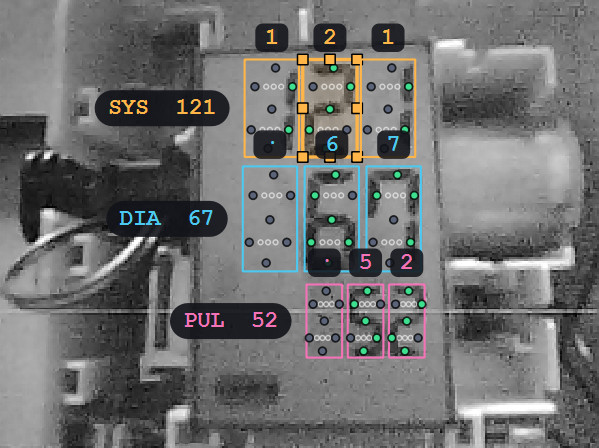
Optically detecting which LCD segments are activated.
His initial idea was to tap into the monitor’s PCB with his logic analyzer. He quickly found a test point that let him pull the raw value from the unit’s pressure sensor, and with a little massaging, he even got some code running that turned that into a fair estimation of his actual blood pressure. But it didn’t quite match what the display showed, and doing some research, he found that these monitors generally employ some unknowable Secret Sauce to derive the final result from the raw data.
Efforts to intercept the final number from the device’s main chip before it was sent off to the display driver were stymied by the fact that it was the display driver. The unit was so well integrated, presumably to drive down the cost, that there was a single IC handling essentially all aspects of its operation. So much for the logic analyzer route.
In the end, [Tomasz] took the nuclear option and used a camera mounted to the top of the unit to pull data off the display optically. But instead of a full-fat computer running some computer vision software, he’s able to pull it off on an ESP32-CAM module. How? Because he knows exactly where each segment of the LCD is, he simply needs to check a set array of coordinates in the camera’s image to see if they are lit up or not. This greatly reduces the complexity of the task, and brings it within the capabilities of the lowly microcontroller.
Although we love the idea of developing hacker-friendly medical devices that give up their data without having to jump through so many hoops, we appreciate the effort [Tomasz] put into this, and think it’s a fantastic example for similar reverse engineering efforts.