2026 Retrocomputing Challenge: Oldputer Gives Old Eyes Relief With E-ink Display

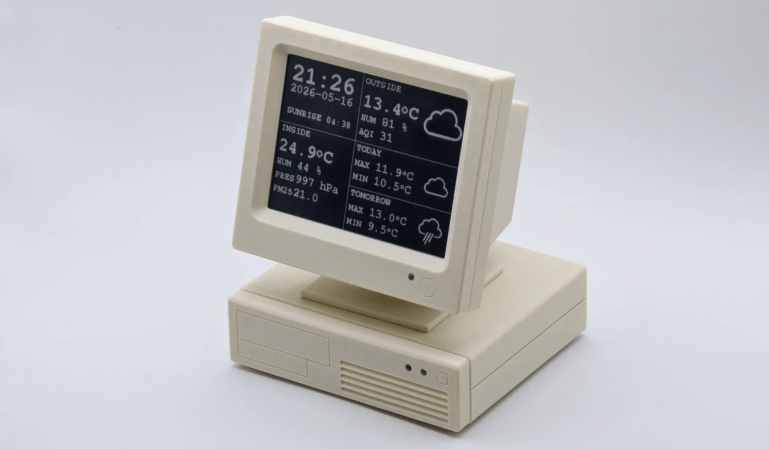
Modern computers are towers of glass and metal with very few large deviations from one to another. Monitor A will go against B, except you can’t tell them apart unless they’re on. At least, that is, compared to how different the old bulky monitors look compared to the new. [Andrzej Górski] seems to agree with this sentiment with his Oldputer, a blast from the past.

[Andrzej Górski]’s inspiration came from one component, and the main component of the project, an old e-ink display. When life gives you one of the slowest versions of a display, there really isn’t too much else to do other than pair it with slow old computers of the past. From that inspiration, there isn’t entirely a whole lot to do other than throw in an ESP32 and some LEDs for indicator lights. Put all this into a fun case, and you get one pretty desk ornament for whatever information you wanna display.

If you want to replicate the past again, you might want to look for the project GitHub here. If you’re looking for something even older, check out the replica of the MCM/70!

2026 Retrocomputing Challenge: NEC 286 Laptop Rides Again

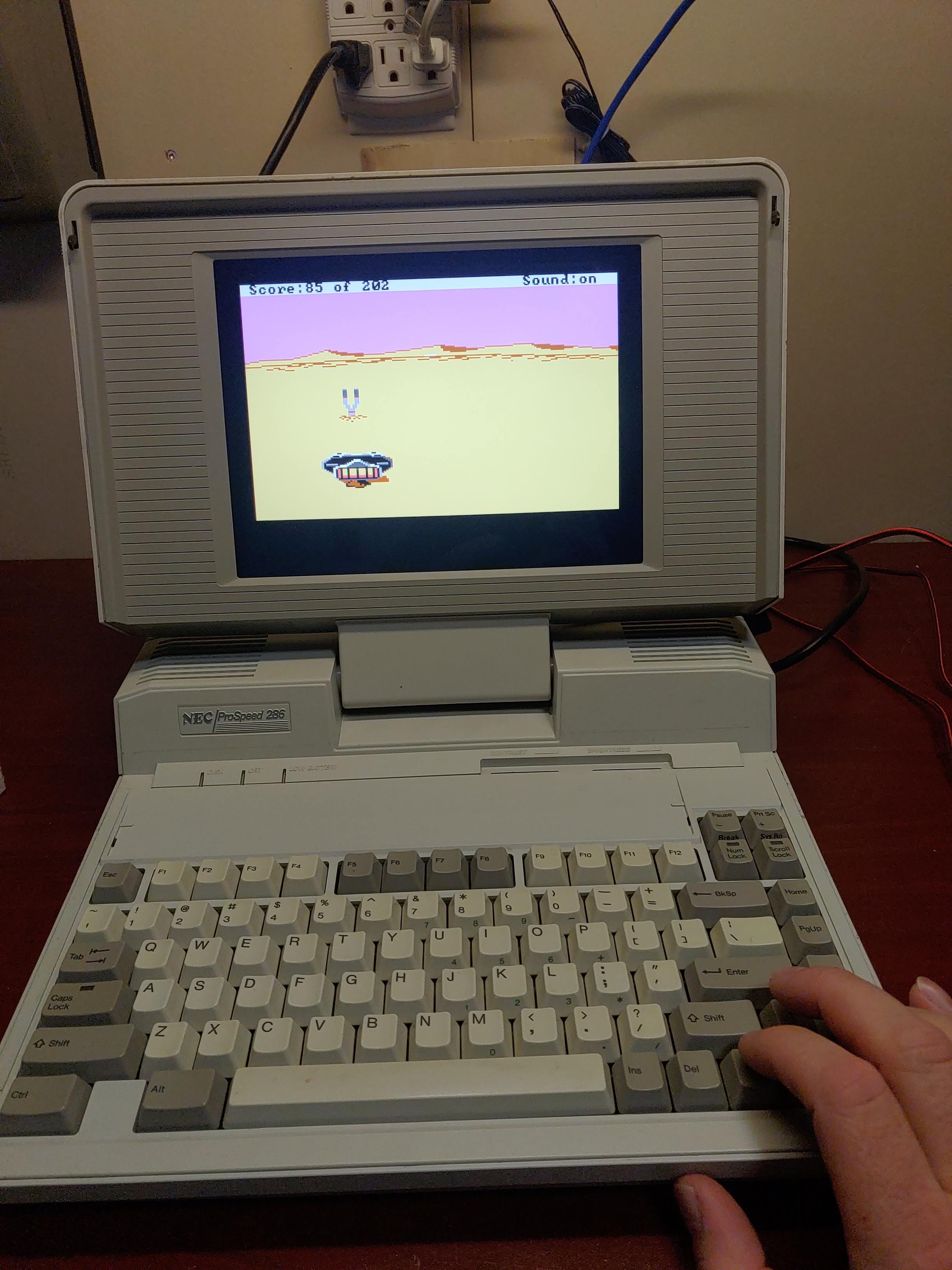
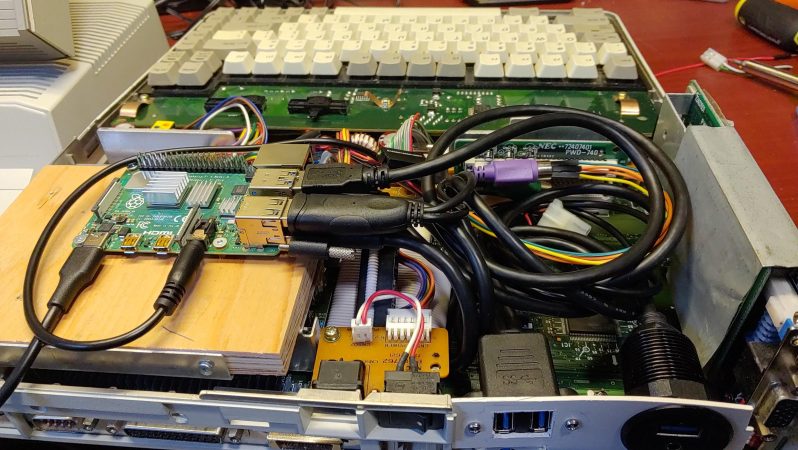
The sad reality is that all consumer electronics are going to be e-waste eventually. [Cory Whitesell] was determined his old NEC ProSpeed 286 Laptop wouldn’t meet that fate until absolutely necessary, so when his attempts at repairs failed, his efforts pivoted to create a retro battlestation from the stylish old machine.

That screen looks too good to be stock, but otherwise you can’t tell from this angle.

Externally, it looks pretty well stock, and [Cory] has retained as much of the internals as possible. The original power supply remains intact, with power taken off the original HDD’s molex connector. Said power drives a Raspberry Pi, which is small enough to fit inside without any gutting. The original keyboard connects easily enough via a PS/2 to USB adapter, while the passive-matrix LCD has been replaced with a modern screen of the same dimensions. You’d have to be a pretty hard-core purist to mourn that last change.

With emulation on the Pi, he can still have the DOS experience you’d expect from this machine, but its also powerful enough to be useful in the modern day. While we place no bets on whether or not this mod will stay relevant for another 38 years, a more powerful single-board computer or slightly-squished cell phone can be placed in the drive bay instead once the Pi’s ARM processor inevitably starts to look as anemic as the 286 does now.

Not everyone loves this kind of restomod, but we’ve featured more than a few and have a special category for it in our ongoing retrocomputing contest for those who will do everything to keep classics out of the e-waste bin, including remaking them.

2026 Retrocomputing Challenge: Retro Terminal Bartop Arcade Topper

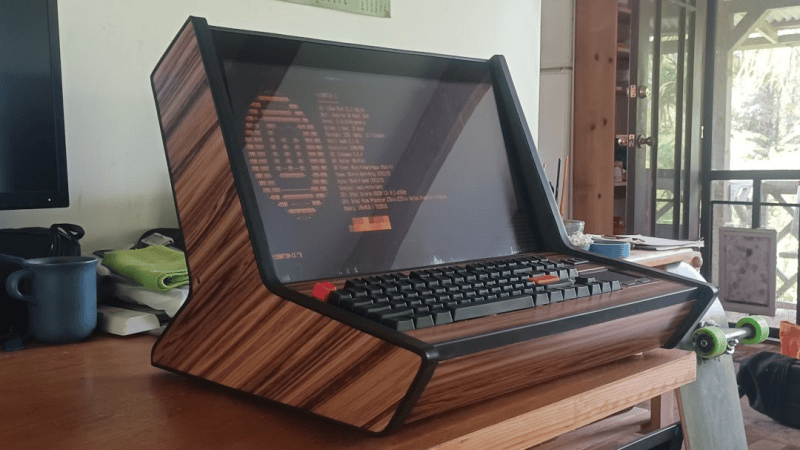
Retrocomputing is more than just hardware. It’s also a feel, a vibe, and [valkyrie0528]’s Retro Terminal Bartop Arcade Topper has it in spades.

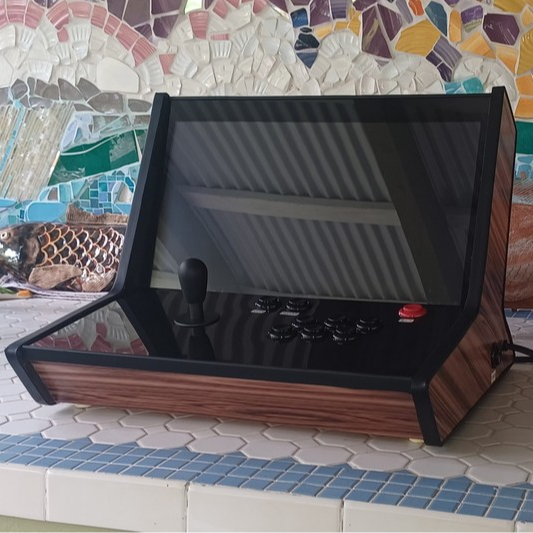
The same unit, in bartop arcade machine mode.

Here’s how it happened. The gorgeous device you see in the image above in fact started out as a bartop arcade cabinet build. The front section — with arcade buttons and joystick — is a removable panel. While building it, the panel was uninstalled and [valkyrie0528] placed a keyboard in the empty recess to do some configuration. Sitting at the machine like that felt like being right back in the 80s, perched at an 8-bit home computer. Cue a visit from the Good Ideas Fairy.

Now, in addition to being an arcade cabinet, one can swap the arcade controls panel for a one that has a keyboard (clicky and mechanical, of course), touchpad, and small USB breakout. The result looks amazing either way. As an arcade machine it’s beautiful, and in retro terminal mode it’s simply gorgeous.

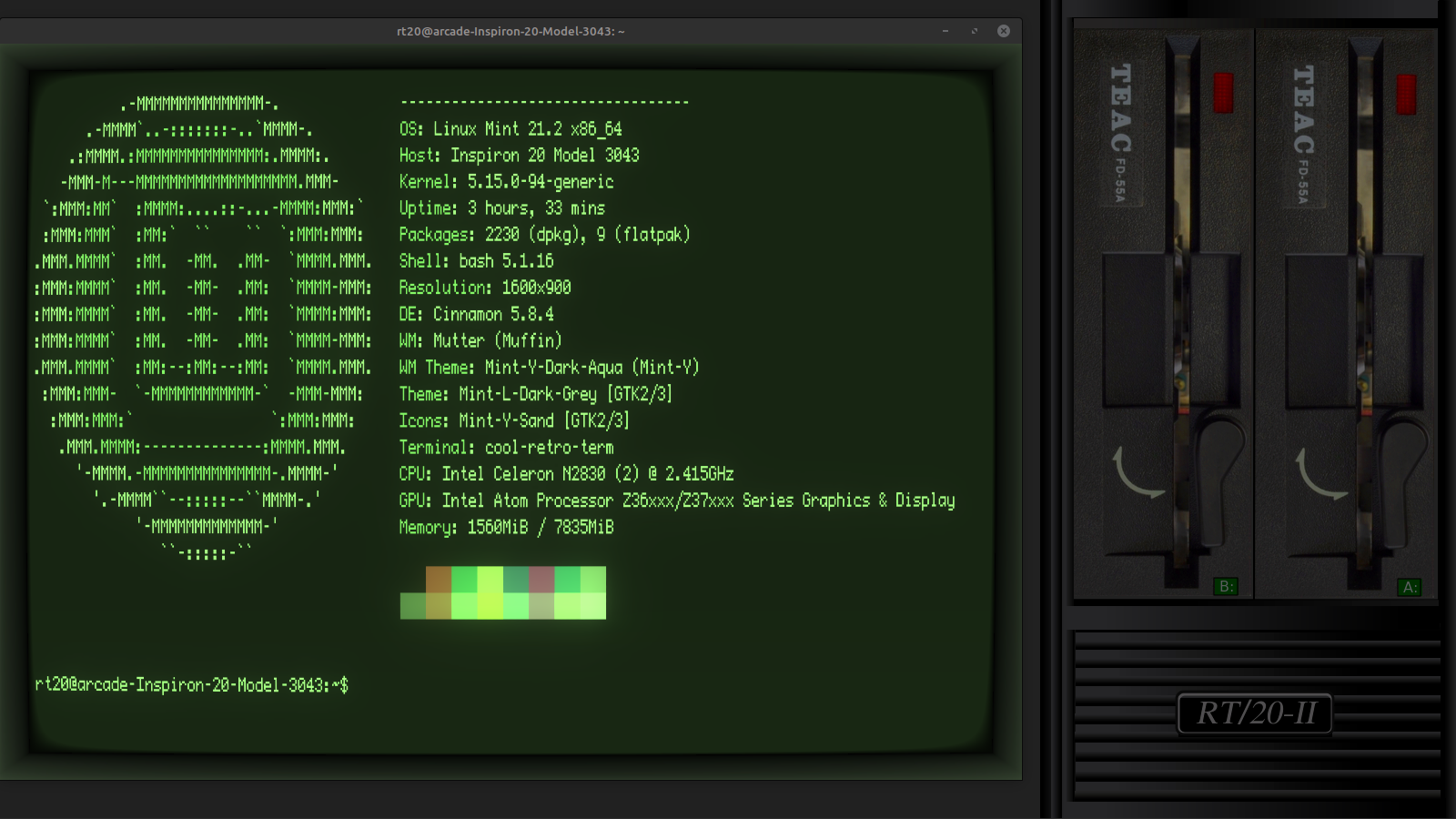
The icing on the cake is [valkyrie0528]’s use of cool-retro-term as the terminal emulator, and there’s even a widescreen wallpaper accompanying it that puts an image of two 5.25″ floppy drives to the side. If you like that idea, you can download the wallpaper file from the project page for your own use.

A widescreen wallpaper with two 5.25″ floppy drives is the perfect complement to a retro terminal emulator.

There’s still time to enter our 2026 Retrocomputing Challenge, so if you find yourself inspired and want to show off your own take of things, there’s no time to lose!

2026 Retrocomputing Challenge: Dungeons Of Daggorath, But Without Quite So Much Typing

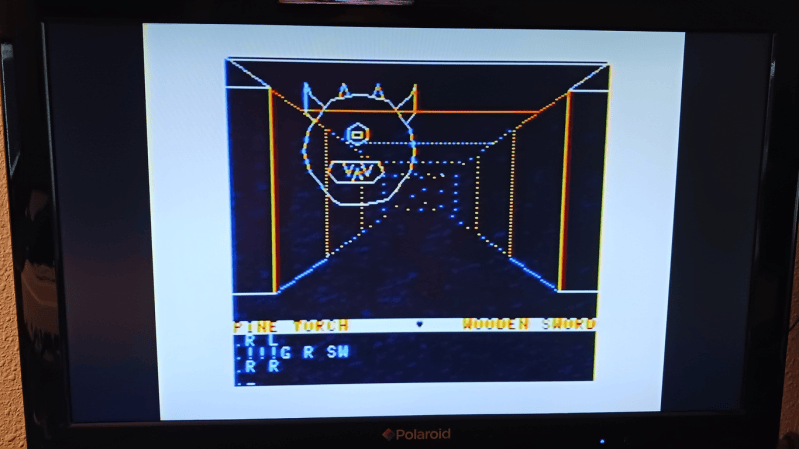
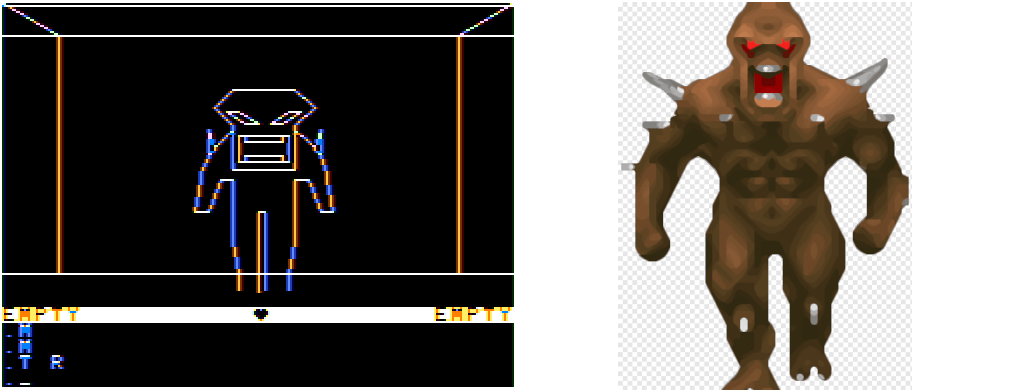
People mod games all the time, but it’s not every day someone mods Dungeons of Daggorath for the TRS-80. [Nick Bild] did exactly that, adding joystick support and a couple DOOM-inspired monsters for good measure. And while he was at it, optional unlimited player health and power because why not?

A pretty good representation, in our opinion.

Dungeons of Daggorath was pretty unusual for its time. It portrayed a dungeon and its contents from a first-person perspective, and events progressed in real time.

Gameplay-wise, most commands entered by the player revolved around moving around and attacking monsters, and that was done with text commands like ATTACK RIGHT which could mercifully be shortened to A R. Still, not the most efficient control scheme.

[Nick] downloaded the original source code and made several modifications. A joystick moves the player much more efficiently, with the button acting as a shortcut to attacking with whatever is in the player’s right hand. He also replaced the spider and viper enemies with creatures inspired by DOOM‘s imp and cacodemon monsters, as well as the aforementioned optional limitless health and power.

[Nick] dubbed the modified game Dungeons of Doom and while the terms of the original don’t allow redistribution of modified code, his changes are simple enough to follow. Especially so for those from the generation that remembers typing programs in by hand from a magazine page.

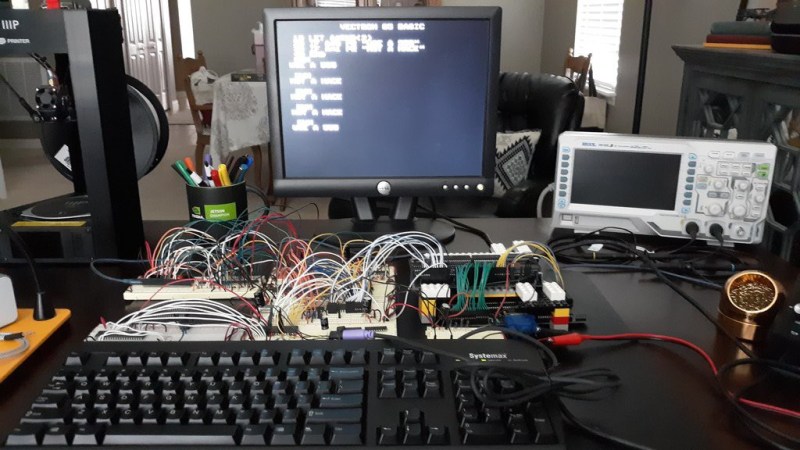
The prototype Vectron65 on breadboard with the VGA Plus v2 and VGA Text Mode cards

2026 Retrocomputer Challenge: Vectron65 Plus Puts The Emphasis On Plus

[Nick Bild] evidently has a soft spot for the 6502, given that his Vectron65 Plus home computer project uses at least one of them, depending on the add-ons. You see, he hasn’t just made a homebrew computer, he’s also produced multiple expansions. One of which, the VGA Plus Text Mode, has its own 6502 co-processor. He’s also produced two versions of a VGA graphics card capable of 640×480 output. We’re still not 100% sure how many entries we are going to count [Nick]’s work as for the contest, since the graphics cards can be used with just about anything, not just the Vectron65, but we do know they’re strong contenders every one.

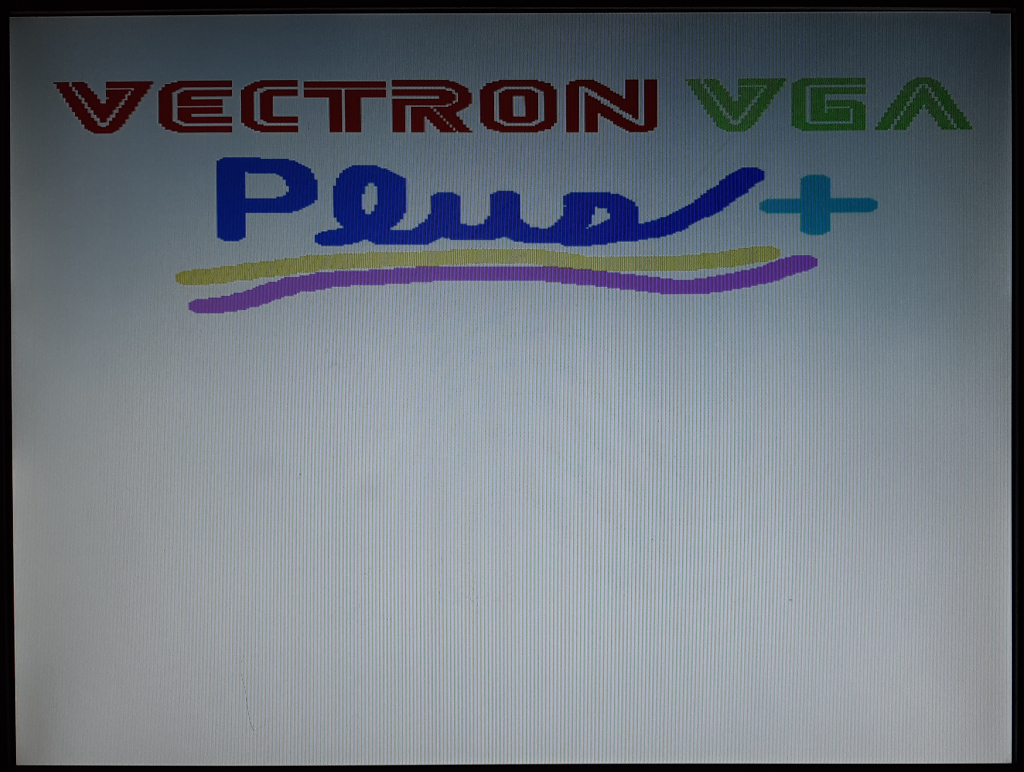
The video doesn’t really show the graphics, so here’s an example.

We covered the start of the Vectron65 project back in 2019, and it’s only gotten more practical as it has moved off breadboard onto PCB, and into a new version as the 65 Plus with more RAM and GPIO ports. Considering that the original let you game in VR using an add-on we covered, we might have to drop the “nearly” from “nearly practical” when talking about the Plus. Especially when you consider the graphics — we covered first version of 7400-series based VGA graphics card, while the newer V2 differs mostly in doubling the RAM and producing a more stable output. The V2 VGA card can work in tandem with the Text Mode card to write 40-column text to the screen without using up all the 6502 CPU’s cycles, offloading them to the second 6502 on the card with the help of a character ROM. Hey, if Commodore could put a second 6502 in a disk drive, why not? You can check out the whole suite in action in the demo video below. We admit to being particularly tickled by the Hackaday Comment Generator he’s running in BASIC.

If you’re worried about competing with [Nick], don’t worry — the 2026 Retrocomputing contest has multiple categories. You still have a few weeks to do something retro-modern, restomod an old machine, or just do some old-school programming.

Continue reading “2026 Retrocomputer Challenge: Vectron65 Plus Puts The Emphasis On Plus” →

2026 Retrocomputing Challenge: Lunar Lander On The PDP-1

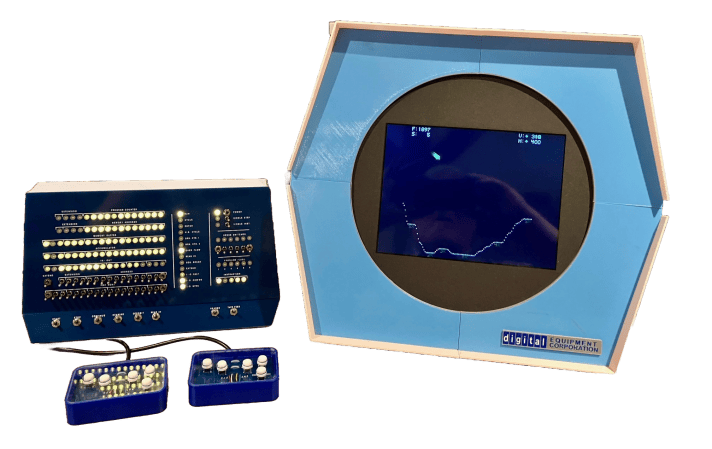
A lot of the retrocomputing world is focused on the 1980s, and for good reason– the home computer revolution was in full swing in that decade, and there is a veritable Cambrian Explosion of capable hardware to play with, emulate or recreate. There’s plenty of retro to look back to before that halcyon decade, though, as [Michael Gardi]’s port of Lunar Lander to the PDP-1 reminds us.

Both Digital Equipment Corporation’s PDP series and the game Lunar Lander are probably iconic enough in their own right to need no introduction, but there’s actually a connection between them. While many people think the game started with Atari’s 1979 arcade cabinet, the first version– then only text based, and called the Lunar Landing Game–actually dates back 10 years before that, and was dreamed up at DEC on a PDP-8. If you’re of a certain vintage, odds are, you probably typed in the BASIC version of the Lunar Landing Game at some point.

This is not that game. Despite the 1959 PDP-1 being more restricted, hardware-wise, than the PDP-8, [Michael Gardi] manages to get Lunar Lander in all of its graphical glory running on the PDP-1. Of course, if you’ve seen SpaceWar you know DEC’s first minicomputer can handle the graphics. You can play the emulated version online, if you’d like, or download it yourself from the link above. There is one PDP-1 that survives in working order, and [Michael] hopes to get the chance to run it there one day on the machine that started hacker culture. We wish him luck!

In the meantime, this may be the most “retro” project in our ongoing retrocomputer contest. There’s no special prize for that superlative, but if you can do older, have at ‘er! There are three weeks left to go back in time and claim both bragging rights and fabulous prizes.


2026 Retrocomputing Challenge: A Homebrew Computer In Only Three ICs

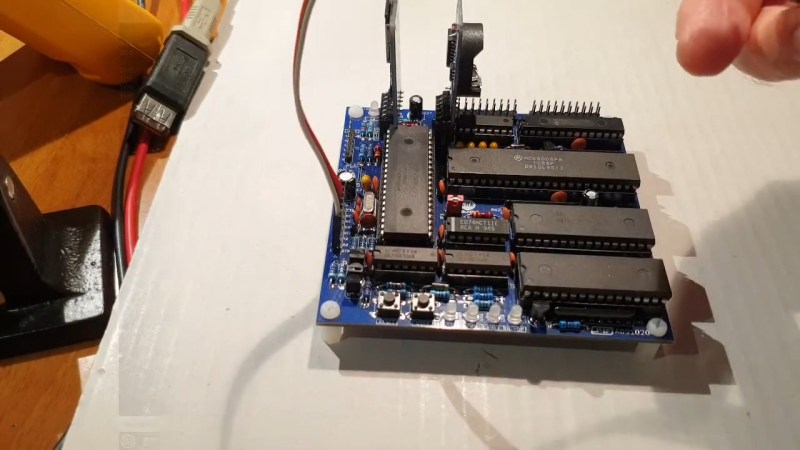
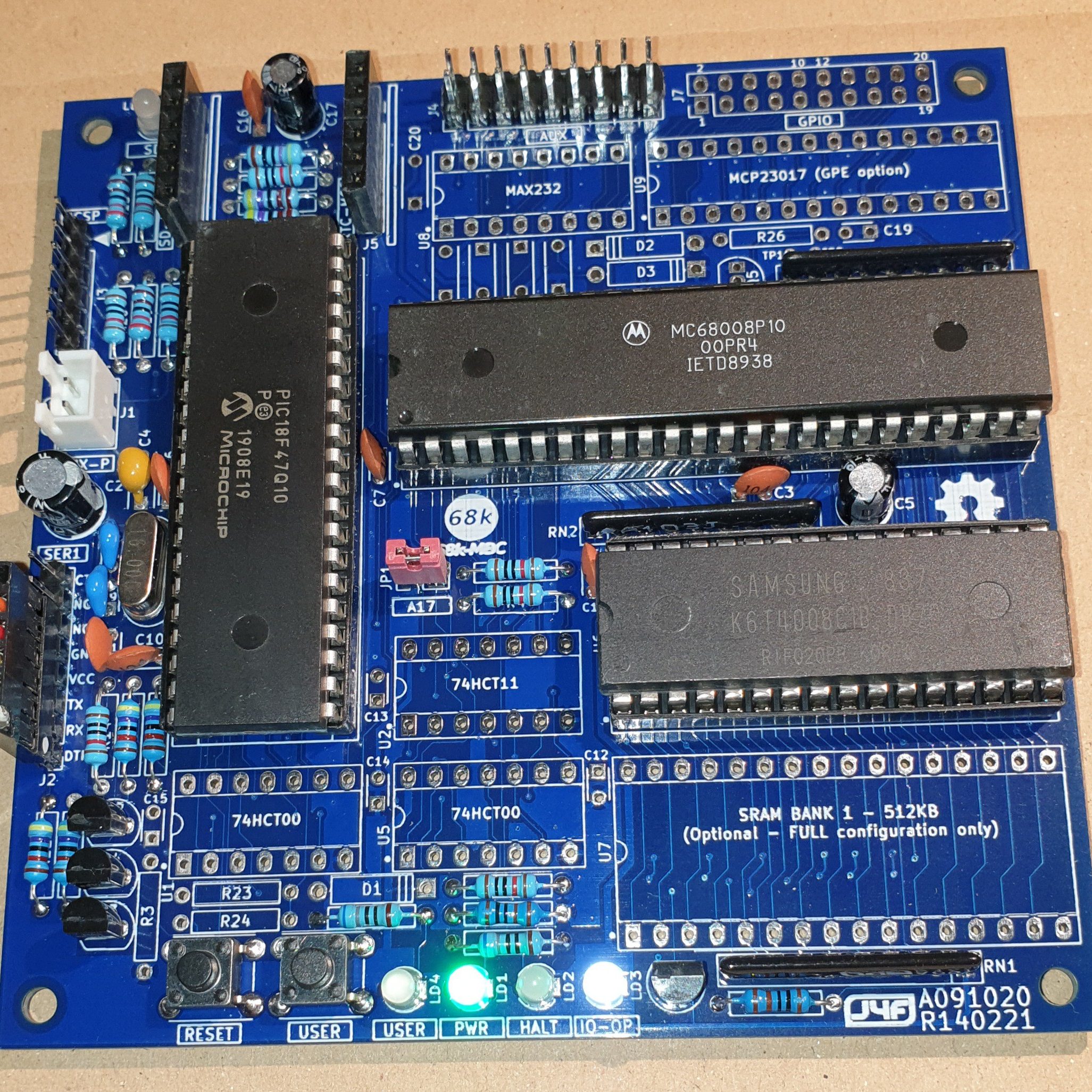
Homebrew computers don’t have to be retrocomputers, but [Just4Fun]’s all-through-hole, 68008-based “68k-MBC” certainly qualifies, so it is a worthy entry in our ongoing contest. While there are both “full” and “lite” hardware configurations, the three-IC “lite” configuration is what first caught our eye. Yes, three: the 68008, an SRAM chip, and a PIC microcontroller that acts as the ROM.

Software is provided by the suitably-retro CP/M68K, or standalone executables, which run on both hardware configurations.

There are four lights, but three chips in the “lite” version of the build.

The “lite” option restricts you to a maximum of 512 KB of RAM and a single serial port, but it looks like you still get I2C and the option to plug in an SD “hard drive” or RTC module however you configure the machine. Through the serial port, you can of course connect a terminal of you choice, or even use a thermal printer. The “full” version has two serial ports, if you want to do both. [Just4Fun] also has a parallel adapter lets you plug in printers with that interface as well. The demo video is below, but be warned that the text-to-speech narration won’t be to everyone’s liking.

We’ve featured other single-board-computers using the 68k before, but this one is a worthy contender in our contest, not least for the impressively low chip count. This contest has gotten oodles of entries, but there’s still time for yours: entries close October 27th.

Continue reading “2026 Retrocomputing Challenge: A Homebrew Computer In Only Three ICs” →