Octopart And Altium Join Forces

Octopart, the search engine for electronic parts, is now a wholly owned subsidiary of Altium.

This acquisition is neither Altium’s first parts database purchase, nor is it Octopart’s first interaction with Altium. Ciiva, a parts and datasheet search engine was acquired by Altium a few years ago, and Altium Circuit Maker features an interface to the Octopart database.

Under the deal, Octopart will remain independent of Altium and operate out of their NYC office, and plans are for the part search engine to remain free and open.

Disclosure: Hackaday’s parent company, Supplyframe, also runs FindChips.com and Parts.io, component search tools.

Where Are They Now: Terrible Kickstarters

Kickstarter started out as a platform for group buys, low-volume manufacturing, and a place to fund projects that would otherwise go unfinished. It would be naive of anyone to think this would last forever, and since these humble beginnings, we’re well into Peak Kickstarter. Now, Kickstarter, Indiegogo, and every other crowdfunding platform is just another mouthpiece for product launches, and just another strategy for anyone who needs or wants money, but has never heard of a business loan.

Of course there will be some shady businesses trying to cash in on the Kickstarter craze, and over the last few years we’ve done our best to point out the bad ones. Finding every terrible Kickstarter is several full-time jobs, but we’ve done our best to weed out these shining examples of the worst. Following up on these failed projects is something we have been neglecting, but no longer.

Below are some of the most outrageous Kickstarters and crowdfunding campaigns we’ve run across, and the current status of these failed entrepreneurial endeavors.

Continue reading “Where Are They Now: Terrible Kickstarters”

Hackaday Prize Entry: A Sixth Sense

There’s far more going on in the environment that humans have the senses to detect. Birds migrate with the help of the Earth’s magnetic field, and certain species of fish can detect electrical fields. For his Hackaday Prize entry, [Sebastian] is giving us a sixth sense. He’s building a device that allows anyone to detect the Earth’s magnetic field and find their way north for the summer.

The initial idea for [Sebastian]’s project came after his father’s inner ear was damaged. The doctor told him his brain needed to be trained to work with only one inner ear. If it works for balance, [Sebastian] wondered, why couldn’t the brain be trained to listen to an extra sensory input?

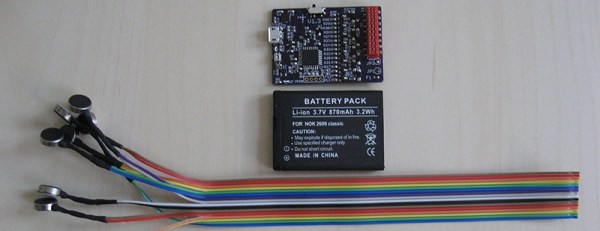
[Sebastian]’s device is an accelerometer and magnetometer, connected to a microcontroller that drives a few vibration motors. By mounting these motors around an ankle strap, [Sebastian] hopes to train his brain to listen to the magnetic fields.

So far, [Sebastian] has a device that can sense the Earth’s magnetic field and buzzes the motor closest to magnetic north. There’s still a lot of work to do, including filtering the magnetometer inputs, adding a ‘sleep’ mode, and putting Bluetooth functionality on board, but it’s already a very well-designed project.


The 2015 Hackaday Prize is sponsored by:

Raspberry Pi And Windows 10 IoT Core: A Huge Letdown

Last Spring, Microsoft unveiled their plan for Windows and the Internet of Things. It starts with the Raspberry Pi and Windows 10 IoT Core – a stripped down system with Windows API calls running on an ARM architecture. Yes, Microsoft is finally moving away from the desktop, building a platform for a billion Internet of Things things, or filling the gap left by tens of thousands of POS terminals and ATMs running XP being taken offline. Either one is accurate.

Earlier this week, Microsoft announced the first public release of Windows 10 IoT Core. This is the review, but here’s the takeaway: run. Run as fast as you can away from Windows IoT. It’s not worth your time unless you have a burning desire to write apps for Windows, and even then you could do a better job with less effort with any Linux distro.

Continue reading “Raspberry Pi And Windows 10 IoT Core: A Huge Letdown”

Hackaday Prize Entry: Homebrew Smartwatches

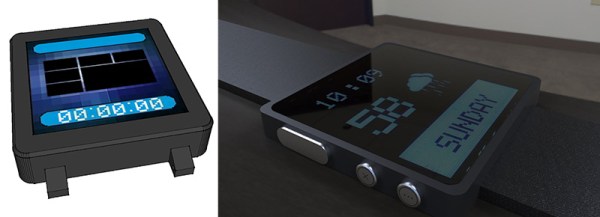
The Pebble Smartwatch has been around for years, and the introduction of the Apple Watch has everyone looking at wrist-mounted computing as the newest gadget consumers can glom onto. There was never any doubt the 2015 Hackaday Prize would have more than a few smartwatches.

[Ramon]’s Zerowatch gets its name from the Arduino Zero, as this watch is based off of and completely compatible with the Arduino Zero. With a 48 MHz ARM Cortex M0+, a three-axis accelrometer, a microSD card slot, and a bright OLED display, this is an extremely capable wrist-mounted computer. As with all wearable electronics, the enclosure makes or breaks the entire device, and [Ramon] has a very slick 3D printed case for this watch.

Connectivity is important for smartwatches, and that’s something [Montassar]’s Open Source Smart Watch doesn’t skimp out on. He’s using an STM32F4 as the main controller and a 1.44″ TFT, and adding the standard Bluetooth module — an HC-05 — to the mix. [Montasar]’s project is also tackling connectivity by working on a few Android apps that connect directly to this phone. He’s using the MIT App Inventor to speed up development for these phone apps, and makes custom smartwatch apps a breeze.

Both are great projects, and thanks to free, open source, and easy to use tool chains, both projects are excellent examples of open hardware development and a great entry to The Hackaday Prize.

The 2015 Hackaday Prize is sponsored by:

Hebocons And Why They Matter

Everyone remembers Battlebots, and those of us feeling the pains of nostalgia have tuned into the recent reboot on ABC. As with the golden age of Battlebots, all robot fighting competitions eventually become a war between machines perfectly designed for the task. In the original run of Battlebots, this meant a bracket full of wedge bots, with the very cool robots eliminated year after year.

You don’t watch NASCAR for the race, you watch it for the crashes, and professional robot fighting competitions will always devolve into a few hundred laps of left turns. Fire and sparks are great, but there is a better robot fighting competition, and this time anyone can get in the game without spending years working on a robot.

It’s called Hebocon, and it’s billed as, ‘a sumo wrestling tournament for those who don’t have the technical skills to actually make robots’. The best translation I’ve seen is, ‘shitty robot battles’, and it’s exactly what robot battles should be: technical mastery overcome by guile, and massive upsets through ingenious strategy. You won’t get fire and sparks, but one thing is certain: no robot will make it out of Hebocon fully functional, but that’s only because they weren’t fully functional to begin with.

Continue reading “Hebocons And Why They Matter”

Hackaday Prize Entry: A Civilization Starter Kit

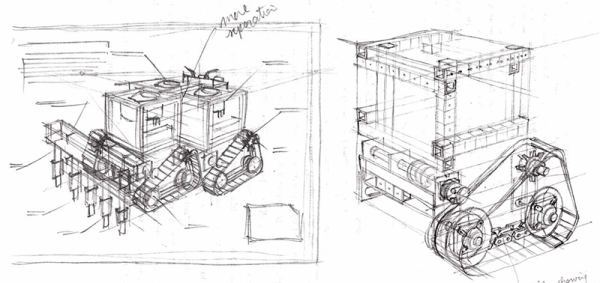
Over the last few years, [Marcin] has been working on the building blocks of civilization. He’s busy creating the Global Village Construction Set, the fifty most useful machines ever created. Everything from bread ovens to combine harvesters is part of this Global Village Construction Set, and everything is open source, free for all to use and improve upon.

For this year’s Hackaday Prize, [Marcin] is working on an Open Source Bulldozer. The ability to create earthworks and move dirt around is actually one of humanity’s greatest achievements, and enables the creation of everything from foundations for homes to trans-oceanic canals.

This Open Source bulldozer is astonishingly modular, scaleable from a one-ton microtractor to a 13,000lb dozer, with attachment points for blades, drawbars, and everything else you can attach to a Bobcat earthmover. It’s 168 horses of opensource earthmoving capability, and a perfect addition to this year’s Hackaday Prize.

[Marcin] and his group Open Source Ecology posted a video of this micro bulldozer rolling around on their shop floor recently; you can check that out below. You can also see our coverage of the GLVCS from several years ago.


The 2015 Hackaday Prize is sponsored by:

Continue reading “Hackaday Prize Entry: A Civilization Starter Kit”