Cloud Support For Fleets Of 3D Printers

bot

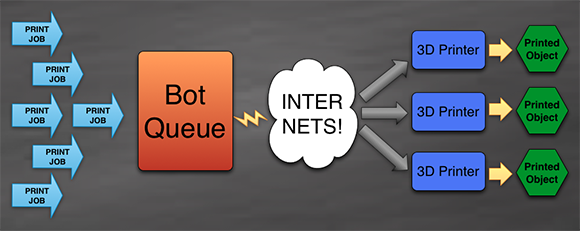
More than ever, 3D printers are being used for small prototype and production runs, and the normal way of using a 3D printer with a single desktop app is becoming more and more out of date. [Zach ‘Hoeken’ Smith] has a solution to the frustration of printing out multiples of objects: it’s called BotQueue, and allows anyone to submit print jobs to multiple 3D printers over the Internet.

The idea behind BotQueue is to allow anyone to send jobs to a 3D printer over the Internet. Queues and multiple printers are supported, meaning small-scale manufacturing just got a lot easier for anyone dealing with multiple printers.

We’ve seen a few 3D printer fleets that could benefit from an online print server for multiple 3D printers. It’s not a project meant for everyone – one 3D printer per person should be enough for just about everybody – but if you’re part of a hackerspace with a few printers, we could see this being used to great effect among your fellow makers. You’re not limited to using the official BotQueue servers, either. You can run your own BotQueue from [Zach]’s git

A Clever Solution For Constantly Locking Workstations

ROBOT

[Vasilis] works at CERN, and like any large organization that invented the World Wide Web, they take computer security pretty seriously. One ‘feature’ the IT staff implemented is locking the desktop whenever the screen saver runs. When [Vasilis] is in his office but not at his battlestation, the screen saver invariably runs, locking the desktop, and greatly annoying [Vasilis].

The usual Hackaday solution to this problem would be a complex arrangement of RFID tags, webcams, and hundreds, if not thousands of lines of code. [Vasilis] came up with a much better solution: have the computer ping his phone over Bluetooth. If the phone is detected by the computer, kill the screen saver.

The code is up on Github. It’s not much – just 20 lines of a Bash script – but it’s just enough to prevent the aggravation of typing in a password dozens of times a day.

DEFCAD, The Island Of Misfit Objects

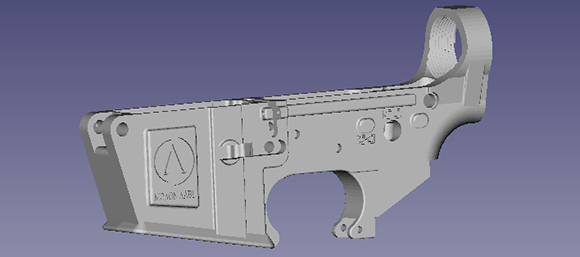
Defense Distributed, the guys working on 3D printed guns and lower receivers for an AR-15, have a storied history with makers, corporations, and our elected representatives. When the news broke they were designing a 3D printed weapon, their $25,000 leased 3D printer was taken away from them. When their designs were too controversial for Thingiverse, they were taken down. Defense Distributed keeps on firing back, though, and now they’re hosting their own 3D model repo called DEFCAD.

In another one of Defense Distributed’s well-produced promo videos, they make their case for a repository of 3D models that doesn’t respond to takedown requests. Basically, 3D printing is a disruptive technology and is too important to be beholden to copyright lawyers, talking heads of the media, and, “the collusive members of the maker community”.

DEFCAD isn’t only about guns. They plan on hosting anything those in the upper echelons of power don’t like – or at least those with a copyright, patent, or trademark gripe – and never responding to a takedown request. It’s a great idea, somewhat akin to The Pirate Bay for physical objects, but actually popular.

Hackaday Links: March 12, 2013

Thankfully saved from steampunkers

meter

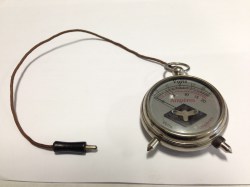
[Chris] found a really cool pocket watch-style multimeter in a box of junk that was passed down from father to son. There aren’t any markings on it, so he’s looking for any information he can get on it. It’s a cool piece of vintage tech in any occasion; check out the pics he sent in below:

Here’s a fix for your illegal stuff

pi

[Don] ‘acquired’ one of those China-only Raspberry Pis, but after plugging it in, only the power light would stay on. The fix, apparently, is putting these three files in the /boot folder of a Red Pi SD card.

Not a pocket watch

meter

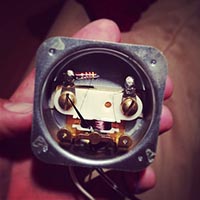
[Tom] picked up an old DC volt meter in an antiques shop. He quickly gutted it to make an analog meter display for his Raspberry Pi. There’s  a few status lights to remind [Tom] of something he hasn’t figured out yet. Bonus points for a cheap buck boost converter, though.

Smashing monitors? Really?

NESIT Hackerspace

The Meriden, CT hackerspace, the New England Society of Information and Technology, was vandalized last week. They’re dealing with some real punks here; their computers weren’t stolen, they were just smashed. NESIT is looking for donations (both money and equipment), so if you have a few monitors or old boxxen and live around there, consider donating them.

Help a guy out here.

survey

[Jonathan] is a real cool dude that’s working on his master’s thesis on ways to build a sustainable company through the development of open source hardware. He wants you to take a survey. How do we know he’s cool? He had something posted on HaD back when we had the old black and white and scotch tape images.

PCB Stencils For $200

stencil

There’s some really cool stuff to find if you wander around a Michaels craft shop or Hobby Lobby long enough. Recently, [Ben] picked up a craft cutter – a small vinyl cutter-like device meant for scrapbooking and other crafty endevours. He’s using this machine to create solder paste stencils that are better than any laser cut stencil he’s used before.

Like a build we’ve seen before, [Ben] is using a desktop-sized vinyl cutter, the Sihouette Portrait,  with 4 mil Mylar. After converting the relevent layers of a Gerber file into .SVG files, [Ben] loaded up Robocut to cut very, very small holes in his solder stencil. The results are great; much better than a laser would cut Mylar, and good enough to apply paste to a few hundred boards at least.

While [Ben] is using his stencils to apply solder paste, we’re wondering if a similar process could be used to apply a UV-curing solder mask to home-fabbed boards. That would allow for some very professional-looking boards to be produced with a turnaround time of just a few hours.

One Piece, 3D Printed Crossbow

bow

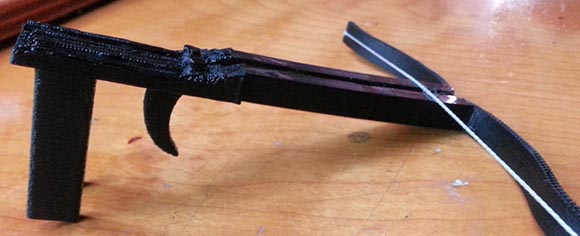
Centuries ago, craftsmen and smiths of all sort spent hundreds of hours crafting a crossbow. From the fine craftsmanship that went into making the bow to the impeccable smithing a windlass requires, a lot of effort went into building a machine of war. Since [Chris] has a 3D printer, he figured he could do just as well as these long-dead craftsmen and fabricate a crossbow in under a day.

What’s really interesting about [Chris]’ crossbow is that it is only a single piece of plastic. The bow is integrated into the stock, and the trigger works by some creative CAD design that takes advantage of the bendability of plastic. The only thing required to shoot a bolt from this crossbow is a piece of string. That, and a few chopsticks.

He won’t be taking part in any sieges, but [Chris]’ weapon is more than capable of shooting a bolt across a room or launching a balsa wood airplane. You can see an example of this after the break.

Continue reading “One Piece, 3D Printed Crossbow”

Building New, Weird CPUs In FPGAs

CPU

The popularization of FPGAs for the hobbyist market means a lot more than custom LED controllers and clones of classic computer systems. FPGAs are also a great tool to experiment with computer architecture, creating new, weird, CPUs that don’t abide by the conventions the industry has used for 40 years. [Victor] is designing a new CPU that challenges the conventions of how to access different memory locations, and in the process even came up with a bit of example code that runs on an ARM microcontroller.

Most of the time, the machine code running on your desktop or laptop isn’t that interesting; it’s just long strings of instructions to be processed linearly. The magic of a computer comes through comparisons, an if statement or a jump in code, where the CPU can run one of two pieces of code, depending on a value in a register. There is the problem of reach, though: if a piece of code makes a direct call to another piece of code, the address of the new code must fit within an instruction. On an ARM processor, only 24 bits are available to encode the address, meaning a jump in code can only go 16 MB on either side of its call. Going any further requires more instructions, and the performance hit that comes along with that.

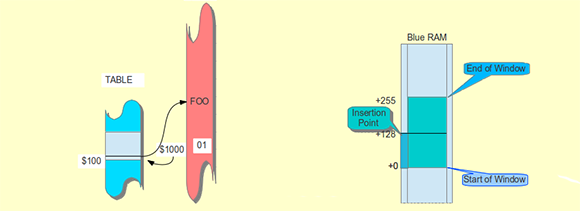
[Victor] decided a solution to this problem would be to create a bit of circuitry that would be a sliding window to store address locations. Instead of storing the literal address for jumps in code, every branch in the code is stored as a location relative to whatever is in the program counter. The result is an easy way to JMP to code very far away in memory, with less of a performance hit.

There’s an implementation for this sliding window token thing [Victor] whipped up for NXP’s ARM Cortex M3 microprocessor, and he’ll be working on an implementation of this concept in a new CPU over on his git.