DIY GLOBARS For Nighttime Bike Visibility

Inspired by a non-existant yet still cool illuminated bicycle handlebar project, [Becky] over at Adafruit came up with her own version of light up  handlebars. Not only is her project actually real, they’re also a pretty cool build that brings a little lightcycle ambiance to twilight bicycling.

[Becky]’s light up handlebars are inspired by the GLOBARS concept design that made the blog rounds earlier this year. Instead of custom machined aluminum tubing, [Becky] used an Adafruit LED strip neatly assembled with heat shrink tubing and waterproof tape, along with an 8 AA-cell battery holder in a fabric and velcro pouch suspended from the top tube on her bike.

After wrapping the LEDs around the handlebars, [Becky] wrapped them in clear handlebar tape she sourced from Amazon. From the video after the break, the 2 meter LED strip on [Becky]’s handlebars verge on lightcycle territory, but sourcing a 6 AA-cell battery holder over an 8-cell will bring the brightness down to a reasonable but still safe level.

You can check out [Becky]’s build video after the break.

Continue reading “DIY GLOBARS For Nighttime Bike Visibility”

Picking Handcuffs With Laser Cut Keys

At this year’s HOPE conference, German competitive lockpicker and security researcher [Ray] gave a talk about escaping high security handcuffs that are probably being used by your local police and other LEOs. He’s doing this with 3D printed and laser cut keys because, you know, security through obscurity never works.

Two years ago, [Ray] gave a talk at HOPE on 3D printing Dutch handcuff keys (you can listen to his conference as an .MP3 here). This time around, [Ray] copied the keys of Bonowi and Chubb handcuffs, very popular brands for American police. After obtaining a key from each of the two brands, [Ray] broke out the calipers and micrometer and designed his own versions that can be printed on a RepRap or Makerbot, or just laser cut from a piece of plastic; the perfect material for sneaking one through a metal detector.

The .DXF and .STL files for the handcuff keys will be available on Thingiverse shortly. We’d suggest watching this Thingiverse account (nevermind), as they have the files for [Ray]’s earlier Dutch handcuff key.

Viewing CCTV On Every Street Corner

2.4 GHz video transmitters are everywhere these days, in many, many products ranging from baby monitors to CCTV setups. Surprisingly, most owners of these video devices don’t realize they’re transmitting an unencrypted video signal, a belief [Benjamin] hopes to rectify.

[Ben]’s project started with him driving around cities recording unencrypted 2.4GHz video feeds. His idea has since expanded to include building metal boxes with an LCD display and attaching them to light poles. Think of it as an education via technology; most people don’t know these devices are receivable by everybody, and showing them it is possible is the first step in learning.

If you’re looking for something a little more creepy than a metal box attached to a lamp-post, [Ben] is also the brainchild behind the Surveillance Video Entertainment Network, an installation (also in van form) that exposes unencrypted 2.4 GHz video transmissions in cities around the world.

You can check out a few intercepted surveillance videos after the break.

Continue reading “Viewing CCTV On Every Street Corner”

Batarangs For The Dark Knight Rises

The Dark Knight Rises is out now, and [Christian] over at MakeIt Labs decided to show up everyone at this year’s Halloween party with these custom made Batarangs.

After the Batarangs were plasma cut out of 11-gauge steel, [Rob] beveled the trailing edges of the wing, powder coated them, and sharpened them with a grinder and a diamond stone. Yes, these Batarangs are probably much better weapons than the on-screen logo shaped shuriken, but it’s questionable how useful they are compared to perfectly balanced CGI weaponry. They’re a really awesome looking build perfect for this year’s Halloween costume.

One small word of warning for all the commentors: We know a few of you have already seen the midnight showing of The Dark Knight Rises, but posting any spoilers will result in a member of the Hackaday team hunting you down and savagely beating you. Also, given the shooting at the premier in Aurora, Colorado you probably don’t want to bring weapons – even prop ones – to a movie theatre.

You can check out the making of video for [Christian]’s Batarangs after the break.

Continue reading “Batarangs For The Dark Knight Rises”

Hackaday Links: July 20, 2012

Hey, it’s the 43rd anniversary of men first walking on the moon. Here’s some stuff we found to celebrate that. Fun trivia: for Apollo 11, [Neil] and [Buzz] didn’t go more than 200 feet from the LEM.

This is so incredibly sad

Remember Heathkit? A lot of cool kit-based electronics came from them. They’re out of business, but you can get all the Heathkit swag you can imagine from the repo man. A ton of stuff from the old Heathkit headquarters is being auctioned off in Byron Center, Michigan this Tuesday, July 24. Notable lots include a HE-Robot and a nice pair of o’scopes. If someone wants to pick up one of the catalog lots for us, we’d be thankful.

Troll Physics: ‘What is with this guy’ edition

We’ve seen [Fredzislaw]’s LED trickery before. The first time was a crazy 3 LED circuit, the reveal of which showed two AC power supplies in a battery connector. This time, [Fred] has two switches and an LED. Turn one switch on, the LED lights up. Turn that switch off and flip the other one, the LED still lights up. Turn both switches on, the LED goes off. Your guess is as good as ours.

Prototyping with a key fob remote

[Gary] wrote in to tell us about the dev board he’s been working on. It has either a PIC or AVR on the back side, broken out into 0.1 inch headers on the front. There’s a small solderless breadboard and an on-board RF link that uses a five-button key fob remote. Seems very useful, no matter what side of the PIC/AVR holy war you’re on.

Consumer Alerts: Software defined radio
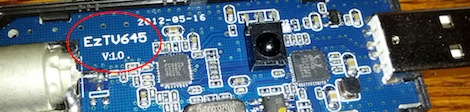
Over on the RTLSDR subreddit, [photoscotty] bought this TV tuner dongle from Deal Extreme and received the inferior EZTV645 tuner. Unsurprisingly, Chinese manufacturers will just grab whatever is available, put it in an envelope, and ship it off on a slow boat from China. [photoscotty] is trying to return his dongle to DX, but until Sparkfun or Adafruit start selling these things (yes, there’s a market now get on it) you’ll have to be careful out there.

Wouldn’t this feel terrible against your skin all day?

[Colin] printed a watch band on his Makerbot. Apparently Shenzhen humidity didn’t play nicely with his nylon strap, so [Colin] made his own out of plastic. It’s flexible and has a neat looking clasp, as well as an awesome demo for what a 3D printer can actually do. Thingiverse files here.


Using A Watch To Control Ms. Pacman

Recently, [Alan] broke out the ‘ol Atari 2600 to relive his childhood with a bit of Yar’s Revenge and Adventure, but after looking at his new TI EZ430 Chronos watch, he figured he could add a bit of motion control from this classic game system. He used the accelerometer in this watch to play Ms. Pacman by tilting his wrist, an awesome build that really shows off the power of his new wrist worn device.

The watch is running stock firmware and communicates to a PC via an RF module attached to his computer’s USB port. The accelerometer data is fed into a VB.net app to convert the movements of the wrist into up, down, left, and right commands. These commands are then sent out over a serial port to an Arduino to translate those commands into something the Atari joystick port can understand.

Sure, it may be a roundabout way of playing Ms. Pacman, but considering the TI Chronos has been used for very serious work such as stopping SIDS and helping out soccer referees, we’re happy to see a more frivolous application for this neat watch.

You can check out [Alan]’s video after the break, or get the VB and Arduino source here and here.

Continue reading “Using A Watch To Control Ms. Pacman”

From 0 To C: Teaching Programming Without A Computer

It’s no secret that learning how to program is very hard, and teaching it doubly so, requiring the student to wrap their head around very unorthodox concepts. [Ubi de Feo] over at the Amsterdam tech collective Hello, Savants! has a unique solution for taking someone who knows nothing of programming and turning them into a computer aficionado capable of deftly wielding semicolons and parens. It’s called From 0 to C, and aims to teach students programming in an environment without computers.

For his class, [Ubi] made up a lot of wooden boxes with eight subdivisions representing the bits in a byte. By putting ping-pong balls in each slot, [Ubi]’s students can grasp the concept of counting by powers of two and quickly move on to hexidecimal and more advanced concepts like bit shifting.

After learning the ins and outs of how stupid computers actually are, [Ubi]’s students then learn the syntax of a language of their choice (C, JavaScript, or Python, for example), and write a few programs.

Although we’re sure most of our readers are far past the ‘learning programming from a blank slate’ portion of their hacker and maker career, anything that gets more people solving their own problems is okay in our book. [Ubi] has a pretty neat take on the pedagogy of teaching programming, and we’d really like to see his work expand outside his Amsterdam collective.