The Most Evil Gift Ever

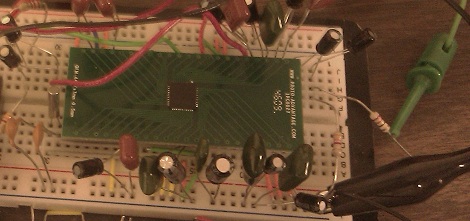
[form], a new user on the Hack a Day forums, was thinking, “what Christmas present i can send a friend, that would be really annoying?” We think he really hit it out of the park with this one. It’s a modified computer speaker that will play “explicit” audio until the power button is pressed 200 times and the light sensor is covered. When this present is unwrapped, the room will fill with sounds not suitable for children, the elderly, or those with heart conditions.

The build is based around an old powered computer speaker. Six Li-ion batteries from an old laptop provide the power, and a very simple circuit pulls sound off an SD card with the help of an ATtiny45.

The schematic for the build looks easy enough, and like a good builder, [form] included the source and HEX files. Sadly (or thankfully), there is no video of the gag gift in action; probably a good thing, because this seems like a great way to lose a friend.

Ask Hackaday: Troll Physics Edition

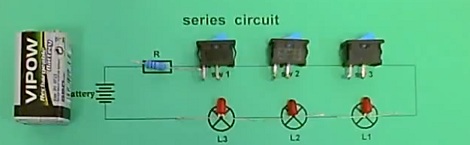
[Martin] sent in two videos he found while cruising the tubes. The first video is a simple circuit with a resistor, three switches, and three LEDs. All the components are soldered together right in front of the camera. When a battery is connected, turning the first switch on makes the first LED light up. Turning the second switch on makes the second LED light up, and the same thing goes for the third switch and LED. Obviously we’re dealing with powers that are incomprehensible with even several cups of coffee.

The second video features the same resistor/switches/LEDs, this time in a parallel circuit. Turning on the first switch makes the first LED light up, and the second switch makes the second LED light up. Truly we are dealing with an expert in troll physics.

This is probably something really benign and uninteresting, but it sure is enough to wake up enough brain cells on a Monday morning. We’re not going to hypothesize, so check out the comments where we expect the correct answer to be.

Continue reading “Ask Hackaday: Troll Physics Edition”

[Jack]’s Solar-powered Clock

Hack A Day’s own [Jack Buffington] finally finished the solar clock he built for the buildlounge.com laser cutter giveaway.

[Jack] has been putting up the build log on his blog, and now the project is finally complete. The clock operates entirely on solar power. Instead of fancy-smanchy electronics, this clock puts a new spin on the very old school sundial. A box outside [Jack]’s house captures sunlight and focuses it onto an array of optical fibers. These fibers transmit the sunlight though the wall and to the face of the clock. Only a portion of the fibers are lit at any one time, and these correspond to the time of day. With a lot of confusing fiber routing, the clock can indicate the time of day by lighting up the clock face.

We covered the nascent beginnings of this project when it was still a glimmer in [Jack]’s eye, and we’ve got to hand it to him. This is a really creative project, and the addition of the ‘daylight savings time lever’ is the icing on the cake. Check out the video after the break for a great explanation of how the clock actually works, and be sure to check out the project on BuildLounge.

Continue reading “[Jack]’s Solar-powered Clock”

Playing With Routers, Vinyl And Music Concrete

When Danish musicians Vinyl Terror and Horror visited [Daniel] and his CNC router at EMS in Sweden, things were sure to get interesting. The band uses heavily modified record players and modified vinyl records to produce strange soundscapes. During their time at EMS, Vinyl Terror and Horror were able to produce some strange vinyl that shouldn’t play on a record, but do.

Most of VTaH and [Daniel]’s work is centered on a CNC router. This soundscape took two records to produce. The spare rectangles were cut from a second record and designed to be press-fit into the host. When the newly assembled record is played, truly bizarre ‘skipping-but-still-playing’ sounds are made. The same process was used on the puzzle piece record the guys made.

The experiments continued by cutting a circle out of a record and gluing it back into place with a different orientation. This idea was taken to its logical conclusion that serves as the exemplar of music concrete.

[Daniel] and Vinyl Terror and Horror came up with a pretty neat spin (HA!) on century-old way of making electronic music, so we’ll give all of them some props. Check out all the videos from VTaH’s time at EMS after the break.

Continue reading “Playing With Routers, Vinyl And Music Concrete”

Tribot Robotics Platform

For a number of children born of geek parents, the WowWee Tribot is sure to make an appearance underneath a Christmas tree this year. By New Year’s, though, this toy will surely make its way to the back of a closet to sit unused until spring cleaning. It’s a shame to let such an interesting robotics platform go to waste, so [haltux] sent in a nice guide to unlocking the motor controller of this talking robot.

The ‘legs’ of the WowWee Tribot have three omnidirectional wheels mounted 120 degrees apart. We’ve seen this drive system before, so getting a pre-built platform out of the toy box is pretty interesting.

[haltux] found three H-bridges inside the Tribot and connected the direction and enable pins for each motor directly to an Arduino. The build was a success, and the new robot platform scurried along the floor. There are also rotary encoders on the Tribot, but these run at 12 Volts. [haltux] said he’ll cover these in a future post, and we’re waiting to see it.

MIDI Synth Arduino Shield

There’s a million and one ways to play around with MIDI and an Arduino. It’s trivial to have a ‘duino spit out a scale to a MIDI keyboard, or even respond to SysEx messages to change a lighting or effects rig. There’s one thing that has eluded MIDI-duino builders, though: implementing a MIDI synthesizer with a DIY shield. It’s a good thing, then, that [Keith] put up a Kickstarter for his AvecSynth project.

[Keith]’s AvecSynth is based around the Dream.fr SAM2195 single chip MIDI synthesizer. It’s a neat little IC that takes in MIDI messages from a sequencer or keyboard and spits out stereo audio. The AvecSynth takes this IC and puts it in a standard Arduino-sized package so building a gigantic light-up, foot-operated piano is now well within the purview of the weekend solder junkie.

While the SAM2195 and AvecSynth doesn’t have fancy subtractive or FM synthesis, it does have the full set of 128 voices in the General MIDI spec. It’s a great project to play around with MIDI, and the price for the DIY kit is right up our alley.

EDIT: [Keith] changed the $20 reward for his Kickstarter to PCB or two SAM2195 chips

Magnetotron Is An Armonica Mellotron Mashup

[Michael] is a huge fan of old media formats. There’s something special about quarter-inch thick 78s, fragile blue cylinders holding music, and thin strips of mylar that preserve the human voice. He’s had an idea for a tape-based instrument for a while, and now that the Magnetotron is complete, we’re in awe of this glass harmonica and Mellotron mashup.

The Magnetotron is a large rotating cylinder that has dozens of strips of audio tape attached to it. The cylinder rotates with the help of a small motor. As the strips of tape rotate in front of him, [Michael] presses two tape heads up to the instrument, making some sort of sound.

Each strip of tape contains a recording of one note, like the venerable Mellotron. Instead of physical keys, the Magnetotron is played in a much more tactile fashion like the glass harmonica. The output of the Magnetotron is interesting with a whole bunch of wow and flutter. Check out the demo of [Michael] playing his instrument at NIME in Brooklyn after the break.

Continue reading “Magnetotron Is An Armonica Mellotron Mashup”