2023 Halloween Hackfest: A Spooky “Severance” Speaker

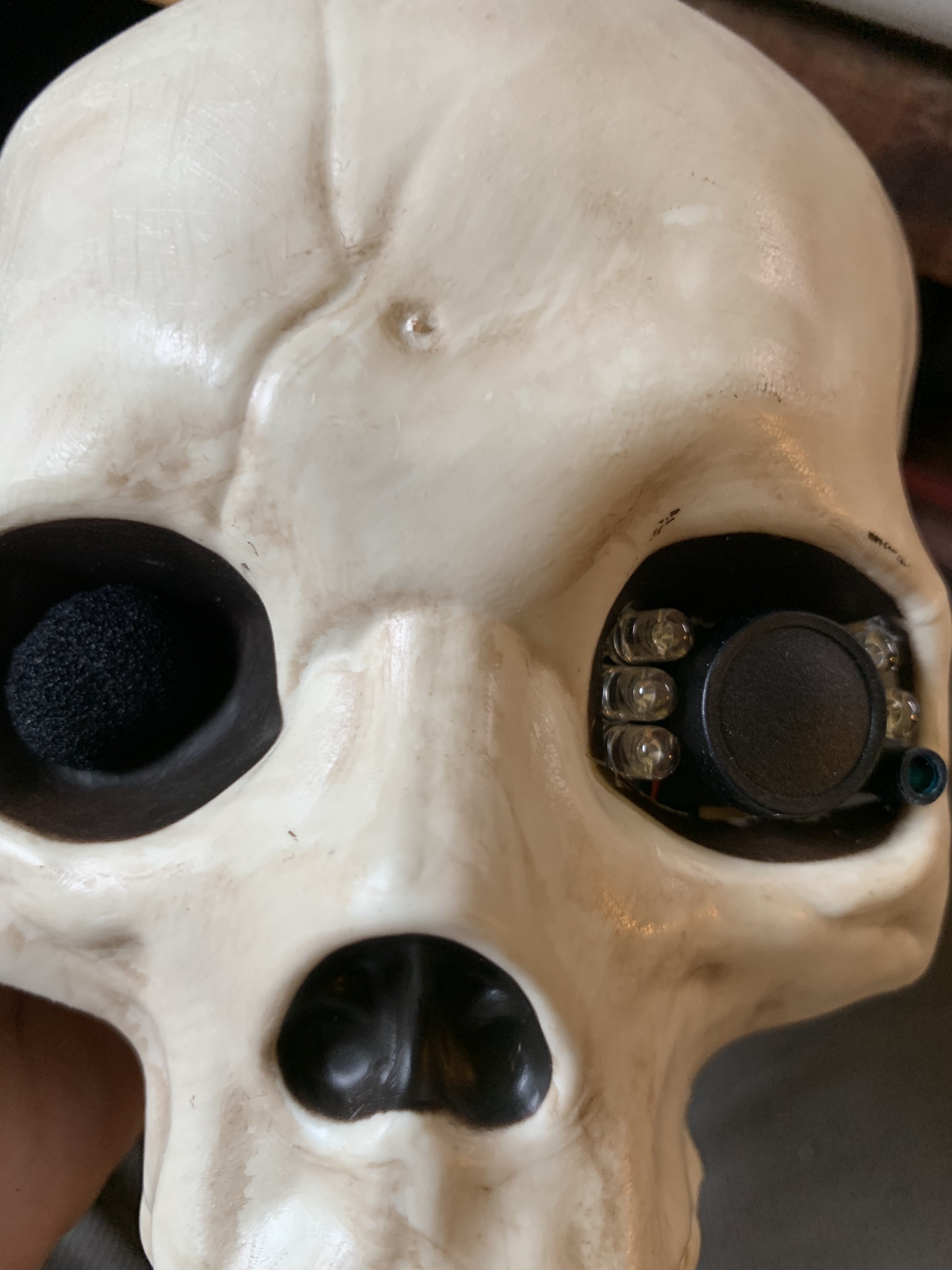
If you know, you know. After becoming fully engrossed in the sci-fi psycho-thriller “Severance“, [Ben Brooks] absolutely needed to have a version of the ominous speaker known as the Board.

This speaker represents the Board, who is the enigmatic governing body of Lumon Industries, the fictional and gigantic biotechnology company featured in the show.

The Board cultivates an air of mystery by rarely speaking, and when it does, it speaks through a single person who paraphrases the Board’s responses. The audio that comes out is a mix of the show’s theme song, pertinent show quotes, and static.

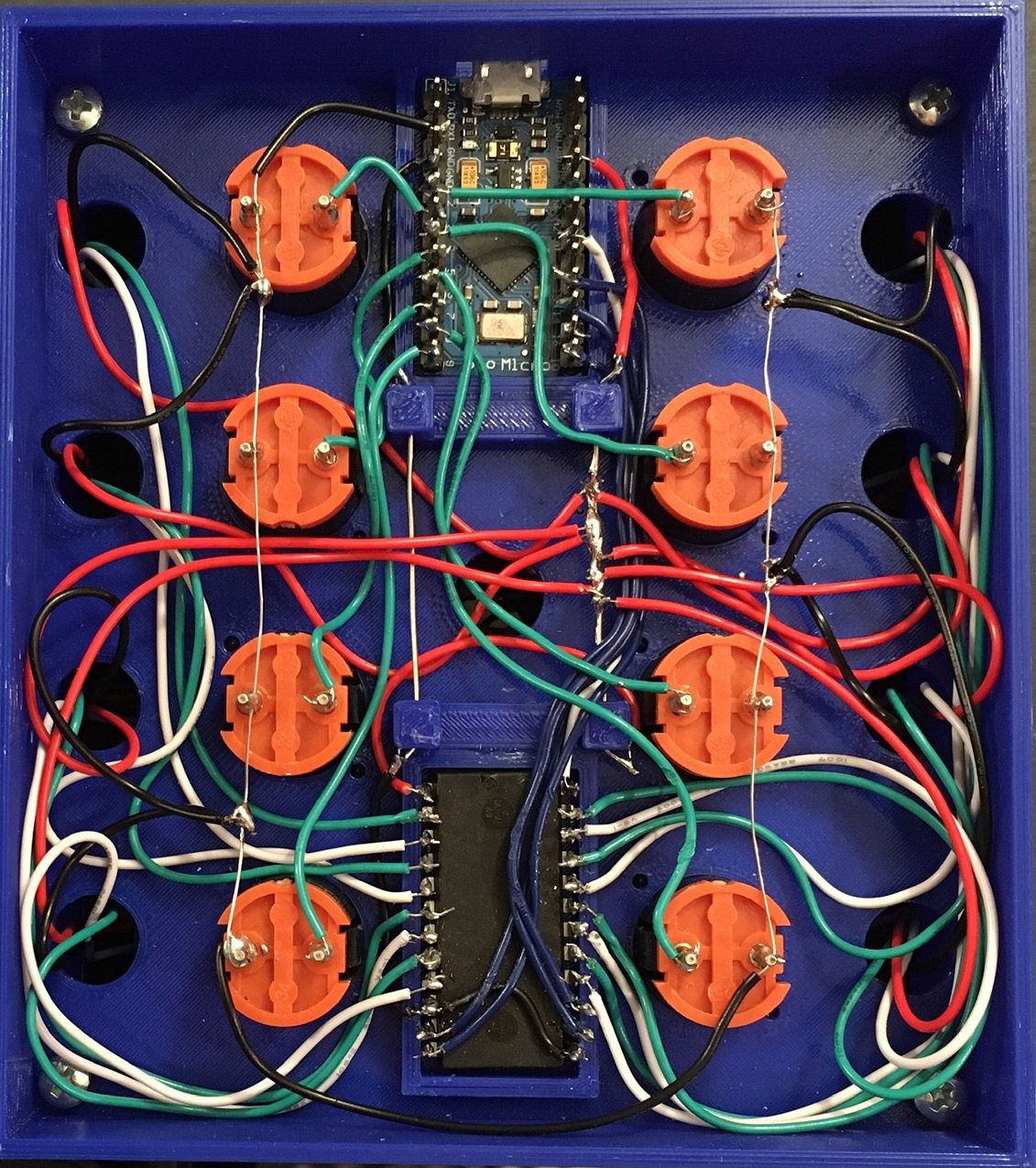
The guts of this freaky little thing are pretty simple — an ESP8266, a DF Player Mini, and a couple of small speakers. In fact, [Ben] had all the parts leftover from a previous home automation project, including the PCB.

Although the original plan was to program it in Arduino, [Ben] ended up using ESPHome to make it easier to integrate with sensors for the big night. Be sure to check out the demo video after the break.

We’ve seen a few fun hacks for the porch this year, including the treat trough of terror and this Ouija robot that out-creeps the real thing.

Continue reading “2023 Halloween Hackfest: A Spooky “Severance” Speaker”

Bone-Shaking Haunted Mirror Uses Stable Diffusion

We once thought that the best houses on Halloween were the ones that gave out full-size candy bars. While that’s still true, these days we’d rather see a cool display of some kind on the porch. Although some might consider this a trick, gaze into [Tim]’s mirror and you’ll be treated to a spooky version of yourself.

Here’s how it works: At the heart of this build is a webcam, OpenCV, and a computer that’s running the Stable Diffusion AI image generator. The image is shown on a monitor that sits behind 2-way mirrored glass.

We really like the frame that [Tim] built for this. Unable to find something both suitable and affordable, they built one out of wood molding and aged it appropriately.

We also like the ping pong ball vanity globe lights and the lighting effect itself. Not only is it spooky, it lets the viewer know that something is happening in the background. All the code and the schematic are available if you’d like to give this a go.

There are many takes on the spooky mirror out there. Here’s one that uses a terrifying 3D print.

2023 Halloween Hackfest: A Spooky Muscle-Brain Interface

What could be better than a Halloween decoration? Something more perennial, or even something that could also be found in a classroom or lab. Something like [Markus Bindhammer]’s spooky muscle-brain interface. It was inspired by a series called “Tales From the Loop” in which a character’s muscle electrical activity is measured in preparation to adjust his prosthetic hand.

Essentially, it does what you think it does: attach the sensors to your muscles, move them around, and watch the brain light up. [Markus] started with a children’s learning kit that involves molding the brain and discs out of red rubbery goop, the vertebrae out of plaster, and then assembling the whole thing.

Instead, [Markus] molded the brain and vertebrae in two-part silicone for durability, and used two-component colored epoxy for the discs.

As the inspiring series is set in the 80s (we assume the brown, dingy 80s and not the fun, neon 80s), [Markus] gave the enclosure/stand an appropriate color scheme. Inside that box there’s an Arduino Pro Micro, a Grove EMG detector, and a mini step-up converter module. And of course, under the brain, there’s a NeoPixel ring. Don’t miss the build and demo video after the break.

There are a ton of things you can do with blinkenlights for Halloween. How about a light-up candy slide, or a bucket that seems them coming?

Continue reading “2023 Halloween Hackfest: A Spooky Muscle-Brain Interface”

Illustrated Kristina with an IBM Model M keyboard floating between her hands.

Keebin’ With Kristina: The One With The Tile-Based Macropad

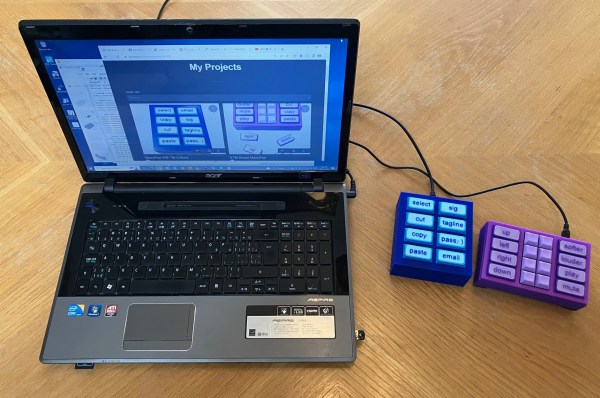
Prolific Hackaday.io member [Michael Gardi] has hit upon the biggest problem with making reprogrammable macro pads — the legend situation. What do you do when the whole point is that the keys can so easily be changed?

There are a couple of options: blank keycaps and memorization, re-legendable keycaps, and little screens instead of keycaps. Surely there has to be another way, and [Michael] has discovered one: a tile-based system of descriptors.

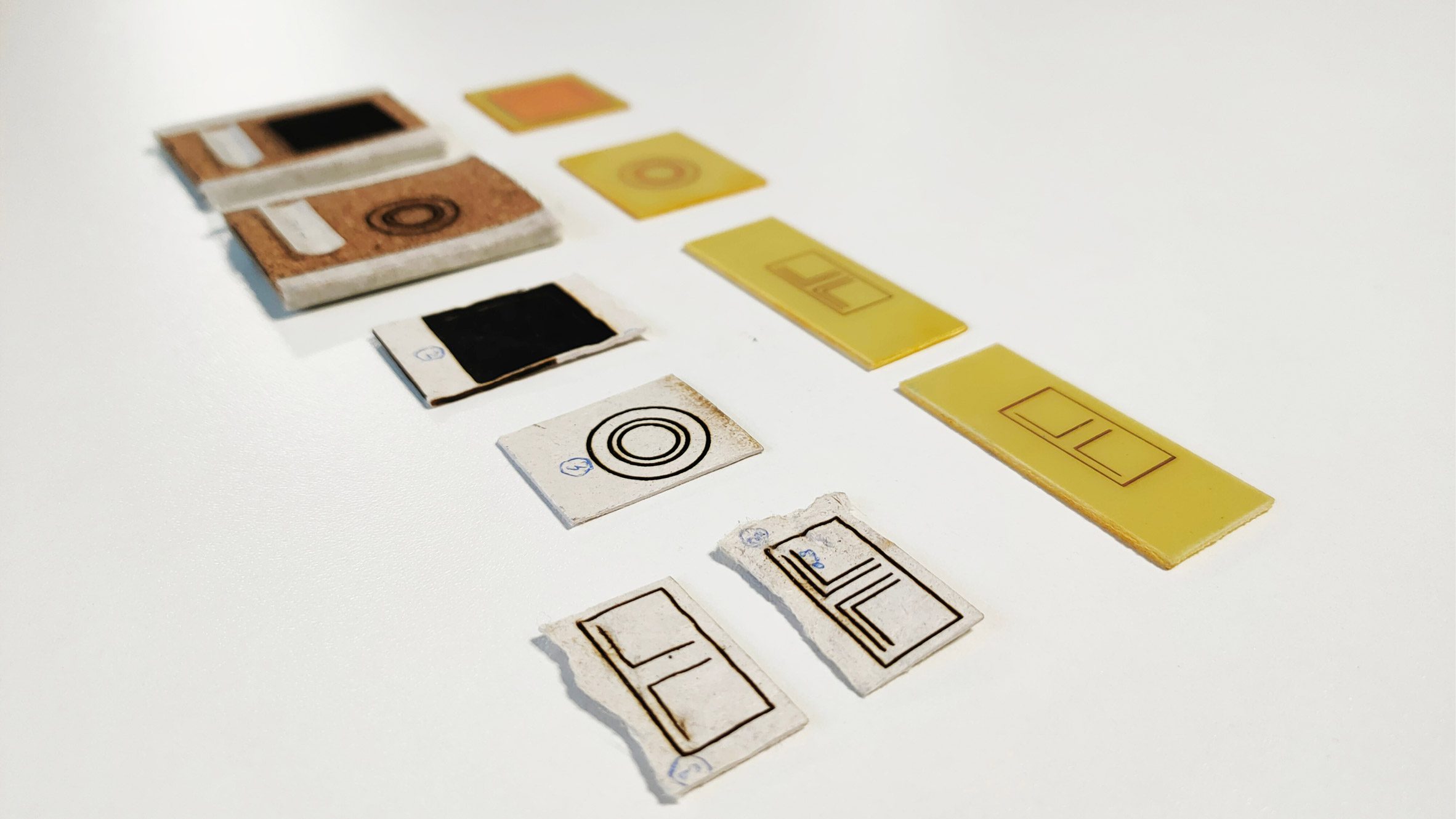
As you can see, the labels are removable 3D-printed tiles that swap out with ease thanks to tiny magnets. But these aren’t just tidy labels. Inserting a new label automatically changes the macro! Each tile holds a “simple numeric value” which maps it to a macro when inserted and detected by a Hall effect sensor. I can’t wait to hear these tiles click in action during a demo video, which I can only hope is forthcoming.

Continue reading “Keebin’ With Kristina: The One With The Tile-Based Macropad”

2023 Halloween Hackfest: Candy Basket Sees You Coming

On Halloween, some people can’t or don’t want to open the door for various reasons. Maybe they have a cat that likes to escape every chance it gets, or maybe their favorite TV show is on during prime trick-or-treating time. Whatever the case, we think it’s perfectly acceptable to leave a bowl of candy outside the door, especially if there are electronics involved.

In this case, the bowl detects trick-or-treaters and candy eaters using an LD2410 60 GHz radar sensor and an RP2040. A light pipe shows orange when a person is detected, and switches over to green as they come closer, as if to say you may have candy now.

Nothing happens after that, but now that we think about it, it would be cool to add an MP3 decoder and a speaker to play a little witch cackle or something once they’ve had a chance to stick their hand in the bucket.

[Mike Kushnerik] actually designed the PCB a few months ago for non-Halloween purposes: some home automation projects. But then they were trying to think of something for Halloween, and this delightful light-up bucket came to mind. In addition to the RP2040 chip, there’s a 128 MB flash chip, a WS2812 LED, and a header for communicating with the radar sensor over UART. Be sure to check out the brief demo video after the break.

If you’d like to stand outside and give out candy, at least send it down a light-up slide or something.

Continue reading “2023 Halloween Hackfest: Candy Basket Sees You Coming”

This 3D Printable Soldering Air Filter Really Sucks

If you solder (and we know you do), you absolutely need ventilation, even for that lead-free stuff. Fortunately, [tinyboatproductions] has gotten into air quality lately and is here to help you with their snappy 3D printed air-filtering design.

At the heart of this build is a 120 mm notoriously-quiet Noctua fan coupled with a carbon filter. It does what you’d think — position the fan the right way and it sucks the air through the filter, which catches all those nasty particles.

The only problem is that the Noctua uses PWM, so there’s no governing it with a just potentiometer. To get around this, [tinyboatproductions] introduced an Arduino Nano and a buck converter, both of which were admittedly a bit overkill. Now the speed can be controlled with a pot.

Once control of the fan was sorted, [tinyboatproductions] decide to add an OLED display to show the fan speed and power condition, which is a nice touch. Be sure to check out the build video after the break.

If this doesn’t have quite enough features for you, here’s one that’s battery powered.

Continue reading “This 3D Printable Soldering Air Filter Really Sucks”

Crabapplepad Folding Keyboard Is Actually Pretty Sweet

[Sergei Silnov] was quite attached to the Microsoft Natural Ergonomic 4000 keyboard, an updated version of their Natural keyboard that brought so many into the split fold. But once [Sergei] started writing notes in coffee shops, it was time for something portable.

The trouble with many portable keyboards, especially folding ones, is that they’re not often comfortable to type on. However, the Crabapplepad, a sleek, elegant offering, looks as though it begs to differ.

[Sergei] truly thought of everything and packed it into this 2cm thick wonder. There’s a little kickstand to hold your phone, or you can just throw an Apple trackpad between the halves and it magnetically attaches. Inside there’s a Seeed Studio XIAO nRF52840, and the switches are the extremely thin and hard-to-find Kailh PG1425 X, a sweet-looking scissor switch.

The only problem with X-switches is that there is only one type of keycap for them at the moment, and there aren’t any homing bums for F and J. To get around this, [Sergei] designed some 3D-printed frames to go around the keycaps and make them more distinct. Yes, this beauty it is open source, so go forth and be comfortable in absolute style. Don’t forget to check out the demo after the break.

To be honest, there once was a pretty good folding keyboard — the Palm Portable. Don’t worry; someone made a Bluetooth adapter for them.

Continue reading “Crabapplepad Folding Keyboard Is Actually Pretty Sweet”