The Biohacking Movement And Open Source Insulin

In March of 2014, I knew my eight year old daughter was sick. Once borderline overweight, she was now skeletally thin and fading away from us. A pre-dawn ambulance ride to the hospital gave us the devastating news – our daughter had Type 1 diabetes, and would be dependent on insulin injections for the rest of her life.

This news hit me particularly hard. I’ve always been a preparedness-minded kind of guy, and I’ve worked to free myself and my family from as many of the systems of support as possible. As I sat in the dark of the Pediatric ICU watching my daughter slowly come back to us, I contemplated how tied to the medical system I had just become. She was going to need a constant supply of expensive insulin, doled out by a medical insurance system that doesn’t understand that a 90-day supply of life-saving medicine is a joke to a guy who stocks a year supply of toilet paper. Plus I had recently read an apocalyptic novel where a father watches his 12-year old diabetic daughter slip into a coma as the last of her now-unobtainable insulin went bad in an off-grid world. I swore to myself that I’d never let this happen, and set about trying to find ways to make my own insulin, just in case.

Continue reading “The Biohacking Movement And Open Source Insulin”
One Way To Recharge Alkaline Batteries

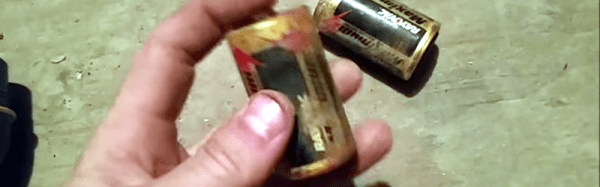
It says it right on the side of every alkaline battery – do not attempt to recharge. By which of course the manufacturer means don’t try to force electrons back into the cell. But [Cody] figured he could work around that safety warning chemically, by replacing the guts of an alkaline dry cell.

The batteries in question were certainly old, gnarly looking, and pretty dead – [Cody] barely got a reading on his multimeter. As you can see after the break, he cleaned off the exterior corrosion and did a quick teardown of the dry cells, removing the remains of the zinc anode, now in the form of zinc oxide paste looking very much like what you’d slather on your nose before a day at the beach. He filled the resulting cavity with a putty of zinc dust, freshened up the electrolyte charge with a squirt of 20% potassium hydroxide, sealed up the cell with a little silicone caulking, and put the recycled cell to the test. Result: 1.27 volts. Not too shabby.

Continue reading “One Way To Recharge Alkaline Batteries”

Field Expedient Stick Welder From Cordless Tool Battery Packs

The self-proclaimed and actual “smartest idiot on YouTube” is back with another entry from the “don’t try this at home” file. [AvE] recently did a teardown of a new DeWalt cordless drill-driver, and after managing to get everything back together, he was challenged by a viewer to repurpose the 20V battery packs into an impromptu stick welder.

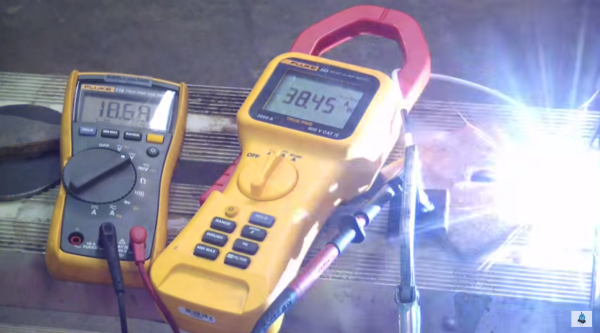
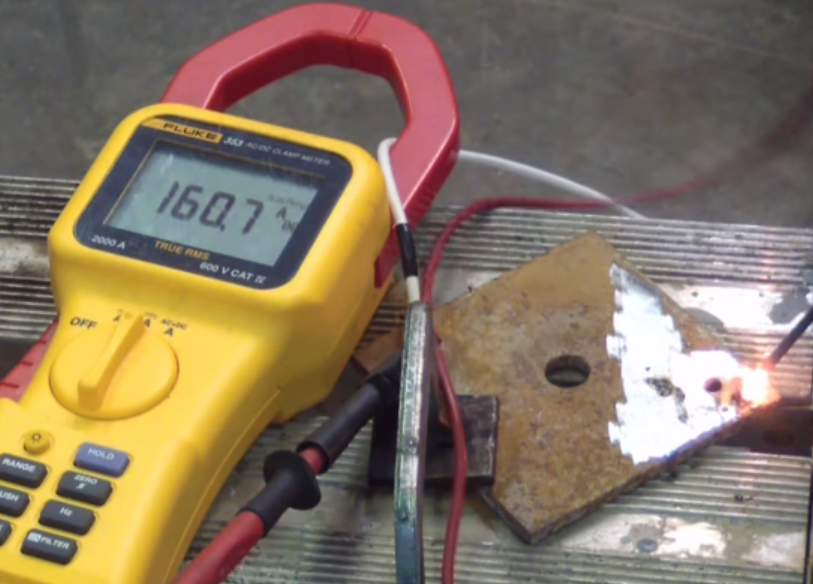
AvE_short[AvE] delivered – sort of. His first attempt was with the two battery packs in parallel for higher current, but he had trouble striking an arc with the 1/8″ rod he was using. A freeze-frame revealed an incredible 160A of short-circuit current and a welding rod approaching the point of turning into plasma. Switching to series mode, [AvE] was able to strike a reasonable arc and eventually lay down a single splattery tack weld, which honestly looks better than some of our MIG welds. Eventually his rig released the blue smoke, and the postmortem teardown of the defunct packs was both entertaining and educational.

While we can’t recommend destroying $100 worth of lithium-ion battery packs for a single tack weld, it’s interesting to see how much power you’re holding in the palm of your hand with one of these cordless drills. We saw a similar technique a few years back in a slightly more sophisticated build; sadly, the YouTube video in that post isn’t active anymore. But you can always stay tuned after the break for the original [AvE] DeWalt teardown, wherein blue smoke of a different nature is released.

Continue reading “Field Expedient Stick Welder From Cordless Tool Battery Packs”

Hackaday Prize Entry: Online Bone Marrow Cytometry Aid

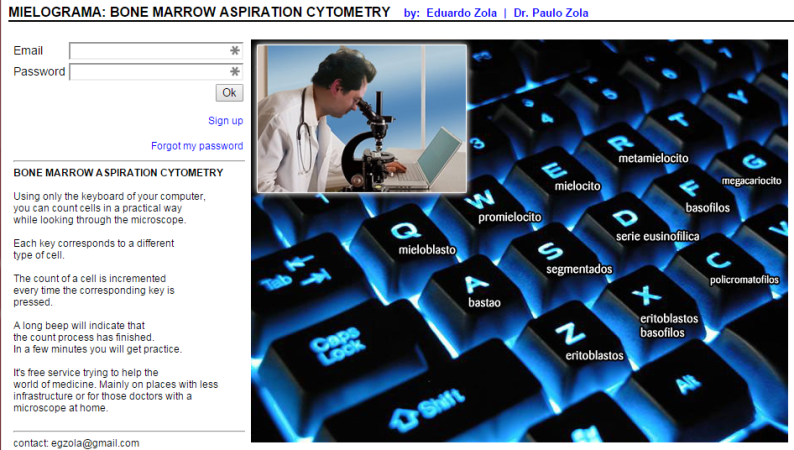
Simple blood tests can lead a doctor toward a diagnosis of blood cancers, like leukemia, lymphoma and myeloma, but to really see what’s going on, he or she needs to go to the source of the problem: the bone marrow. Examining maturing blood cells from the marrow with a microscope is an important step in staging the disease and developing a plan for treatment, but it’s a tedious and error-prone process that requires a doctor to classify and tally a dozen or so different cells based on their size, shape and features. Automated systems like flow cytometry and image analysis software can help, but in an austere environment, a doctor might not have access to these. Luckily, there’s now an on-line app to assist with bone marrow cytometry.

Thanks to [Eduardo Zola], a doctor can concentrate on classifying cells without looking up from the microscope, and without dictating to an assistant. Keys are assigned to the different cell morphologies, and a running total of each cell type is kept. With practice, the doctor should be able to master the keying for the various cells; we suspect the generation of physicians that grew up with the WASD keying common in PC-based gaming might have a significant advantage over the older docs when it comes to learning such an app.

[Eduardo]’s app seems like a simple way to improve on an important medical procedure, and an enabling technology where access to modern instrumentation is limited. To that end, one area for improvement might be a standalone app that can run on a laptop without internet access, or perhaps even a version that runs on a smart phone. But even as it is, it’s a great entry for the 2015 Hackaday Prize.

The 2015 Hackaday Prize is sponsored by:

This Little Amiga Still Runs School District’s HVAC

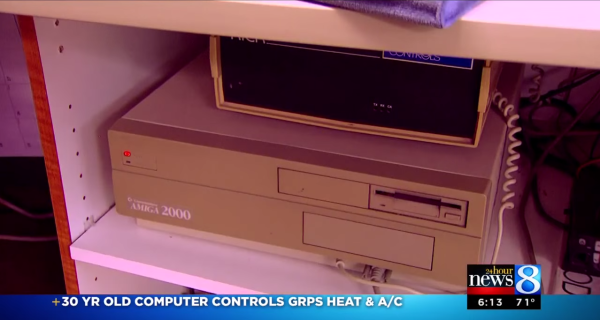
It’s the rare tech worker that manages a decade in any one job these days – employee loyalty is just so 1980s. But when you started your career in that fabled age, some of the cultural values might have rubbed off on you. Apparently that’s the case for an Amiga 2000 that’s been on the job since the late ’80s, keeping the heat and AC running at Grand Rapids Public Schools (YouTube video link.)

The local news story is predictably short on details and pushes the editorial edge into breathless indignation that taxpayer dollars have somehow been misspent. We just don’t see it that way. “If it ain’t broke, don’t fix it,” is somewhat anathema to the hacker ethos. After all, there’s no better time to “fix” something than when it’s working properly and you can tell if you’ve done something wrong. But keeping an important system running with duct tape and wire ties is also part of the hacker way, so we applaud [Tim Hopkins] and his colleagues at the GRPS Facilities and Operations Department for their efforts to protect the public purse. And a round of applause is also due not only to the Amiga design team, who produced a machine that can run for nearly three decades, but also to Johnson Controls, whose equipment – apparently a wide area radio modem linking the HVAC systems in the district’s buildings – is being run by The Little Amiga That Could. Sounds like they built stuff to last way back when.

So when this machine is finally retired, here’s hoping they give it a good sendoff. Perhaps we’ll see it with some other Amigas at some future Vintage Computer Festival. Or maybe it’ll be one of those active retirees and start a career in the music industry.

[Thanks Thinkerer!]

Hardware Store CNC Machine Is Remarkably Precise

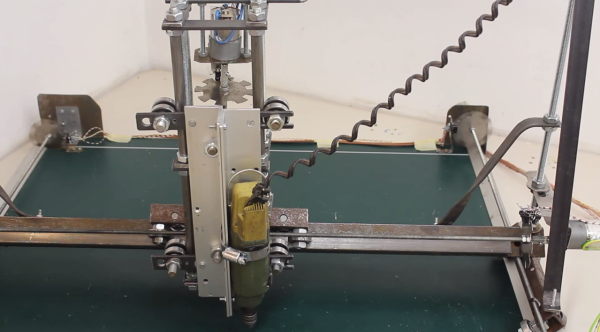
A vise, a hacksaw and file, some wrenches – the fanciest tools [HomoFaciens] uses while building his DIY hardware store CNC machine (YouTube link) are a drill press and some taps. And the bill of materials for this surprisingly precise build is similarly modest: the X- and Y-axes ride on cheap bearings that roll on steel tube stock and aluminum angles; drives are threaded rods with homemade encoders and powered by small brushed DC gear motors; and the base plate appears to be a scrap of ping-pong table. The whole thing is controlled by an Arduino and four H-bridges.

The first accuracy tests using a ball point pen for tooling are quite impressive. [HomoFaciens] was able to draw concentric circles eyeball-accurate to within a few tenths of a millimeter, and was able to show good repeatability in returning to a point from both directions on both the X- and Y-axis. After the pen tests, he shows off a couple of other hardware store tooling options for the Z-axis – a Proxxon rotary tool with a burr for engraving glass; a soldering iron for cutting styrofoam; and a mini-router that works well enough to cut some acrylic gears.

We’re impressed by this build, which demonstrates that you don’t need a fancy shop to build a CNC machine. If you’re getting the itch to jump into the shallow end of the CNC pool, check out some of the builds we’ve featured before, like this PVC CNC machine, or this $250 build.

[Thanks, ThunderSqueak]

Home Brew Supercapacitor Whipped Up In The Kitchen

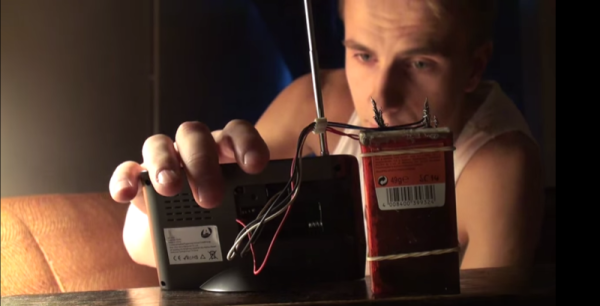
[Taavi] has a problem – a wonky alarm clock is causing him to repeatedly miss his chemistry class. His solution? Outfit his clock radio with a supercapacitor, of course! But not just any supercapacitor – a home-brew 400 Farad supercap in a Tic Tac container (YouTube video in Estonian with English subtitles.)

[Taavi] turns out to be quite a resourceful lad with his build. A bit of hardware cloth and some stainless steel from a scouring pad form a support for the porous carbon electrode, made by mixing crushed activated charcoal with epoxy and squeezing them in a field-expedient press. We’ll bet his roommates weren’t too keen with the way he harvested materials for the press from the kitchen table, nor were they likely thrilled with what he did to the coffee grinder, but science isn’t about the “why?”; it’s about the “why not?” Electrodes are sandwiched with a dielectric made from polypropylene shade cloth, squeezed into a Tic Tac container, and filled with drain cleaner for the electrolyte. A quick bit of charging circuitry, and [Taavi] doesn’t have to sweat that tardy slip anymore.

The video is part of a series of 111 chemistry lessons developed by the chemistry faculty of the University of Tartu in Estonia. The list of experiments is impressive, and a lot of the teaser stills show impressively exothermic reactions, like the reduction of lead oxide with aluminum to get metallic lead or what happens when rubidium and water get together. Some of this is serious “do not try this at home” stuff, but there’s no denying the appeal of watching stuff blow up.

As for [Taavi]’s supercap, we’ve seen a few applications for them before, like this hybrid scooter. [Taavi] may also want to earn points for Tic Tac hacks by pairing his supercapacitor with this Tic Tac clock.

[Thanks, Lloyd!]