Inexpensive Reading Glasses Become Stereoscope

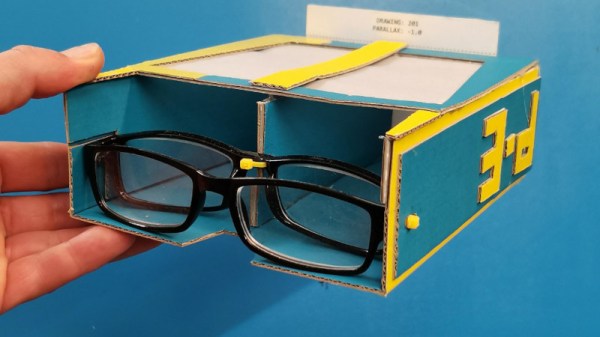
It’s an unfortunate consequence of growing older, that no longer are you able to read the print on a SOT-23 package or solder a QFN without magnification. Your eyes inexorably start to fail, and to have any hope of continuing a set of reading glasses is required. We have this in common with [Niklas Roy], who noticed while shopping for cheap reading glasses that their lenses were of surprisingly good quality. The result of this observation was a stereoscope made from card and a few euros worth of eyewear.

In the tradition of [Niklas]’ work it has a high level of attention to detail, which manifests itself here in a parametric web-based template generator to produce a result tailored to your glasses. It’s a fairly straightforward trapezoid shape, with a compound lens made from two sets of glasses drilled and held back-to-back with zip ties.

It served as a project for a group of children, and of course because stereo cameras are a relative rarity he also investigated taking his own pictures by moving a smartphone for left and right eye perspectives. It seems the youngsters had a lot of fun.

These lenses hadn’t come up on our radar until now, but like many goodies in a dollar store they’re certainly something to take a look at. Maybe not as a stereoscope for everyone though, some of us can’t see what the fuss is about.
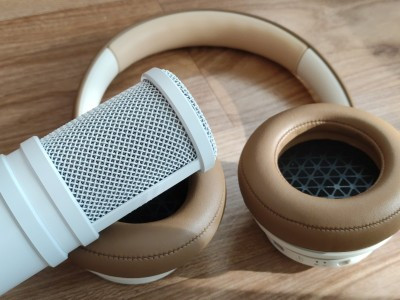
Equalize Your Listening With HiFiScan

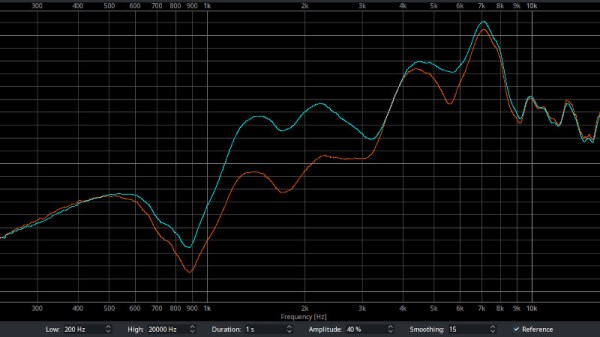
Audiophiles will go to such extents to optimize the quality of their audio chain that they sometimes defy parody. But even though the law of diminishing returns eventually becomes a factor there is something in maintaining a good set of equipment. But what if your audio gear is a little flawed, can you fix it electronically? Enter HiFiScan, a piece of Python software to analyse audio performance by emitting a range of frequencies and measuring the result with a microphone.

This is hardly a new technique, and it’s one which PA engineers have used for a long time to tune out feedback resonances, but an easy tool bringing it to the domestic arena is well worth a look. HiFiScan is a measuring tool so it won’t magically correct any imperfections in your system, however it can export data in a format suitable for digital effects packages.

Naturally its utility is dependent on the quality of the hardware it’s used with, but the decent quality USB microphone used in the examples seems to give good enough results. We see it used in a variety of situations, of which perhaps the most surprising is a set of headphones that have completely different characteristics via Bluetooth as when wired.

If audio engineering interests you, remember we have an ongoing series: Know Audio.

The Hunt For A Rare Version Of IBM’s OS/2

Slovenian OS/2 Warp 4 was a popular OS choice in that European country back in the day, but could the Slovenian Computer Museum lay their hands on a copy? In that question lies a bit of detective work and some luck.

There’s an old gag, about how this is finally the year of the Linux desktop. But oddly back in the ’90s it almost seemed possible, because alongside Microsoft Windows there were a host of other players that just might have become challengers. Foremost among them was IBM’s OS/2, a desktop PC operating system that could very much give Windows a run for its money. It could even run 16-bit Windows applications thanks to the code-sharing deal between the two companies dating back to the DOS days. Big Blue were so anxious to take their OS into new markets that they localized it into languages which Microsoft hadn’t touched, of which Slovenian was one.

But a couple of decades later, could a copy of this rare operating system version be found? While it may still lurk on a dusty shelf in an IT office somewhere it’s proved elusive, and online sources have dried up. The quest for it makes interesting reading for anyone with an interest in that period of retrocomputing, and finally ended up at the Slovenian company which had performed the localisation. This resulted in a copy of the OS, but not of the media, box, or paperwork. It yielded the fascinating discovery that IBM had localized the Windows 3.1-derived components as well as their own code, something that Microsoft had never done.

So do you have a boxed Slovenian OS/2 Warp 4 on a dusty shelf? Someone at the Slovenian Computer History Museum might like to see it. Meanwhile it’s a surprise to find that OS/2 is still supported.

Finally We Can Watch The Deere Cracking Def Con Talk

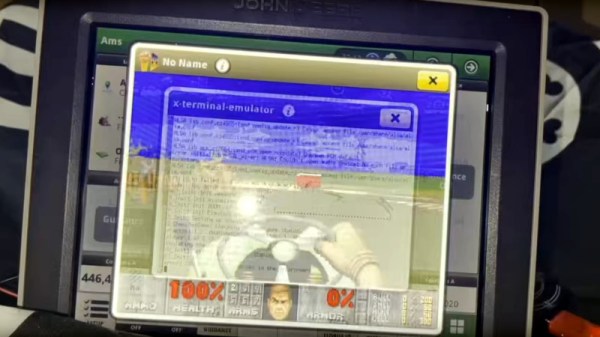
A few weeks ago, some tantalizing social media posts emerged from a Def Con talk, in which [Sick Codes] broke into the screen control unit for a John Deere tractor live on stage, and proceeded to play a special Deere-themed DOOM level upon it. At the time there was nothing more to go on, but we’re pleased to find out that the whole talk has been put online.

The talk starts with an introduction to the topic, to the basics of the control units within the machine and to the various different ages of Deere screen unit. We find that the earlier machines, which are still at work on farms worldwide, rely on outdated Windows CE versions, though the very latest screens run a Linux variant.

It’s one of these last screens to which he turns his attention, and we’re treated to an in-depth look at some of its secrets. After a lot of dead ends and learning exercises the final result is distilled into a pogo pin adapter for the hardware part, and a simple enough cron job to bypass one of Deere’s defenses by keeping the filesystem writable so a file can be updated. There’s a bit more detail about the special DOOM level too, as a special bonus.

You can see our original mention of this talk, or read some of our past Deere coverage.

Continue reading “Finally We Can Watch The Deere Cracking Def Con Talk”

London Bridge Has Fallen — By Radio

One of the global news stories this week has been the passing of the British monarch, Queen Elizabeth II. Since she had recently celebrated 70 years on the throne, the changing of a monarch is not something that the majority of those alive in 2022 will have seen. But it’s well known that there are a whole suite of “London Bridge has fallen” protocols in place for that eventuality which the various arms of the British government would have put in motion immediately upon news from Balmoral Castle. When it became obvious that the Queen’s health was declining, [Hackerfantastic] took to the airwaves to spot any radio signature of these plans. [Update 2022-09-11] See the comments below and a fresh Tweet to clarify, it appears these were not the signals they were at first suspected to be.

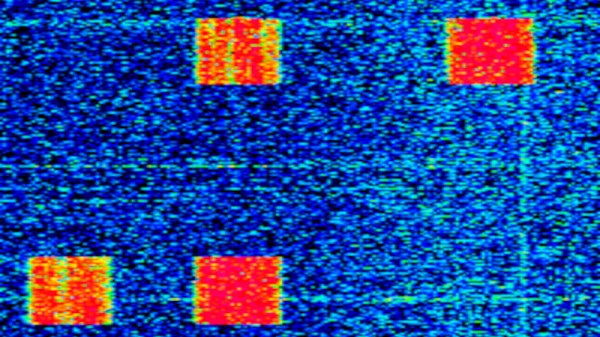
What he found in a waterfall view of the 4 MHz military band was an unusual transmission, a set of strong QPSK packets that started around 13:40pm on the 8th of September, and continued on for 12 hours before disappearing.  The interesting thing about these transmissions is not that they were a special system for announcing the death of a monarch, but that they present a rare chance to see one of the country’s Cold War era military alert systems in action.

It’s likely that overseas embassies and naval ships would have been the intended recipients and the contents would have been official orders to enact those protocols, though we’d be curious to know whether 2022-era Internet and broadcast media had tipped them off beforehand that something was about to happen. It serves as a reminder: next time world news stories happen in your part of the world, look at the airwaves!

2022 Cyberdeck Contest: The Folding Mini-Deck

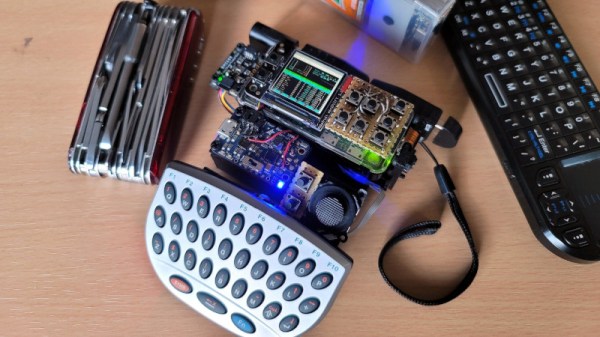
The trend for cyberdecks has brought us many takes on the home-made portable computers, but it’s fair to say that some of them can be rather unwieldy. This is not an accusation you can point at [Smeef] with the Mini-Deck though, because its Raspberry Pi Zero, Adafruit miniature display, and tiny keyboard make the whole unit able to fit in the palm of a hand. We’re not sure we’ve seen one so compact!

The most obvious feature is the keyboard, it’s a DreamGear MiniKey miniature USB keyboard. It doesn’t have all the useful buttons a PC board has, so there’s also a separate set of buttons to cover those. Then there’s an analog stick connected to an Arduino Pro Micro that takes the functionality of a mouse, and an Adafruit Mini PiTFT 1.3″ Display. While a fully-functional display for the Pi, we do wonder if this tiny screen might actually be a bit too tiny to be practical. Power for the unit comes via an 18650 battery, which also functions as a pin for a folding mechanism.

The result is something that looks, feels, and works like a cyberdeck, but all in miniature. It might be a stretch to write a Hackaday piece on a machine like it, but we’re guessing that merely having built something like this is cool enough in itself. Certainly it’s considerably smaller than previous contenders for the smallest build.

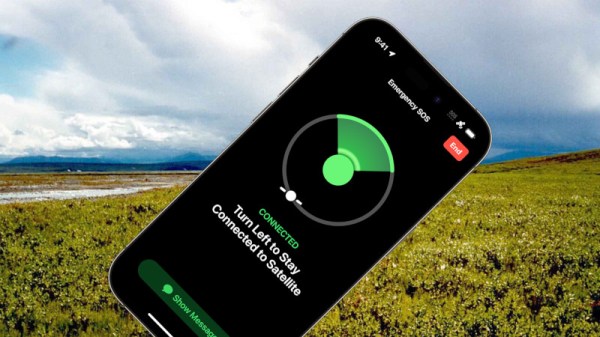
Apple’s Satellite Emergency Texts, How Do They Work?

There is always some hype surrounding an Apple product announcement, and while maybe it’s not in the same league as those for the original iPod or iPhone, their iPhone 14 model will include emergency texting by satellite has generated quite a bit of coverage. It’s easy to find a lot about the system from the software end in terms of its interface and even Apple’s use of compression, but what about the radio side? Whose satellite constellation are they using, and how does it work?

As has been widely reported, their communication partner for the service is Globalstar, a provider of satellite data services that like their competitor Iridium have their origins in the 1990s when satellite phones were briefly seen as the Next Big Thing. They have a 24-satellite constellation, and they sell a range of off-the-grid voice, data, paging, tracking, and IoT connectivity services. The Apple emergency texting looks a lot like Globalstar’s Spot texting service. It’s only available in North America for now, we’re guessing because the satellites aren’t smart relays but straightforward transponders, and the network lacks sufficient ground station coverage outside that region.

With all the talk about low-earth-orbit connectivity surrounding services such as SpaceX’s Starlink it’s a bit unexpected to find ourselves back with a satellite constellation using 1990s technology. But we can see that as well as a major win for Globalstar as their service begins to look outdated by comparison to Starlink, it’s a perfect match for Apple in not requiring a complex ground station for low-bandwidth text messages. We expect that there will be some form of exclusivity in the deal, so it will be interesting to see how the larger Android vendors respond.

It’s worth noting, we’ve looked at satellite IoT services before.

Wilderness image: U.S. Fish and Wildlife Service, Public Domain.