Usually when we post a Fail Of The Week, it’s a heroic tale of a project made with the best of intentions that somehow failed to hit its mark. The communicator that didn’t, or the 3D-printed linkage that pushed the boundaries of squirted plastic a little bit too far. But today we’re bringing you something from a source that should be above reproach, thanks to [Boldport] bringing us a Twitter conversation between [Stargirl] and [Ticktok] about a Texas Instruments datasheet.
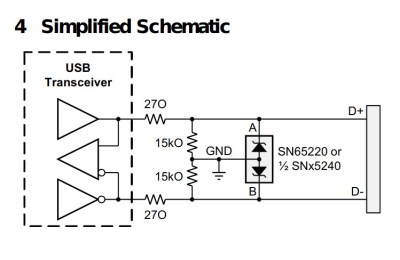
The SN65220 schematic
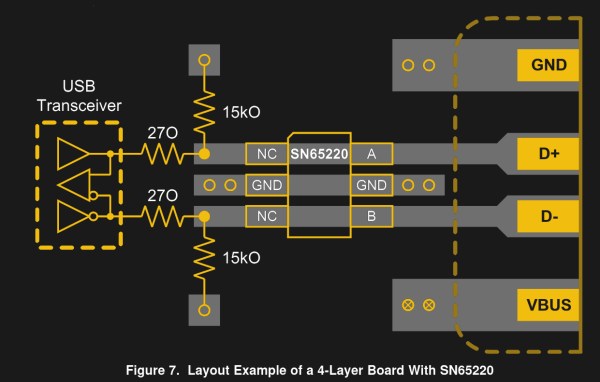
The SN65220 is a suppressor chip for USB ports, designed to protect whatever the USB hardware is from voltage spikes. You probably have several of them without realising it, the tiny six-pin package nestling on the PCB next to the USB connector. Its data sheet reveals that it needs a resistor network between it and the USB device it protects, and it’s this that is the source of the fail.
There are two resistors, a 15kO and a 27O, 15k ohms, and 270 ohms, right? Looking more closely though, that 27O is not 270 with a zero, but 27O with a capital “O”, so in fact 27 ohms.
The symbol for resistance has for many decades been an uppercase Greek Omega, or Ω. It’s understood that sometimes a typeface doesn’t contain Greek letters, so there is a widely used convention of using an uppercase “R” to represent it, followed by a “K” for kilo-ohms, an “M” for mega-ohms, and so on. Thus a 270 ohm resistor will often be written as 270R, and 270 kilo-ohm one as 270K. In the case of a fractional value the convention is to put the fraction after the letter, so for example 2.7kilo-ohms becomes 2K7. For some reason the editor of the TI datasheet has taken it upon themselves to use an uppercase “O” to represent “Ohms”, leading to ambiguity over values below 1 kilo-ohm.
We can’t imagine an engineer would have made that choice so we’re looking towards their publishing department on this one, and meanwhile we wonder how many USB devices have gone to manufacture with a 270R resistor in their data path. After all, putting the wrong resistor in can affect any of us.
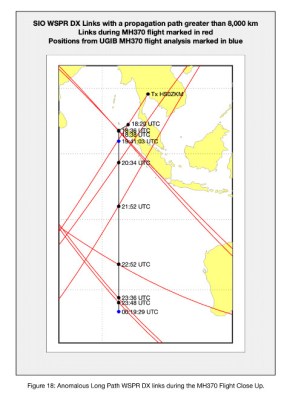
The disappearance of Malaysia Airlines flight MH370 after an unexplained course change sent it flying south over the Indian Ocean in March 2014 still holds the mystery of the wreck’s final location. There have been a variety of efforts to narrow down a possible search area over the years, and now we have news of a further angle from an unexpected source. It’s possible that the aircraft’s path could show up in radio scatter detectable as anomalously long-distance contacts using the amateur radio WSPR protocol.
WSPR is a low-power amateur radio mode designed to probe and record the radio propagation capabilities of the atmosphere. Transmit beacons and receiving stations run continuously, and all contacts however fleeting are recorded to an online database. This can be mined by researchers with an interest in the atmosphere, but in this case it might also provide clues to the missing airliner’s flightpath. By searching for anomalously long-distance WSPR contacts whose path crosses the expected position of MH370 it’s possible to spot moments when the aircraft formed a reflector for the radio waves. These contacts can then either confirm positions already estimated using other methods, or even provide further course points. It’s an impressive demonstration of the unexpected data that can lurk in a trove such as the WSPR logbook, and also that while messing about on the airwaves the marks we leave behind us can have more benefit than simply bragging rights over the DX we’ve worked.
A story that passed almost unnoticed was that the Coca-Cola company plan to run a limited trial of paper bottles. Wait, paper for a pressurized beverage? The current incarnation still uses a plastic liner and cap but future development will focus on a “bio-based barrier” and a bio composite or paper cap tethered to the vessel.
Given that plastic pollution is now a major global concern this is interesting news, as plastic drinks bottles make a significant contribution to that problem. But it raises several questions, first of all why are we seemingly unable to recycle the bottles in the first place, and given that we have received our milk and juice in paper-based containers for decades why has it taken the soda industry so long?
Plastic soft drink bottles are made from Polyethylene terephthalate or PET, the same polyester polymer as the one used in Dacron or Terylene fabrics. They’re blow-moulded, which is to say that an injection-moulded preform something like a plastic test tube with a screw top fitting is expanded from inside in a mould by compressed gas. As anyone who has experimented with bottle rockets will tell you, they are immensely strong, and as well as being cheap to make and transport they are also readily recyclable when separated from their caps.
There was a time when a Vector Network Analyser or VNA was the type of instrument that cost as much as a very fancy car or even a small house. The advent of commodity semiconductors that perform at high RF frequencies coupled with microcontrollers powerful enough to handle the data acquisition and processing might not yet have put those high-perfomance instruments within reach, but at our end of the market it’s opened the possibilities for some useful yet affordable devices. A fresh contender comes from [Jankae], whose LibreVNA tops out at 6 GHz and shows some significant attention to design detail that puts it above some of the budget offerings.
At its heart is the versatile Si5351 multi-way clock generator, accompanied by a pair of MAX2871 phase-locked-loop chips for the higher frequency local oscillators. A switched bank of low-pass filters take care of local oscillator harmonics, and in the receive chain there are ADL5081 mixers feeding a dual conversion IF running at 70 MHz and then 300 kHz. Finally the ADCs are Microchip’s MCP3313, and all is kept in sync by an FPGA and an STM32G431 microcontroller. The main data proccessing is offloaded to a host computer, with a software package and GUI able to be compiled on Windows, Linux, and OSX.
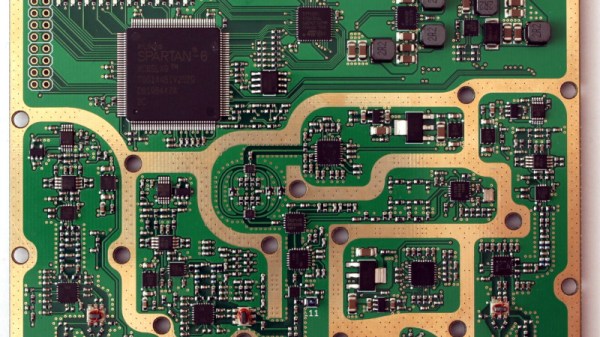
The PCB shows the attention to detail, not least in the power supply arrangements, with every major component receiving its own regulator to ensure no RF makes it down the power rails. It’s clear that a properly made LibreVNA won’t be as cheap as some of its rivals, but we think the corresponding performance hike would make the extra cost worthwhile.
There’s a document I had to sign to wrap up a community responsibility in rural Oxfordshire. At the bottom, dotted lines for signature and date. My usual illegible scrawl for a signature, and scribble in the date below it. Then there’s the moment when the lady handling the form scans it with a puzzled face for a minute, before accepting it with a smile. She’s just been ISO’d!
I’m telling you, you’ve got Pi Day wrong. Evan Shelhamer, CC BY 2.0.
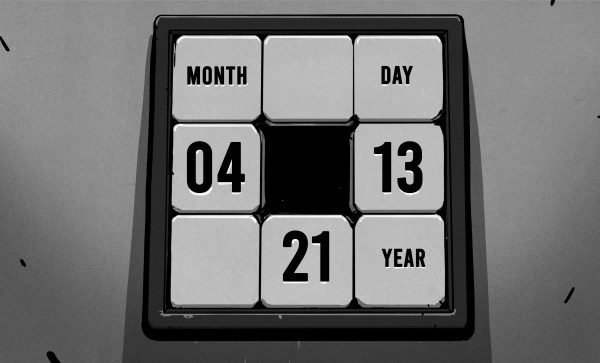
Where I come from in England, it’s the norm to represent dates in ascending order: day, month, year. Thus the 4th of March 2021 becomes 04/03/2021 when written down on a form. This is entirely logical, and makes complete sense given the way a date is said aloud in English and other languages.
Meanwhile in America it’s the norm to represent dates in a different manner: month, day, year. Thus March 4th, 2021 becomes 03/04/2021 when written down on a form. This is also entirely logical, and makes complete sense given the way dates are pronounced in American English.
As someone whose job entails crossing the Atlantic in linguistic terms, I am frequently confused and caught out by this amusing quirk of being divided by a common language. Is 03/04/2021 the 3rd of April or March 4th? “Why can’t Americans use a logical date format!” I cry as in a distant transatlantic echo I hear my friends over there bemoaning our annoying European ways. It’s doubtful that this divergence has caused any satellites to crash, but it sure can be annoying.
Confusing Everyone For Over Three Decades
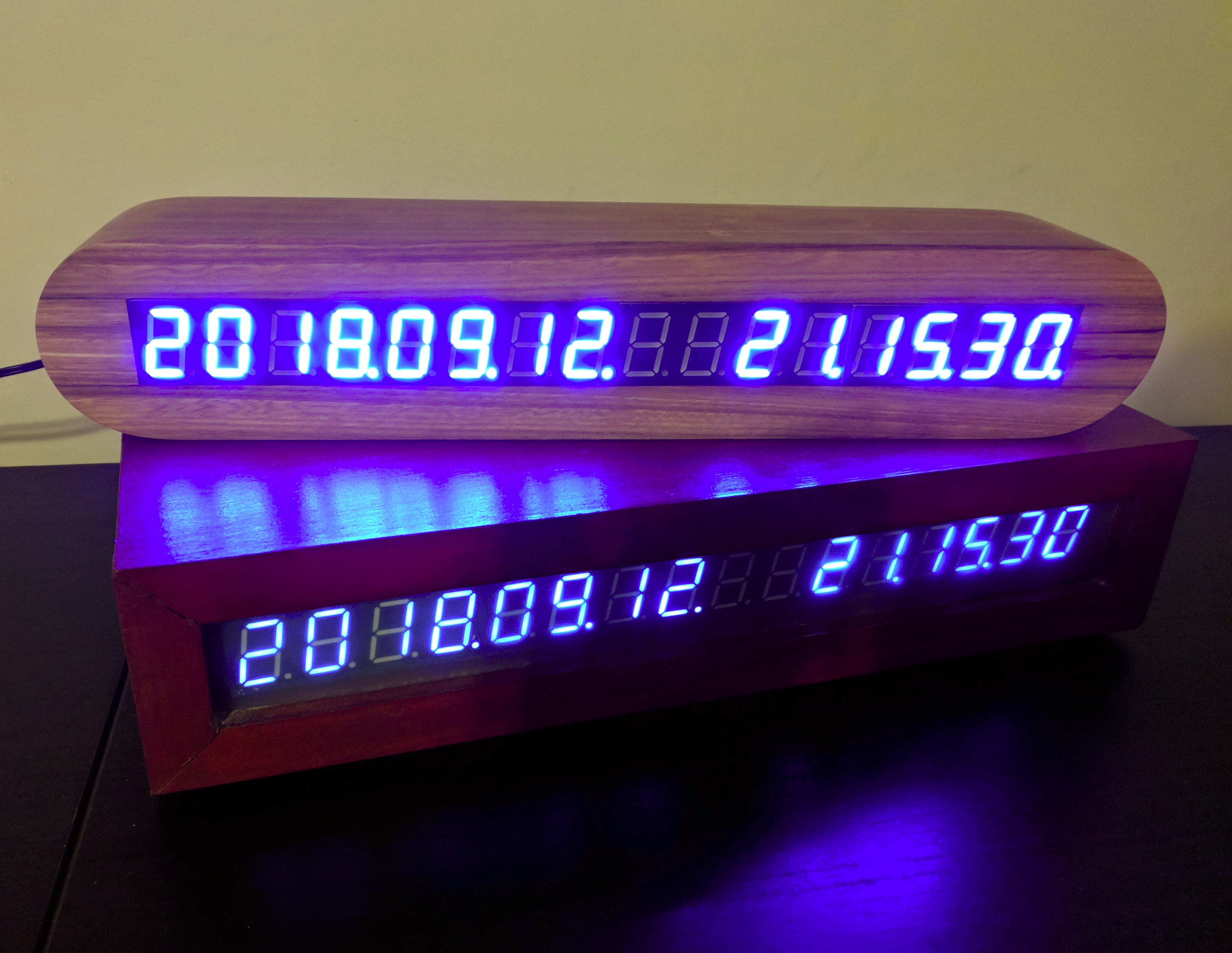
So I took a stand. A couple of decades ago I adopted ISO 8601 in writing dates, an international standard that’s been with us for well over three decades. It too is an entirely logical way to express time, but unlike the two mentioned earlier it’s not tied to any linguistic quirks. Instead it starts with the largest unit and expresses a date or time in descending order, and extends beyond dates into time. Thus the date on my form that caused the puzzlement was 2021-03-04. I’m guessing that here at Hackaday I’m preaching to the choir as I certainly won’t be the only one here using ISO 8601 in my daily life, but while we’re talking about alternative date formats within our community it’s an opportunity to take stock of the situation.
UNIX time is probably the most instantly recognisable of all our measurement schemes, being a count of seconds elapsed since the Unix epoch of 1970-01-01T00:00:00+00:00 UTC. Coincidentally this is also an auspicious date for many readers, as it’s our birthday. If I’d written the 4th of March on that form as 1614816000 though I would have been met with complete incomprehension, so aside from the occasional moment of coming together to observe a rollover it’s not something we use outside coding.
But it does lead neatly to another question: since UNIX time is most often expressed in text as a base-10 number, why on earth does our clock time work in base 60 for seconds, base 12 or 24 for hours, and then base 12 for months? Why don’t we use a base 10 metric time system?
It makes sense for our annual calendar and the length of our day to be derived from Earth’s orbit, as we use dates as a measure of season and times as a measure of the daily progress rather than simply elapsed periods. We owe our twelve-hour days and nights to the ancient Greeks and our 60 seconds and minutes to the ancient Babylonians, while our twelve months come from the ancient Romans. It’s clear that a 365.24-day year with four seasons doesn’t divide neatly into ten months, so we’re at the mercy of our own set of celestial bodies when talking about dates. But surely we could move on from ancient Greece and Babylon when it comes to the time of day?
Liberté, Égalité, Ponctualité!
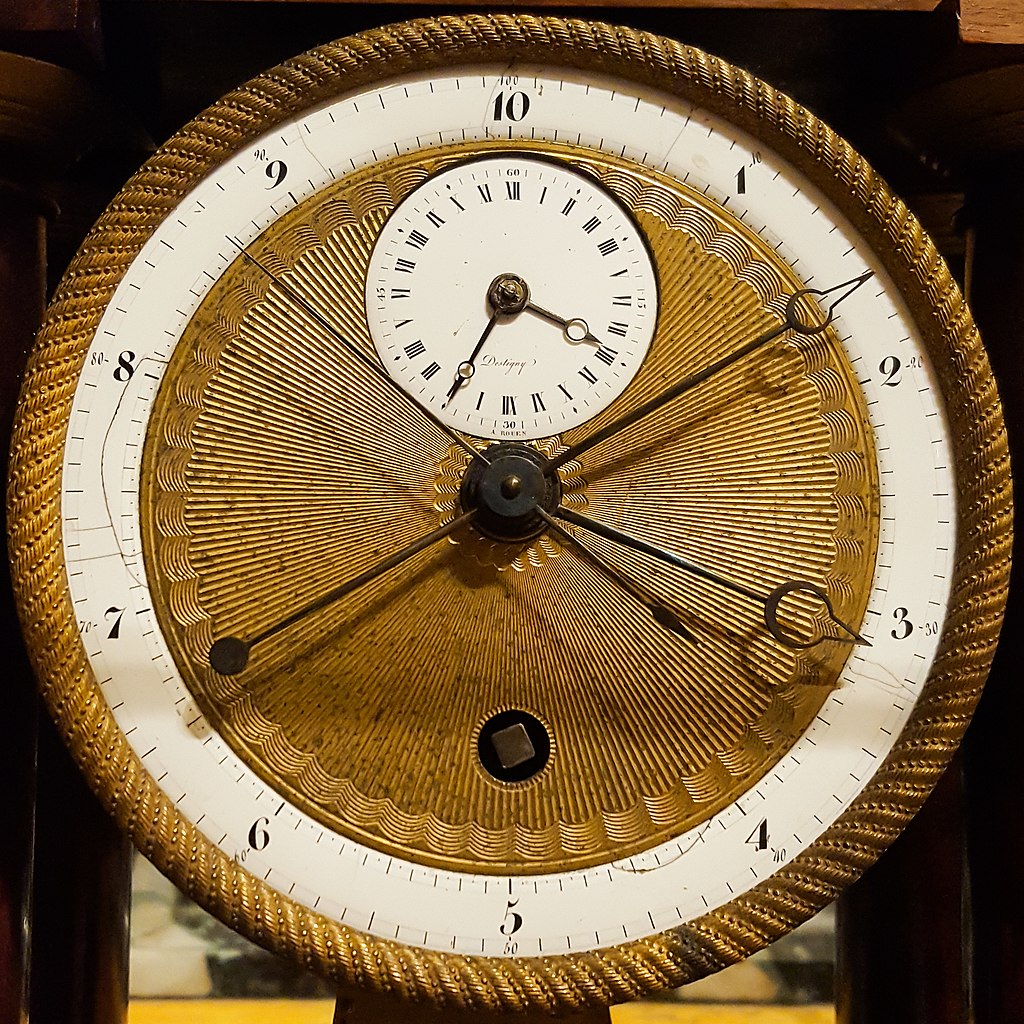
A 10-digit Revolutionary French clock. DeFacto, CC BY-SA 4.0
Probably the most famous attempt at a decimal calendar came in the aftermath of the French Revolution; the French Republican calendar perhaps wisely stuck with twelve months but made each of them of three 10-day weeks, and then split the day by 10 hours, with each further subdivision being by base 10. The months each had 30 days, with the remaining 5 days (or 6 in leap years) being public holidays.
It came to an official end when the revolutionary government that had introduced it was replaced by that of Napoleon. Unlike other French Republican measurements such as the meter, it evidently didn’t provide enough advantage for its popularity to outlive its political origins.
There’s an interesting parallel in the decimalisation of British currency in 1971. Previously, a pound was 20 shillings, each of which were 12 pence. Afterwards, a pound became 100 new pence, and that’s stuck. Despite some people’s lingering nostalgia for the old system, the utility of decimialisation was self-evident.
The moral of the French time-decimalization story was that people simply use a calendar and time system to tell the date and time. When you need to do frequent arithmetic, as is the case with currency, distance, or weights, this is made significantly easier through decimals. But when nature hands you four seasons, you’re pressed into twelve months. Perhaps when we slip the bonds of Earth, we’ll use decimal Stardates, but in the mean-time, ISO might just be the way to go.
Futurism is dead. At least, the wildly optimistic technology-based futurism of the middle years of the 20th century has been replaced in our version of their future by a much more pessimistic model of environmental challenges and economic woes. No longer will our flying cars take us from our space-age wonder-homes to the monorail which will whisk us through sparkling-clean cities to our robotised workplaces, instead while we may have a global computer network and voice controlled assistants we still live in much the same outdated style as we did decades ago. Our houses are made from wood and bricks by blokes with shovels rather than prefabricated by robots and delivered in minutes, and our furniture would be as familiar to a person from the 1950s as it is for us.
A Plastic Future That Never Quite Happened
There was a time when the future of housing looked remarkably different. Just as today we are busily experimenting with new materials and techniques in the type of stories we feature on Hackaday, in the 1950s there was a fascinating new material for engineers and architects to work with in the form of plastics. The Second World War had spawned a huge industry that needed to be repurposed for peacetime production, so almost everything was considered for the plastic treatment, including houses. It seemed a natural progression that our 21st century houses would be space-age pods rather than the pitched-roof houses inherited from the previous century, so what better way could there be to make them than using the new wonder material? A variety of plastic house designs emerged during that period which remain icons to this day, but here we are five or six decades later and we still don’t live in them. To find out why, it’s worth a look at some of them, partly as a fascinating glimpse of what might have been, but mostly to examine them with the benefit of hindsight.
As those of us with an interest in space exploration look forward with excitement towards new Lunar and Martian exploration, it’s worth casting our minds back for a moment because today marks a special anniversary. Sixty years ago on April 12th 1961, the Vostok 1 craft with its pilot Yuri Gagarin was launched from the Baikonur cosmodrome in what is now Kazakhstan. During the 108-minute mission he successfully completed an orbit of the Earth before parachuting from his craft after re-entry and landing on a farm near Engels, in the Saratov oblast to the south of Moscow.
Yuri Gagarin
In doing so he became the first human in space as well as the first to orbit the Earth, he became a hero to the Soviet and Russian people as well as the rest of the world, and scored a major victory for the Soviet space programme by beating the Americans to the prize. All the astronauts and cosmonauts who have been to space since then stand upon the shoulders of those first corps of pioneering pilots who left the atmosphere alone in their capsules, but it is Gagarin’s name that stands tallest among them.
We consider that the politics of the Cold War should not be allowed to detract on our side of the world from the achievement of Gagarin and the engineers and scientists who placed him in orbit, thus we prefer to tell the whole story when dealing with space history. If you’d like to read a bit more Vostok history then we’d like to point you at the story of another Soviet cosmonaut, Valentina Tereshkova, the first woman in space.