A Bullet For The Digital You

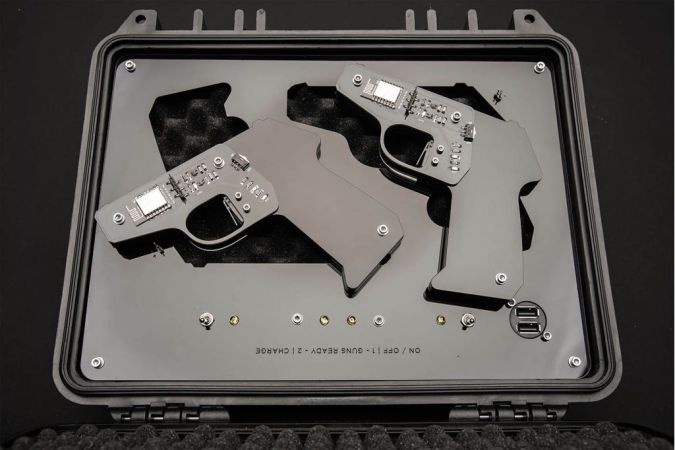
Harkening back to a not-so-distant past where duels settled arguments, [Joris Wegner] put a twist on the idea of quarrels with a gun that damages your online persona rather than your physical one. The controversy of social media is nothing new, but most people today have a large percentage of their lives online. A gun that can destroy your social media by deleting your account feels far more potent than most would like to admit.

At the heart of this build, each gun contains a battery-powered ESP8266 that connects to another ESP8266 in the gun case, which in turn is connected to a computer. When a trigger is pulled, the computer deletes the Facebook account with the credentials stored on the gun. It offers a new look at the importance of one’s social media presence. While the concept of being attacked on social media is nothing new, the idea of digitally dying on social media is perhaps something new. This particular project was put on hold when [Joris] realized that Facebook accounts can be reactivated after 30 days, which renders the gesture less potent.

Playful and interesting twists on the idea of a gun are nothing new here on Hackaday. We’ve seen also [Joris’] work before with a MIDI-controlled video distortion box.

3D Finger Joints For Your Laser Cutter

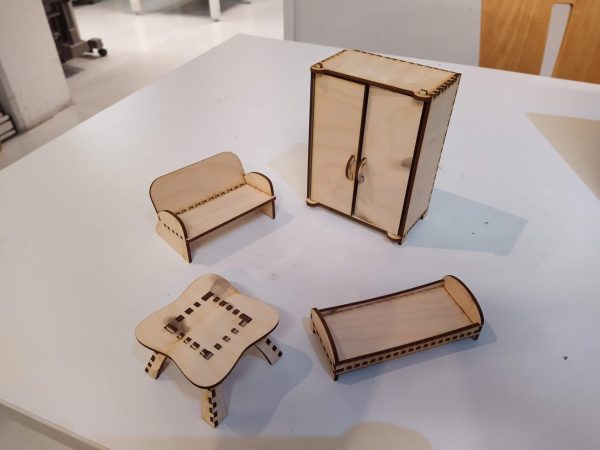
A laser cutter is an incredibly useful tool and they are often found in maker spaces all over. They’re quite good at creating large two-dimensional objects and by cutting multiple flat shapes that connect together you can assemble a three-dimensional object. This is easier when creating something like a box with regular 90-degree angles but quickly becomes quite tricky when you are trying to construct any sort of irregular surface. [Tuomas Lukka] set out to create a dollhouse for his daughter using the laser cutter at his local hackerspace and the idea of creating all the joints manually was discouraging.

The solution that he landed on was writing a python script called Plycutter that can take in an STL file and output a series of DXF files needed by the cutter. It does the hard work of deciding how to cut out all those oddball joints.

At its core, the system is just a 3D slicer like you’d find for a 3D printer, but not all the slices are horizontal. Things get tricky if more than two pieces meet. [Tuomas] ran into a few issues along the way with floating-point round-off and after a few rewrites, he had a fantastic system that reliably produced great results. The dollhouse was constructed much to his daughter’s delight.

All the code for Plycutter is on GitHub. We’ve seen a similar technique that adds slots, finger-joints, and t-slots to boxes, but Plycutter really offers some unique capabilities.

The Macro Keyboard Is On Deck

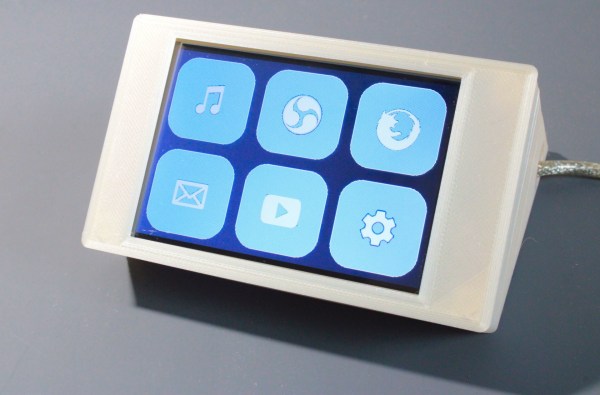
The idea of a reconfigurable macro keyboard is a concept that has been iterated on by many all the way from custom DIY keypads to the polarizing TouchBar on MacBooks. The continual rise of cheap powerful microcontrollers with Wi-Fi and 3D printers makes rolling your own macro keyboard easier every year. [Dustin Watts] has joined the proverbial club and built a beautiful macro pad called FreeTouchDeck.

We’ve seen macro keyboards that use rotary encoders to cycle through different mappings for the keys. FreeTouchDeck has taken the display approach and incorporates a touch screen to offer different buttons. [Dustin] was inspired by a similar project called FreeDeck, which offers six buttons each with a small screen. FreeTouchDeck is powered by an ESP32 and drives an ILI9488 touch screen with an XPT2046 touch controller. This means that FreeTouchDeck can offer six buttons with submenus and all sorts of bells and whistles. A connection to the computer is done by emulating a Bluetooth keyboard. By adding a configuration mode that starts a web server, FreeTouchDeck allows easy customization on the fly.

[Dustin] whipped up a quick PCB that makes it easy to solder the ESP32 and the TFT together, but a breadboard works just fine. Gerbers for that are available on GitHub. To wrap it all up, a nice 3D printed shell encloses the whole system in a clean, tidy way. The code, documentation, and case designs are all on his GitHub.

Continue reading “The Macro Keyboard Is On Deck”

Roll Your Own Tracking

The smartphone is perhaps the signature device of our modern lives. For most of the population it is never more than an arm’s length away, it’s on your person more than any other device in your life. Smartphones are packed with all sorts of radios and ways to communicate wireless. [Amine Mansouri] built an ESP8266 based tracking device that takes advantage of this.

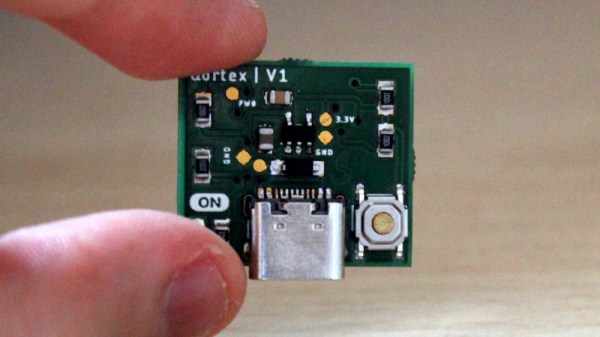
Most WiFi-enabled devices will send out “probe requests” frames trying to search for the SSIDs they were connected to. These packets contain the device MAC address as well as the SSIDs you’ve connected to. Using about 12 components, [Amine] laid out a small board in Eagle. By putting the ESP8266 in monitor mode, the probe frames can be logged and uploaded. The code can be updated OTA making it easy to service while in the field.

With permission from his local library, eight repeater boards were scattered throughout the building to forward the probe packets to where the tracker could pick them up. A simple web interface was built that allows the library to figure out how many people are in the library and how often they frequent the premises.

While an awesome project with open-source code on Github, it is important to stress how important is it to get permission to do this kind of tracking. While some phones implement MAC randomization, there are still many out in the wild that don’t. While this is similar to another project that listens to radio signals to determine the coming and going of ships and planes, tracking people with this sort of granularity is in a different category altogether.

Thanks [Amine] for sending this one in!

A UV Curing Wand For Everyone

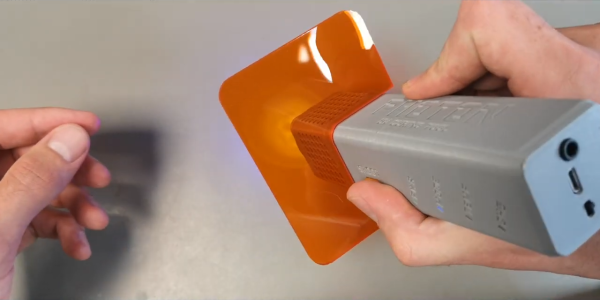
The average person’s experience with an ultraviolet (UV) wand is getting a cavity at the dentist. However, anyone with a resin-based 3d printer knows how important a UV curing system is. Often times some spots on a print need a little bit of extra UV to firm up. [Mile] has set out to create an open-source UV curing wand named Photon that is cost-effective and easy to build.

What’s interesting here is that there are dozens if not hundreds of UV curing systems ranging from $5 LED flashlights to larger industrial flood systems. [Mile] dives right in and shows the trade-offs that those cheaper modules are making as well as what the commercial systems are doing that he isn’t. [Mile’s] Photon wand tries to be energy efficient with more irradiated power while staying at a lower cost. This is done by carefully selecting the CSP LEDs instead of traditional wire-bonded and making sure the light source is properly focused and cooled. From the clean PCB and slick case, it is quite clear that [Mile] has gone the extra step to make this production-friendly. Since there are two industry-standard wavelengths that resins cure at (364nm and 405nm), the LED modules in Photon are user-replaceable.

What we love about this project is looking past what is readily available and diving deep. First understanding the drawbacks and limitations of what is there, then setting a goal and pushing through to something different. This isn’t the first UV curing tool we’ve seen recently, so it seems there is a clear need for something better that’s what is out there today.

Continue reading “A UV Curing Wand For Everyone”

The Protein Folding Break-Through

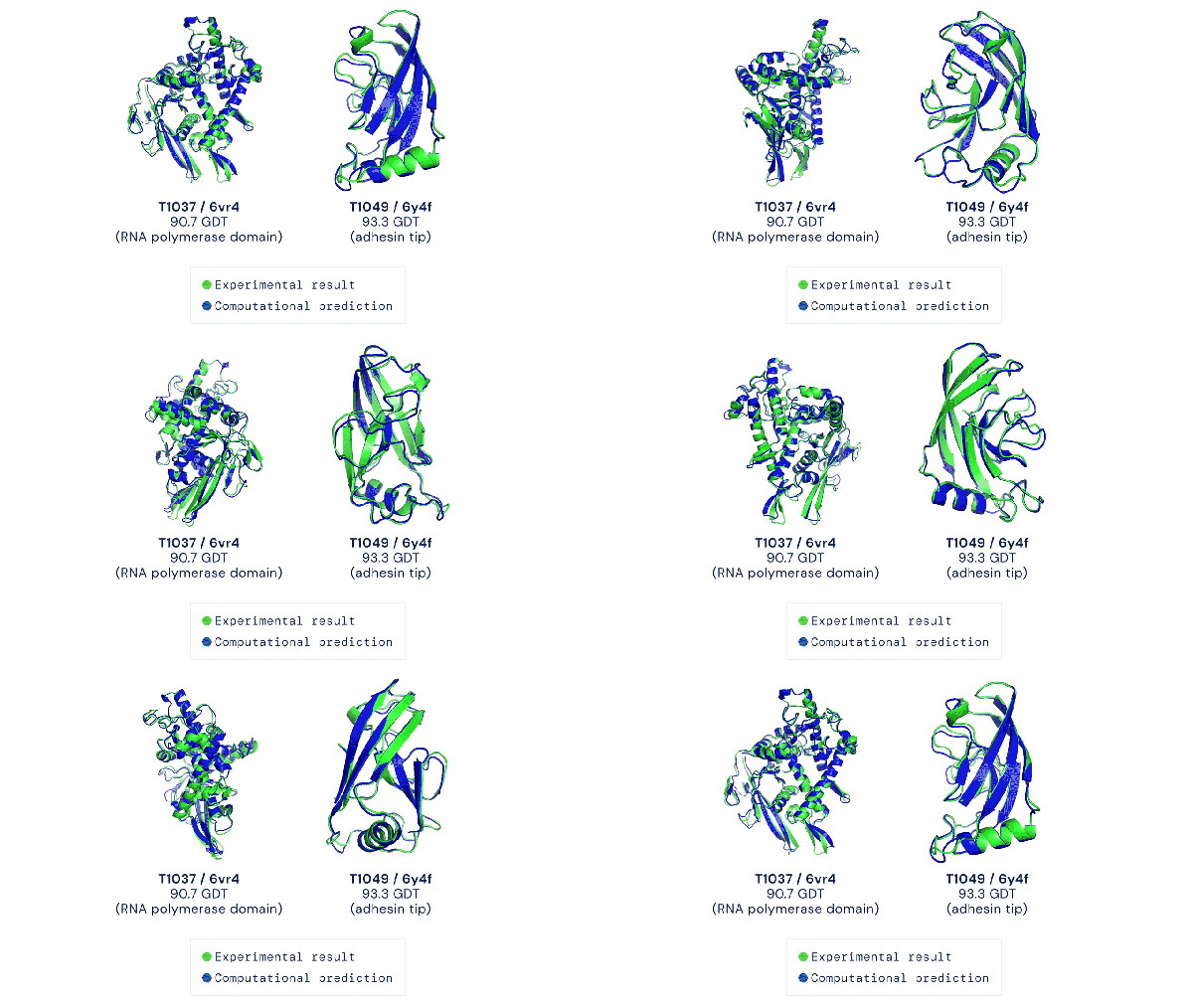
Researchers at DeepMind have proudly announced a major break-through in predicting static folded protein structures with a new program known as AlphaFold 2. Protein folding has been an ongoing problem for researchers since 1972. Christian Anfinsen speculated in his Nobel Prize acceptance speech in that year that the three-dimensional structure of a given protein should be algorithm determined by the one-dimensional DNA sequence that describes it. When you hear protein, you might think of muscles and whey powder, but the proteins mentioned here are chains of amino acids that fold into complex shapes. Cells use these proteins for almost everything. Many of the enzymes, antibodies, and hormones inside your body are folded proteins. We’ve discussed why protein folding is important as well covered recent advancements in cryo-electron microscopy used to experimentally determine the structure of folded proteins.

The shape of proteins largely controls their function, and if we can predict their shape then we get much closer to predicting how they interact. While AlphaFold 2 just predicts the static state, the sheer number of interactions that can change a protein, dynamic protein structures are still out of reach. The technical achievement of DeepMind is not to be understated. For a typical protein, there are an estimated 10^300 different configurations.

Out of the 180 million protein sequences in the Protein database, only 170,000 have had their structures identified. Technologies like the cryo-electron microscope make the process of mapping their structure easier, but it is still complex and tedious to go from sequence to structure. AlphaFold 2 and other folding algorithms are tested against this 170,000 member corpus to determine their accuracy. The previous highest-scoring algorithm of 2016 had a median global distance test (GDT) of 40 (0-100, with 100 being the best) in the most difficult category (free-modeling). In 2018, AlphaFold made waves by pushing that up to the high 50’s. AlphaFold 2 brings that GDT up to 87.

At this point in time, it is hard to determine what sort of effects this will have on the drug industry, healthcare, and society in general. Research has always been done to create the protein, identify what it does, then figure out its structure. AlphaFold 2 represents an avenue towards doing that whole process completely backward. Whether the next goal is to map all the proteins encoded in the human genome or find new, more effective drug treatments, we’re quite excited to see what becomes of this landmark breakthrough.

Continue reading “The Protein Folding Break-Through”

Extracting A Gate From AMD And Intel

The competition between Intel and AMD has been heating up in the last few years as Intel has released chips fabbed with their 14nm++ process and AMD has been using TMSC’s 7nm process. In the wake of the two semiconductor titans clashing, a debate between the merits of 14nm++ and 7nm has sprung up with some confusion about what those numbers actually measure. Not taking either number at their face value, [der8auer] decided to extract a transistor from both Intel’s and AMD’s latest offerings to try and shed some light.

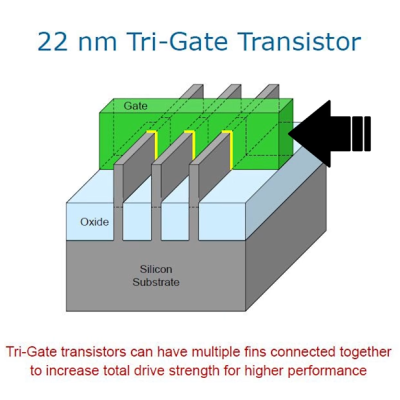
Much of the confusion comes from the switch to the FinFET process. While older planar transistors could be thought of as largely 2d structures, FinFET’s are three dimensional. This means that the whole vertical fin can act as a gate, greatly reducing leakage. It is this fin or gate that [der8auer] is after. On each chip, a thin sliver from the L1 cache was chosen as caches tend to be fairly homogenous sections with transistors that are fairly indicative of the rest of the chip. Starting with a platinum gas intersecting with a focused ion beam on the surface of the chip, [der8auer] built a small deposit of platinum over several hours. This deposit protects the chip when he later cut it at an angle, forming a small lamella 100 micrometers long. In order for the lamella to be properly imaged by the scanning electron microscope, it needed to be even thinner (about 200 to 300nm).

Eventually, [der8auer] was ultimately able to measure the gate height, width, spacing, and other aspects of these two chips. The sheer amount of engineering and analysis that went into this project is remarkable and we love the deep dive into the actual gates that make up the processors we use. If you’re looking for a deep dive into the guts of a processor but perhaps at a more macro scale, why not learn about a forgotten Intel chip from the 1970s?

Continue reading “Extracting A Gate From AMD And Intel”