Meta Cancels Augmented Reality Headset After Apple Vision Pro Falls Flat

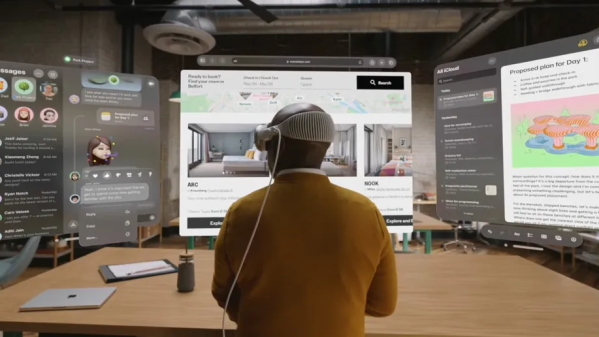
The history of consumer technology is littered with things that came and went. For whatever reason, consumers never really adopted the tech, and it eventually dies. Some of those concepts seem to persistently hang on, however, such as augmented reality (AR). Most recently, Apple launched its Vision Pro ‘mixed reality’ headset at an absolutely astounding price to a largely negative response and disappointing sale numbers. This impending market flop seems to now have made Meta (née Facebook) reconsider bringing a similar AR device to market.

To most, this news will come as little of a surprise, considering that Microsoft’s AR product (HoloLens) explicitly seeks out (government) niches with substantial budgets, and Google’s smart glasses have crashed and burned despite multiple market attempts. In a consumer market where virtual reality products are already desperately trying not to become another 3D display debacle, it would seem clear that amidst a lot of this sci-fi adjacent ‘cool technology,’ there are a lot of executives and marketing critters who seem to forego the basic question: ‘why would anyone use this?’

Continue reading “Meta Cancels Augmented Reality Headset After Apple Vision Pro Falls Flat”
Comparing AliExpress Vs LCSC-Sourced MOSFETs

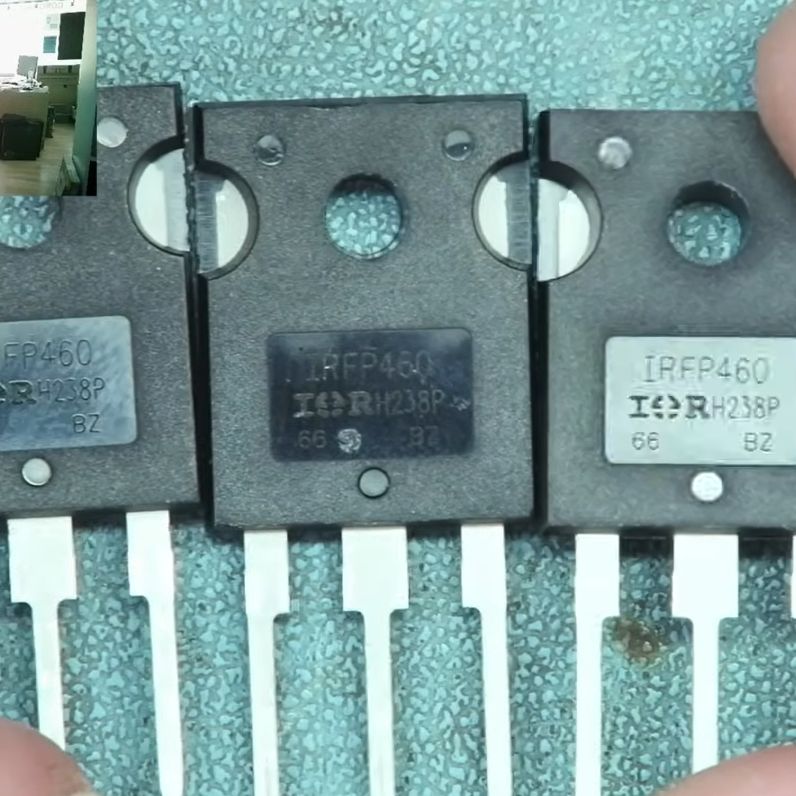
The fake AliExpress-sourced IRFP460 MOSFETs (Credit: Learn Electronics Repair, YouTube)

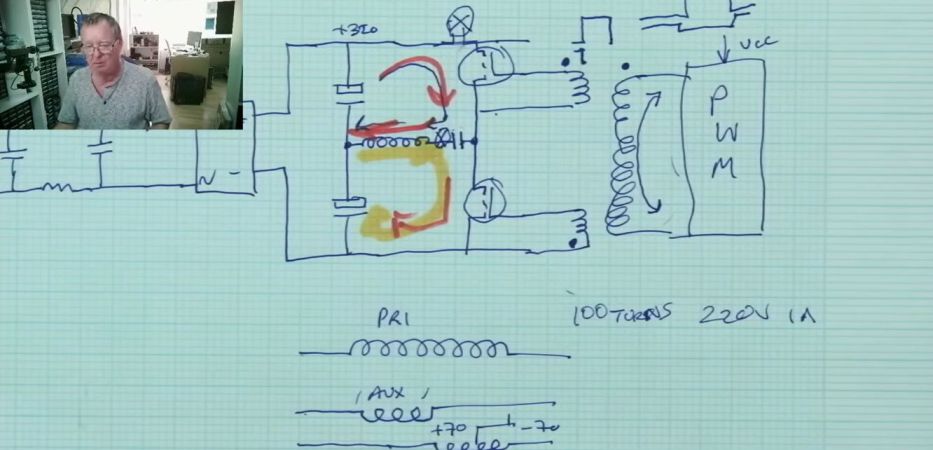
These days, it’s super-easy to jump onto the World Wide Web to find purported replacement parts using nothing but the part identifier, whether it’s from a reputable source like Digikey or Mouser or from more general digital fleamarkets like eBay and AliExpress. It’s hardly a secret that many of the parts you can buy online via fleamarkets are not genuine. That is, the printed details on the package do not match the actual die inside. After AliExpress-sourced MOSFETs blew in a power supply repair by [Learn Electronics Repair], he first tried to give the MOSFETs the benefit of the doubt. Using an incandescent lightbulb as a current limiter, he analyzed the entire PSU circuit before putting the blame on the MOSFETs (IRFP460) and ordering new ones from LCSC.

Buying from a distributor instead of a marketplace means you can be sure the parts are from the manufacturer. This means that when a part says it is a MOSFET with specific parameters, it almost certainly is. A quick component tester session showed the gate threshold of the LCSC-sourced MOSFETs to be around 3.36V, while that of the AliExpress ‘IRFP460’ parts was a hair above 1.8V, giving a solid clue that whatever is inside the AliExpress-sourced MOSFETs is not what the package says it should be.

Unsurprisingly, after fitting the PSU with the two LCSC-sourced MOSFETs, there was no more magic smoke, and the PSU now works. The lesson here is to be careful buying parts of unknown provenance unless you like magic smoke and chasing weird bugs.

Continue reading “Comparing AliExpress Vs LCSC-Sourced MOSFETs”

Intuitive Explanation Of Arithmetic, Geometric & Harmonic Mean

The simple definition of a mean is that of a numeric quantity which represents the center of a collection of numbers. Here the trick lies in defining the exact type of numeric collection, as beyond the arithmetic mean (AM for short, the sum of all values divided by their number) there are many more, with the other two classical Pythagorean means being the geometric mean (GM) and harmonic mean (HM).

The question that many start off with, is what the GM and AM are and why you’d want to use them, which is why [W.D.] wrote a blog post on that topic that they figure should be somewhat intuitive relative to digging through search results, or consulting the Wikipedia entries.

Compared to the AM, the GM uses the product of the values rather than the sum, which makes it a good fit for e.g. changes in a percentage data set. One thing that [W.D] argues for is to use logarithms to grasp the GM, as this makes it more obvious and closer to taking the AM. Finally, the HM is useful for something like the average speed across multiple trips, and is perhaps the easiest to grasp.

Ultimately, the Pythagorean means and their non-Pythagorean brethren are useful for things like data analysis and statistics, where using the right mean can reveal interesting data, much like how other types using something like the median can make a lot more sense. The latter obviously mostly in the hazy field of statistics.

No matter what approach works for you to make these concepts ‘click’, they’re all very useful things to comprehend, as much of every day life revolves around them, including concepts like ‘mean time to failure’ for parts.


Top image: Cycles of sunspots for the last 400 years as an example data set to apply statistical interpretations to. (Credit: Robert A. Rohde, CC BY-SA 3.0)

Ethernet History: Why Do We Have Different Frame Types?

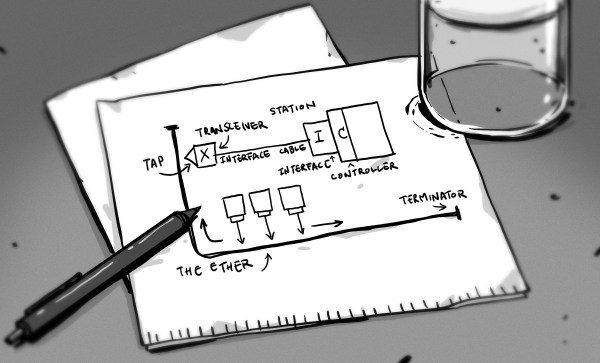
Although Ethernet is generally considered to be a settled matter, its history was anything but peaceful, with its standardization process (under Project 802) leaving its traces to this very day. This is very clear when looking at the different Ethernet frame types in use today, and with many more historical types. While Ethernet II is the most common frame type, 802.2 LLC (Logical Link Control) and 802 SNAP (Subnetwork Access Protocol) are the two major remnants of this struggle that raged throughout the 1980s, even before IEEE Project 802 was created. An in-depth look at this history with all the gory details is covered in this article by [Daniel].

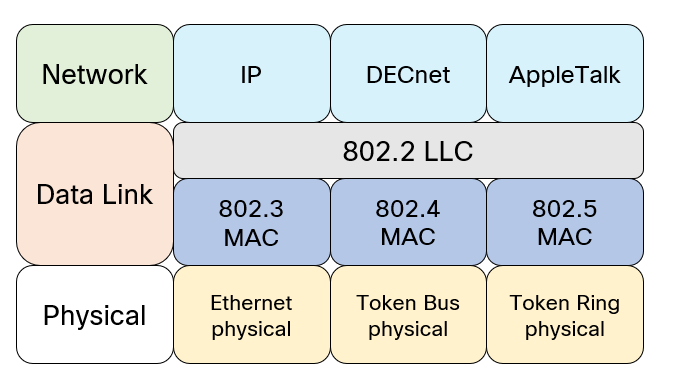
The originally proposed IEEE 802 layout, with the logical link control (LLC) providing an abstraction layer.

We covered the history of Ethernet’s original development by [Robert Metcalfe] and [David Boggs] while they worked at Xerox, leading to its commercial introduction in 1980, and eventual IEEE standardization as 802.3. As [Daniel]’s article makes clear, much of the problem was that it wasn’t just about Ethernet, but also about competing networking technologies, including Token Ring and a host of other technologies, each with its own gaggle of supporting companies backing them.

Over time this condensed into three subcommittees:

  • 802.3: CSMA/CD (Ethernet).
  • 802.4: Token bus.
  • 802.5: Token ring.

An abstraction layer (the LLC, or 802.2) would smooth over the differences for the protocols trying to use the active MAC. Obviously, the group behind the Ethernet and Ethernet II framing push (DIX) wasn’t enamored with this and pushed through Ethernet II framing via alternate means, but with LLC surviving as well, yet its technical limitations caused LLC to mutate into SNAP.  These days network engineers and administrators can still enjoy the fallout of this process, but it was far from the only threat to Ethernet.

Ethernet’s transition from a bus to a star topology was enabled by the LANBridge 100 as an early Ethernet switch, allowing it to scale beyond the limits of a shared medium. Advances in copper wiring (and fiber) have further enabled Ethernet to scale from thin- and thicknet coax to today’s range of network cable categories, taking Ethernet truly beyond the limits of token passing, CSMA/CD and kin, even if their legacy will probably always remain with us.

Second Human Neuralink Brain Implant Recipient Uses It For CAD And Videogaming

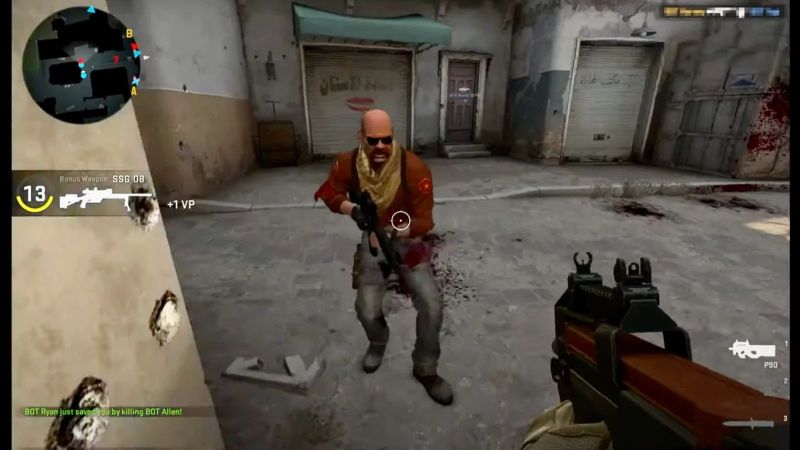
As Neuralink works towards getting its brain-computer interface technology approved for general use, it now has two human patients who have received the experimental implant. The second patient, [Alex], received the implant in July of 2024 and is said to be doing well, being able to play games like Counter Strike 2 without using his old mouth-operated controller. He’s also creating designs in Fusion 360 to  have them 3D printed.

This positive news comes after the first patient ([Noland Arbaugh]) suffered major issues with his implant, with only 10-15% of the electrodes still working after receiving the implant in January. The issue of electrode threads retracting was apparently a known issue years prior already.

We analyzed Neuralink’s claims back in 2019, when its founder – [Elon Musk] – was painting lofty goals for the implant, including reading and writing of brains, integration with AIs and much more. Since that time Neuralink has been mostly in the news for the many test animals which it euthanized during its test campaign prior to embarking on its first human test subjects.

There also appears a continuing issue with transmitting the noisy data from the electrodes, as it is far more data than can be transmitted wirelessly. To solve this seemingly impossible problem, Neuralink has now turned to the public with its Neuralink Compression Challenge to have someone make a miraculous lossless compression algorithm for it.

With still many challenges ahead, it ought to be clear that it will take many more years before Neuralink’s implant is ready for prime-time, but so far at least it seems to at least make life easier for two human patients.

Continue reading “Second Human Neuralink Brain Implant Recipient Uses It For CAD And Videogaming”

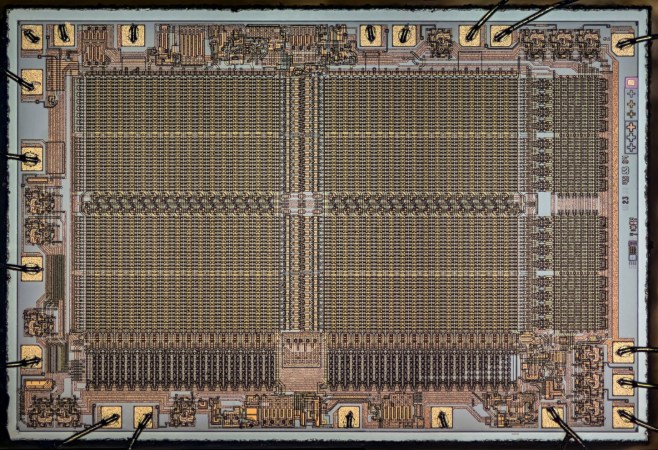
565RU1 die manufactured in 1981.

The First Mass Produced DRAM Of The Soviet Union

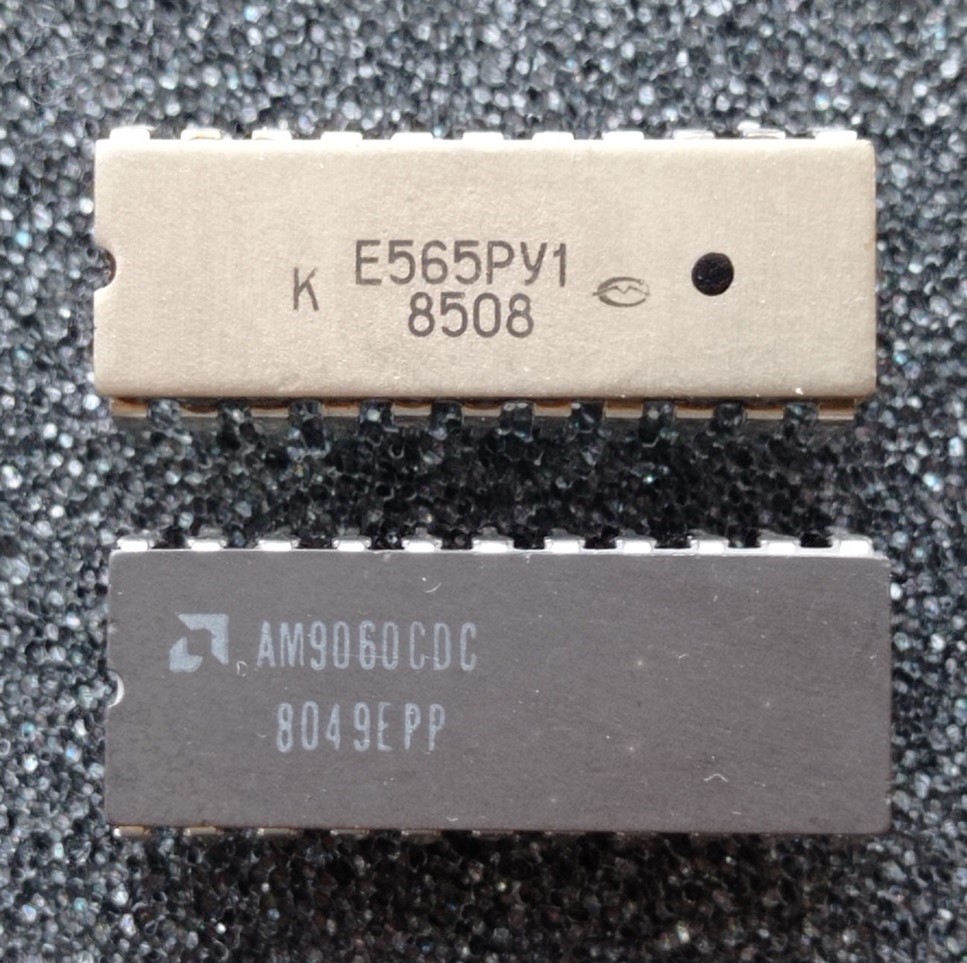
KE565RU1A (1985) in comparison with the analogue from AMD (1980)

Although the benefits of semiconductor technology were undeniable during the second half the 20th century, there was a clear divide between the two sides of the Iron Curtain. Whilst the First World had access to top-of-the-line semiconductor foundries and engineers, the Second World was having to get by with scraps. Unable to keep up with the frantic pace of the USA’s developments in particular, the USSR saw itself reduced to copying Western designs and smuggling in machinery where possible. A good example of this is the USSR’s first mass-produced dynamic RAM (DRAM), the 565RU1, as detailed by [The CPUShack Museum].

While the West’s first commercially mass-produced DRAM began in 1970 with the Intel 1103 (1024 x 1) with its three-transistor design, the 565RU1 was developed in 1975, with engineering samples produced until the autumn of 1977. This DRAM chip featured a three-transistor design, with a 4096 x 1 layout and characteristics reminiscent of Western DRAM ICs like the Ti TMS4060. It was produced at a range of microelectronics enterprises in the USSR. These included Angstrem, Mezon (Moldova), Alpha (Latvia) and Exciton (Moscow).

Of course, by the second half of the 1970s the West had already moved on to single-transistor, more efficient DRAM designs. Although the 565RU1 was never known for being that great, it was nevertheless used throughout the USSR and Second World. One example of this is a 1985 article (page 2) by [V. Ye. Beloshevskiy], the Electronics Department Chief of the Belorussian Railroad Computer Center in which the unreliability of the 565RU1 ICs are described, and ways to add redundancy to the (YeS1035) computing systems.

Top image: 565RU1 die manufactured in 1981.

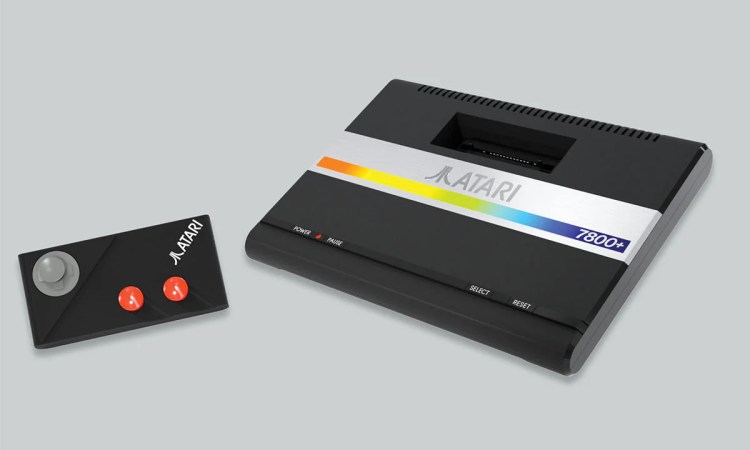
Atari Announces The Atari 7800+ Nostalgia Console

Following the trend of re-releasing every single game console as some kind of modern re-imagining or merely an ARM-SBC-with-emulator slapped into a nice looking enclosure, we now got the announcement from Atari that they will soon be releasing the Atari 7800+.

It’s now up for pre-order for a cool $130 USD or a mega bundle with wired controllers for $170 and shipping by Winter 2024. Rather than it being a cute-but-non-functional facsimile like recent miniature Nintendo and Commodore-themed releases, this particular console is 80% of the size of the original 7800 console, and accepts 2600 and 7800 cartridges, including a range of newly released cartridges.

On the outside you find the cartridge slot, an HDMI video/audio output, a USB-C port (for power) and DE-9 (incorrectly listed as DB-9) controller ports, with wireless controllers also being an option. Inside you find a (2014-vintage) Rockchip RK3128 SoC with a quad core Cortex-A7 that runs presumably some flavor of Linux with the Stella 2600 emulator and ProSystem 7800 emulator. This very likely means that compatibility with 2600 and 7800 titles is the same as for these emulators.

Bundled with the console is a new 7800 cartridge for the game Bentley Bear’s Crystal Quest, and a number of other new games are also up for pre-order at the Atari site. These games are claimed to be compatible with original Atari consoles, which might make it the biggest game release year for the 7800 since its launch, as it only had 59 official games released for it.

Given the backwards compatibility of this new system, you have to wonder how folks who purchased the 2600+ last year are feeling right about now. Then again, the iconic faux-wood trim of the earlier console might be worth the price of admission alone.