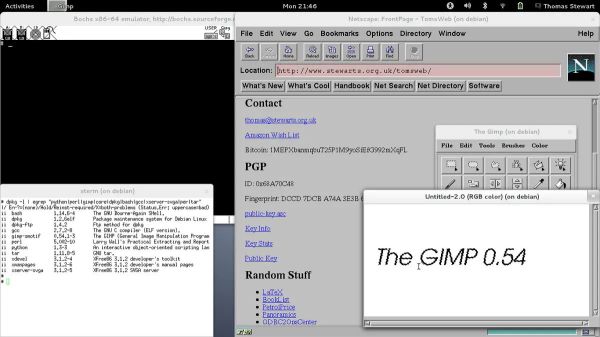
Debian Buzz (1.1) running under Bochs. (Credit: Thomas Stewart)

Looking Back On 30 Years Of Debian

The early history of Linux is a rather murky period to most, long before the era of glitzy marketing and proclamations of ‘the Linux desktop’ being the next hot thing. This was also the era when the first Linux distributions were born, as the Linux kernel never came as a whole OS package – unlike the BSDs – which necessitated others to package it with the elements that make up kernel and user space, such as the GNU tools.

One of these original distributions was Debian, which this month celebrates its 30th birthday. Its entire history, starting with the initial 0.01 release is covered in great detail on the Debian website. After the first release of the Linux kernel in 1991, it would take until August of 1993 when [Ian Murdock] embarked on the Debian project, sponsored by the GNU Project of the Free Software Foundation. This was a pretty rough period, with much of 1994 spent figuring out the basics of the system, the package manager and establishing a release system. Continue reading “Looking Back On 30 Years Of Debian”
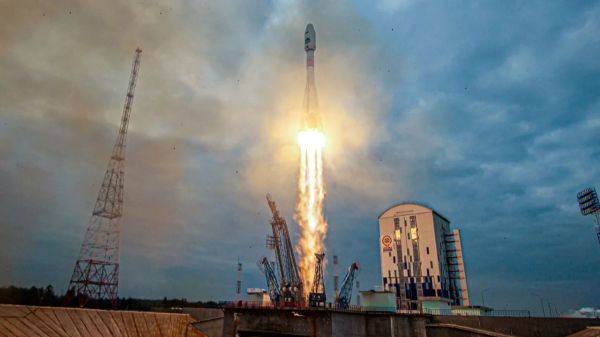
A Soyuz-2.1b rocket booster with a Fregat upper stage and the Luna 25 lunar lander blasts off from a launchpad at the Vostochny Cosmodrome in Amur Oblast, Russia.

Luna 25’s Demise: Raising Fundamental Questions About Russia’s Space Program

The recent news that Russia’s Luna 25 Moon lander had made an unexpected lithobraking detour into the Moon’s surface, rather than the expected soft touchdown was met by a variety of responses, ranging from dismay to outright glee, much of it on account of current geopolitical considerations. Yet politics aside, the failure of this mission casts another shadow on the prospects of Russia’s attempts to revive the Soviet space program after a string of failures, including its ill-fated Mars 96 and Fobos-Grunt Mars missions, the latter of which also destroyed China’s first Mars orbiter (Yinghuo-1) and ignited China’s independent Mars program.

To this day, only three nations have managed to land on the Moon in a controlled fashion: the US, China, and the Soviet Union. India may soon join this illustrious list if its Chandrayaan-3 mission’s Vikram lander dodges the many pitfalls of soft touchdowns on the Moon’s surface. While Roscosmos has already started internal investigation, it does cast significant doubt on the viability of the Russian Luna-Glob (‘Lunar Sphere’) lunar exploration program.

Will Russia manage to pick up where the Soviet Union left off in 1976 with the Luna 24 lunar sample return mission?

Continue reading “Luna 25’s Demise: Raising Fundamental Questions About Russia’s Space Program”

Resin Printer Temperature Mods And Continuous IPA Filtration

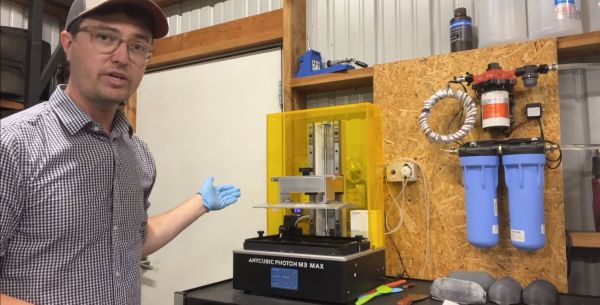
Two essential parts to producing successful resin 3D prints: keeping resin at its optimal temperature and lots and lots of IPA to clean the printed parts with after printing. Unfortunately, most consumer MSLA printers do not come with a resin tray heater, and tossing out IPA after every cleaning session because of some resin contamination is both wasteful and somewhat expensive. These are two things that can be fixed in a number of ways, with [Nick Wilson] going for the ‘crank it to 11’ option, using a high-tech, fully integrated solution for both problems.

The vat with IPA is kept clean through the use of a diaphragm pump that circulates the alcohol through two filter stages, one for larger — up to 5 micrometer — particulates and one for smaller 0.5-micrometer junk. A 405 nm LED lighting section before the filters is intended to cure any resin in the IPA, theoretically leaving the IPA squeaky clean by the time it’s returned to the vat.

For the resin tray heater, a more straightforward 12V 150 Watt silicone heater strip is stuck to the outside edge of the metal resin tray, along with a temperature-controlled relay that toggles the heater strip on and off until the resin reaches the desired temperature. None of these are necessarily expensive solutions, but they can be incredibly useful if you do a fair amount of resin printing.

Continue reading “Resin Printer Temperature Mods And Continuous IPA Filtration”

Building A Hydraulic Lego Excavator Using Standard Pneumatic Cylinders

Everyone already knows that Lego Technic is pretty rad when it comes to existing, pre-made kits, but there’s also quite a bit of hacking potential left. One such area is the lack of hydraulics in Lego Technic, an egregious oversight that [Brick Technology] simply had to correct. His effort results in a partially hydraulic, fully remote-controlled excavator. Rather than a traditional gear hydraulic pump as you’d expect in a real-life excavator, a custom peristaltic pump is used to move the fluid to the hydraulic cylinders (rams for our British and Oceanic friends).

The undercarriage is (sadly) purely electrical, with a slip-ring providing power to the electric final drives in the tracks, enabling it to spin around endlessly without limitations. Where the hydraulics come into play is in the excavator’s arm, with two hydraulic lift cylinders on the boom, one cylinder to control the stick, and a final cylinder to control the bucket. Rather than a hydraulic switch, the setup is simplified by using a single peristaltic pump per cylinder circuit.

Remote control and power are provided using the rather chonky BuWizz 3.0 Pro, which offers a wireless control link (here controlled using BrickController 2 on Android). Although original Lego cylinders were used, these are only intended for pneumatics, where it’s hoped that the used mixture of water and windscreen wiper fluid will prevent corrosion.

(Thanks to [Keith Olson] for the tip)

Continue reading “Building A Hydraulic Lego Excavator Using Standard Pneumatic Cylinders”

Giving Solar Power’s Mortal Enemies A Dusting Without Wasting Water

A prerequisite for photovoltaic (PV) and concentrated solar power (CSP) technologies to work efficiently is as direct an exposure to the electromagnetic radiation from the sun as possible. Since dust and similar particulates are excellent at blocking the parts of the EM spectrum that determine their efficiency, keeping the panels and mirrors free from the build-up of dust, lichen, bird droppings and other perks of planetary life is a daily task for solar farm operators. Generally cleaning the panels and mirrors involves having trucks drive around with a large water tank to pressure wash the dirt off, but the use of so much water is problematic in many regions.

Keeping PV panels clean is also a consideration on other planets than Earth. So far multiple Mars rovers and landers have found their demise at the hands of Martian dust after a layer covered their PV panels, and Moon dust (lunar regolith) is little better. Despite repeated suggestions by the peanut gallery to install wipers, blowers or similar dust removal techniques, keeping particulates from sticking to a surface is not as easy an engineering challenge as it may seem, even before considering details such as the scaling issues between a singular robot on Mars versus millions of panels and mirrors on Earth.

There has been research into the use of the electrostatic effect to repel dust, but is there a method that can keep both solar-powered robots on Mars and solar farms on Earth clean and sparkling, rather than soiled and dark?

Continue reading “Giving Solar Power’s Mortal Enemies A Dusting Without Wasting Water”

Adding Power Over Ethernet Support To A Mac Mini

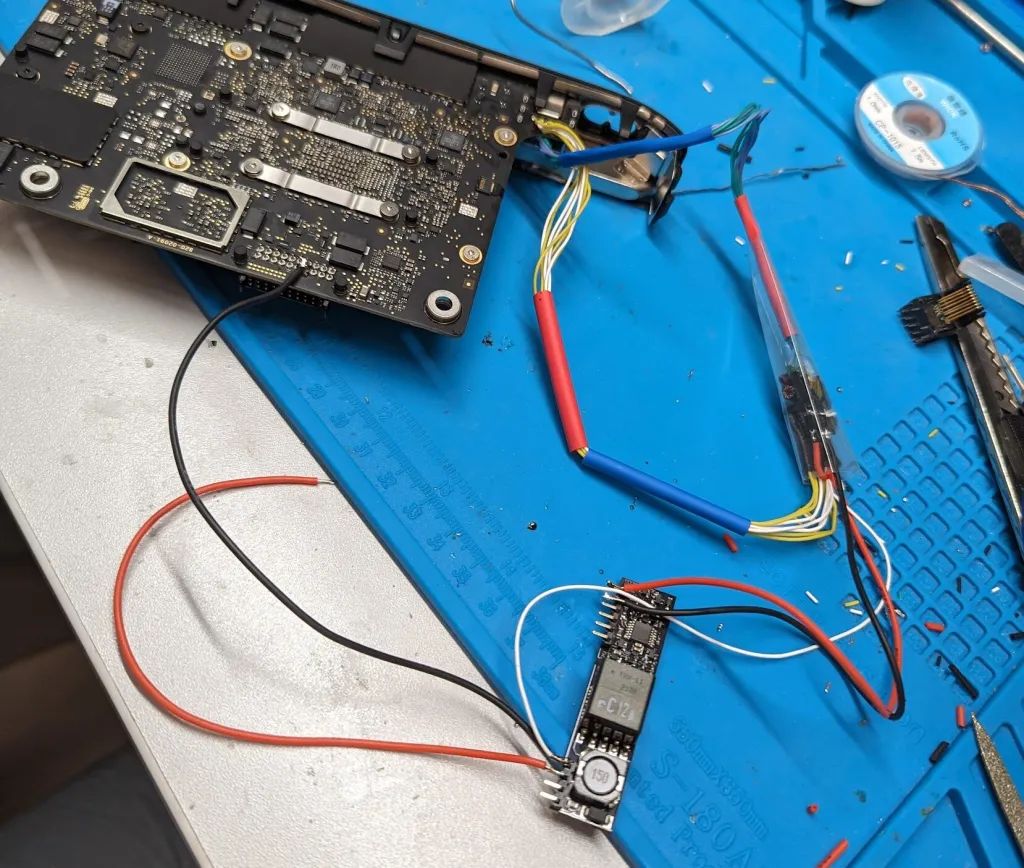
Wiring up a Mac Mini's new PoE module. (Credit: Ivan Kuleshov)
Wiring up a Mac Mini’s new PoE module. (Credit: Ivan Kuleshov)

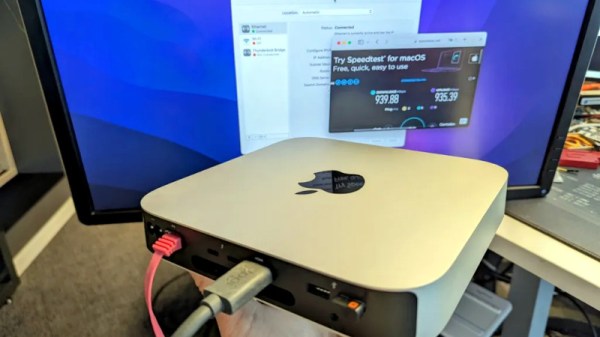
Despite all the fancy features on modern Apple Mac systems like USB-C and Thunderbolt, they have one glaring omission: the absolute lack of any form of Power-over-Ethernet (PoE). This is an issue that [Ivan Kuleshov] sought to rectify with some delicate board-level surgery. Since the original Ethernet jack on the lucky vic^Wrecipient M1 Mac Mini does not have integrated magnetics (magjack), tapping into the appropriate lines would have been rather awkward, with questionable results on the side of the PCB traces that would suddenly be used for PoE purposes they were never designed for.

Rather than choosing this level of experimentation, [Ivan] decided to patch in the Silvertel AG5412 PoE module with plentiful patch wires. This involved removing the Ethernet jack and bypassing the PCB and the magnetics module completely for the new PoE functionality, instead using the magnetics pilfered from a magjack and routing from there back to the mainboard as well as to the PoE module’s inputs. Continue reading “Adding Power Over Ethernet Support To A Mac Mini”

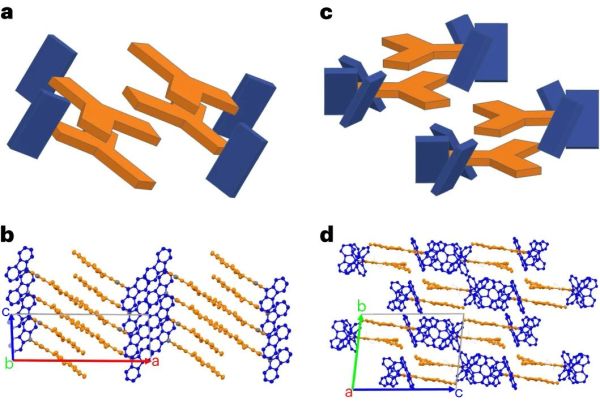
a–d, Crystal structures of the 1CzTrz-F (a,b) and 3CzTrz-F (c,d) compounds, determined by XRD. a,c, Diagrams of the two dimers of both crystallographic unit cells to show the molecular packing. b,d, Spatial arrangement of the acceptor–donor contacts in the 3D crystal structure. The triazine acceptor and the carbazole donor units are coloured orange and blue, respectively. The green features in d indicate co-crystallized chloroform molecules. (Credit: Oskar Sachnik et al., 2023)

Eliminating Charge-Carrier Trapping In Organic Semiconductors

For organic semiconductors like the very common organic light-emitting diode (OLED), the issue of degradation due to contaminants that act as charge traps is a major problem. During the development of OLEDs, this was very pronounced in the difference between the different colors and the bandgap which they operated in. Due to blue OLEDs especially being sensitive to these charge traps, it still is the OLED type that degrades the quickest as contaminants like oxygen affect it the strongest. Recent research published in Nature Materials from researchers at the Max Planck Institute for Polymer Research by Oskar Sachnik and colleagues (press release) may however have found a way to shield the electron-carrying parts of organic semiconductors from such contaminants.

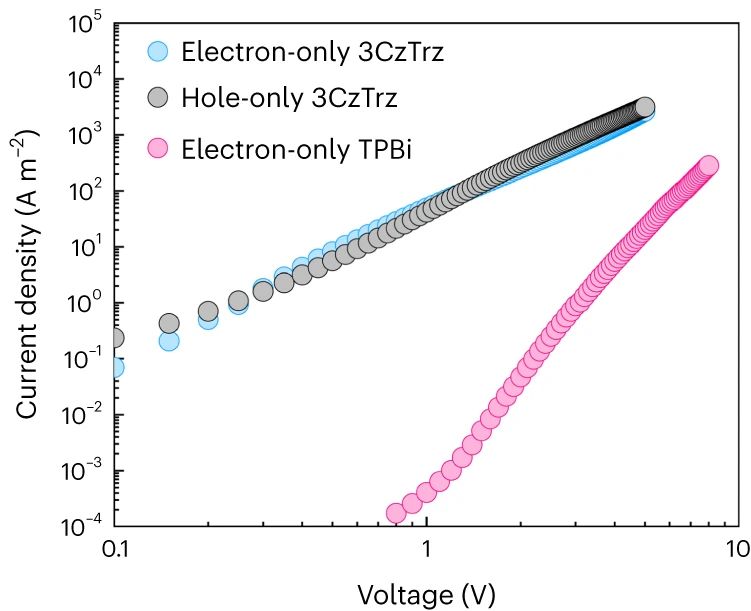
Current density (J)–voltage (V) characteristics of electron- and hole-only devices of 3CzTrz and TPBi. (Credit: Oskar Sachnik et al., 2023)

In current organic semiconductors TPBi is used for electron transport, whereas for this research triazine  (Trz, as electron acceptor) and carbozole (Cz, as donor) were used and compared with the properties of leading-edge TPBi. While a few other formulations in the study did not show remarkable results, one compound (3CzTrz) was found using X-ray diffraction (XRD) to have a structure as shown on the right in the heading image, with the carbozole (in blue) forming essentially channels along which electrons can move, while shielded from contaminants by the triazine.

Using this research it might be possible to create organic semiconductors in the future which are free of charge-traps, and both efficiency and longevity of this type of semiconductor (including OLEDs and perovskites) can be improved immensely.