ArcaOS: OS/2 Updated For The Modern World

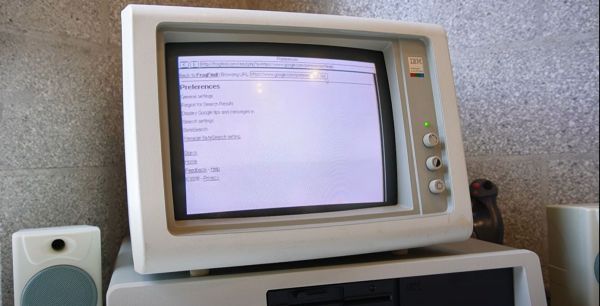
For a certain subset of our readers, mentioning IBM’s OS/2 is likely to bring forth a pang of nostalgia, while for others it’s more likely to bring to mind meme images of rebooting ATM displays. Although OS/2 didn’t become the desktop giant that IBM had intended it to become, reports of its demise are very much premature. As [Michael MJD] covers in a recent video, ArcaOS is essentially the latest version of OS/2, under official license from IBM.

The initial release of ArcaOS was in 2017, and the most recent release was version 5.0.7 in December of 2021. What this gets you is an evolution of OS/2 Warp 4.52 that updates the operating system for modern day hardware, although [Michael]’s experiences with using USB and installing WordPerfect 5.2 end up being rather mixed. With IBM not intending to open source the OS any time soon, ArcaOS appears to be mostly aimed at companies and individuals who wish to keep running their old (OS/2) software on newer hardware, per the FAQ.

This is also reflected in the license cost should you wish to obtain a copy of ArcaOS, with a personal edition license costing $129. What this does get one over OS/2 Warp is SMP support, improved USB, audio and video support, along with an actual package manager (ANPM, based on RPM & Yum).

Would you splurge on an updated OS/2 OS like this, or is tinkering with a fully open source OS like Haiku (BeOS reborn) more your thing?

Continue reading “ArcaOS: OS/2 Updated For The Modern World”

Curve Tracer Design For Power Vacuum Tubes Testing

Regardless of the mythical qualities that are all too often attributed to vacuum tubes, they are still components that can be damaged and wear out over time. Much like with transistors and kin, they come with a stack of datasheets, containing various curves detailing their properties and performance. These curves will change as a part ages, and validating these curves can help with debugging a vacuum tube-based circuit. This is where one can either spend an enormous sum on a commercial curve tracer like the Tektronix 570, or build your own, as [Basin Street Design] has done.

A semi-retired electronics design engineer by trade, he has previously covered the development of the curve tracer on Instructables for the version 1 and version 1.1. What this device essentially allows you to do is sweep the connected tube through its input parameter ranges, while observing the resulting curves on an attached (external) oscilloscope. Here a storage oscilloscope (or DSO) is immensely helpful to capture the curves.

In the project pages, the in-depth theory and functioning of the circuitry is explained, along with the schematics and a number of builds. The project has been around since before the VBA tracer which we covered last year, both of which are infinitely more affordable than a genuine Tektronix 570.

Thanks to [Fernando] for the tip.

Methane Pyrolysis: Producing Green Hydrogen Without Carbon Emissions

Generally, when we talk about the production of hydrogen, the discussion is about either electrolysis of water into oxygen and hydrogen, or steam methane reforming (SMR). Although electrolysis is often mentioned – as it can create hydrogen using nothing but water and electricity – SMR is by far the most common source of hydrogen. Much of this is due to the low cost and high efficiency of SMR, but a major disadvantage of SMR is that large amounts of carbon dioxide are released, which offsets some of the benefits of using hydrogen as a fuel in the first place.

Although capturing this CO2 can be considered as a potential solution here, methane pyrolysis is a newer method that promises to offer the same benefits as SMR while also producing hydrogen and carbon, rather than CO2. With the many uses for hydrogen in industrial applications and other fields, such as the manufacturing of fertilizer, a direct replacement for SMR that produces green hydrogen would seem almost too good to be true.

What precisely is this methane pyrolysis, and what can be expect from it the coming years?

Continue reading “Methane Pyrolysis: Producing Green Hydrogen Without Carbon Emissions”

Deciphering Queen Of Scots, Mary Stuart’s Lost Letters

First part of the cypher used by Mary Stuart and Castelnau, showing the use of homophones, special characters and more. (Credit: Lasry et al., 2023)

Communications by important people over the past thousands of years have been regularly encrypted, making the breaking of this encryption both an essential and also a fascinating historical field. One recent example of an important historical discovery by codebreakers are letters dating back to 1578 through 1584 by Mary Stuart, the Queen of Scots in the 16th century. While deemed lost for centuries, researchers came across them in a stash of encrypted letters that were kept at the Bibliothèque nationale de France’s (BnF). After decrypting these 57 letters, they realized what they had come across.

Even in digitized form, they could not simply be OCRed, leaving the researchers to manually transcribe each character into the software they used to assist with the decrypting. Only during the decrypting process, they began to realize that these were not Italian communications – matching the rest of the collection of which they were part – but in fact letters by Mary and her allies. Of the 57 letters, 54 are from Mary to Castelnau, the French ambassador in London at the time.

Supporting evidence for these decrypted letters being from Mary and Castelnau came from British archives, which had clear text versions of some of the encrypted letters, dated to the years when a mole within the French embassy was leaking translated texts to the English, as part of the usual political pastime during those centuries of getting onto thrones and making other people leave them. Mary’s attempt to become not only the Queen of Scots but also Queen of England came to a tragic end with her execution in 1587 after a politically motivated show trial.

The software the researchers used primarily is called CrypTool 2, which is an open-source project that provides cryptoanalysis and related functionality. The access to the documents themselves was enabled via the DECRYPT project, resources which taken together enables virtually anyone to undertake such historical sleuthing from the comfort of their own home.

(Thanks to [Stephen Walters] for the tip)

Five Years On, Where Is Starman And Where Will He Go?

On 6 February 2018, a Tesla Roadster was launched as the mass simulator on the first ever Falcon Heavy launch — putting for the first time ever a car on a Mars-crossing orbit. While undoubtedly a bit of a stunt, the onboard cameras provided an amazing view of our planet Earth as the Starman dummy in the Roadster slowly drifted away from that blue marble, presumably never to be seen again.

This “never” is the point that researchers at the University of Toronto would like to clarify in a paper published after the launch titled The Random Walk of Cars and Their Collision Probabilities with Planets. Using N-body simulations, they come to the conclusion that there’s a 22%, 12%, and 12% chance of the Roadster impacting the Earth, Venus, and the Sun, respectively. But don’t get too excited, it’s not due to happen for a few million years, so it isn’t something any of us will be around to see.

As the Where Is Starman? website shows, the Roadster never reached escape velocity from the Sun’s gravity, meaning that it’s still zipping around in an orbit around our day star. Exposed to the harsh UV and other radiation, it’s likely that very little is left at this point of the Tesla, or Starman himself. Even so, scientists to this day are feeling less than amused by what they see as essentially littering, adding to the discarded rocket stages, dead satellites and other debris that occasionally makes it into the news when it smashes into the Moon, or threatens the ISS.

The ARPANET Of Things And CMU’s History Of Networked Soda Machines

When the computer science department of Carnegie Mellon University expanded in the 1970s, this created a massive issue for certain individuals who now found that they had to walk quite a distance to the one single Coke machine. To their dismay, they’d now find that after braving a few flights of stairs, they’d find that the Coke machine (refilled randomly by grad students) was empty, or worse, had still warm Coke bottles inside. What happened next is detailed by the Coke machine itself, straight from the CMU’s servers.

A follow-up by the IBM Industrious blog adds more feedback from those responsible for we now refer to as an IoT device, though technically it was an AoT at the time, being a pre-Internet era. For the bottle-based, 1970s machine, microswitches were installed by students in the machine to keep track of the fill state of each column and for how long the bottles had been inside. After about 3 hours newly added bottles were registered as being ‘COLD’, which could be queried from the PDP-10’s mainframe (CMUA) or via ARPANET using the finger command on the special ‘coke’ user account with finger coke@cmua.

As time moved on and the coke machine was replaced  in the early 90s with a newer (and very much non-IoT) model, students would once again attempt to modify it, much to the chagrin of the Coke company’s maintenance people, resulting in the students reverting modifications prior to a maintenance appointment. This tracking system used the empty column lights on the machine, leading to a similar tracking system as on the 1970s machine, except now running on a PC-XT class computer that also tracked the status of the M&M snack machine nearby.

Whether CMU CS students can still query such highly relevant information today is not mentioned, but we presume it is an issue of paramount importance that has been addressed in an expedient fashion over the intervening years.

(Thanks to [Daniel T Erickson] for the tip)

Custom Enclosure For 3D Printer

Having an enclosure around an FDM 3D printer is generally a good idea, even when printing only with PLA, as it keeps the noise in, and the heat (and smell, with ABS) inside. With all the available options for enclosures out there, however, [David McDaid] figured that it should be possible to make an enclosure that does not look like a grow tent and is not overly expensive. He also shared the design files on GitHub.

The essential idea is very simple and straightforward: the structural part is cut out of pine beams that are cut to size and joined into a cube by (3D-printed) corner brackets, with acrylic (Perspex) sheets filling in the space between the wooden beams. A door is formed using (also 3D-printed) hinges and door handles. The whole enclosure is rounded off with a lick of paint on the wooden elements, and a diffused set of LED lights for internal illumination.

It definitely has to be admitted that it makes for a very stylish enclosure, with a lot of modding potential. It can also easily be adapted to differently sized printers and filament material demands.