Laser Cigarette Lighter Makes Smoking Even More Dangerous

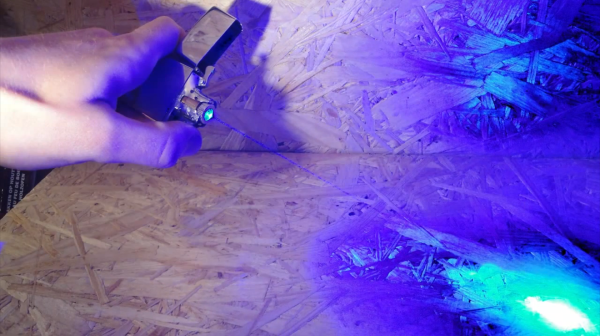
Dangers involved with using this laser cigarette lighter to start off your smoking session include shooting your eyes out and giving yourself a mean Harry Potter style forehead scar. This thing boasts a two Watt laser diode which has no problem burning everything that comes in contact with it.

[Masterjoa3000] shows you how it was built in the video after the break. You need to acquire the diode and support hardware which acts as a heat sink. These are press-fit together before wires are attached to the positive and negative leads. The housing is just a bit too wide for the wind shield on the lighter, but that is fixed by cutting a ‘V’ out of the center of that shielding. Next comes a minuscule driver board which is soldered to the diode and to a momentary push switch. The switch takes the place of the flint so that pressing down on the striking wheel activates the laser. The whole thing still fits in the unaltered outer case.

Here’s another take on the same idea with the laser pointing in a different direction.

Continue reading “Laser Cigarette Lighter Makes Smoking Even More Dangerous”
Vaporizer Rebuild

vaporizer-rebuild

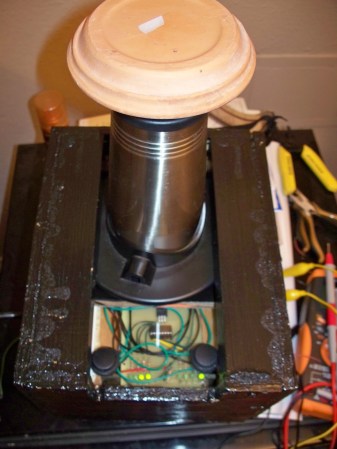
Wait! Don’t click away yet. Yes, this is a vaporizer project, but it has the distinction of being the most electronics engineering oriented post on the subject we’ve ever featured. [Mm Nn’s] vaporizer broke so he decided to fix it. After poking around inside it became clear that pretty much everything was trashed. So this ended up being a complete rebuild of all the support circuitry, with the heating element being the only electrical component he could salvage.

He started looking around for a power supply capable of driving the element from the Arizer V-tower vaporizer. He hoped that he could use a computer PSU but ended up having to buy one to suit; a Mean Well rs-100-24. He drives the system with a microcontroller (programmed in assembly) using PWM to adjust the element. Speaking of, there is a sensor built into the heating element that [Mm] isn’t using because he couldn’t figure out how to read from it. If you’ve got some ideas let us know in the comments.


Pair Of Aquarium Builds Are Masterpieces Inside And Out

two-aquarium-builds

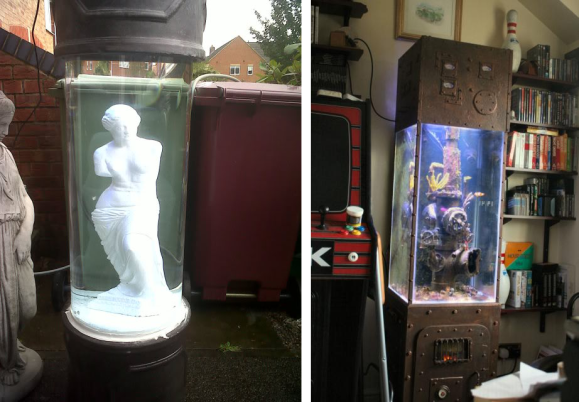
As you start to take in all that was involved with building these two aquariums it boggles the mind. At the time of writing the forum thread is 56 pages long and it’s not just filled up with the adoration of [Big Mr Tong’s] fans. He did so much work that every page is packed with progress pictures that cover the range of topics: plumbing, electrical, mechanical, artistic…. wow!

The curse project was sparked by a friend giving him a couple of huge acrylic cylinders which were a perfect size for custom aquariums. [Tong] even had a couple of ideas in mind for underwater artwork to fill them with. One is a replica of statue ruins that give you the feeling that the tank is a piece of Atlantis capture for your own entertainment. The other is a fascinating replica of a plumbing stack. You know, the large cast-iron pipes that carry away waste? But these are actually PVC parts with modeling clay accents. They were broken, cut, melted, sanded, and who knows what else, to arrive at this look. The different aquariums feature different lighting techniques. There’s custom-made filter baffles. We could go on and on but we won’t so check out the link at the top for all the details.

In the end he went beyond the original cylinders and built his own square tank for the pipe design. It’s a steam-punk piece so there’s even analog dials to display the vital signs of the habitat.

Just looking to maintain a tank you already own? How about building an automatic chemical dispenser.

OSH Park Adds Board Sharing Feature

osh-park-board-sharing

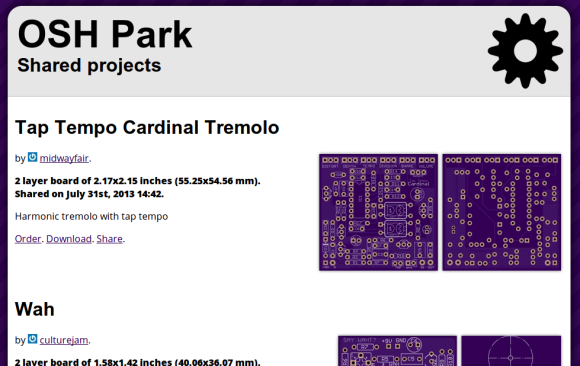
OSH Park continues to get better and better. We think the recent addition of Project Sharing is a huge feature! Obviously this lets you order up the open source goodness posted by others with a minimum amount of effort. But to us there are a couple of other things that make this valuable.

First off, the ability to browse through the projects can be a huge inspiration for your own work. Secondly, the board files themselves are available for download, and it looks like you can post links to your repository if you so choose when sharing your project. This makes OSH Park something of a Thingiverse for PCBs. Browse through what’s offered then download the files to etch yourself or just to use as reference to see how others do things when laying out the traces. And of course the rock bottom prices offered make this a no-brainer for shared breakout board designs.

The Twitter post calls this the “early stages” of the feature. We can’t wait to see what they come up with as it matures.

How To Play A Game Boy Emulator On Chromecast

gameboy-on-chromecast

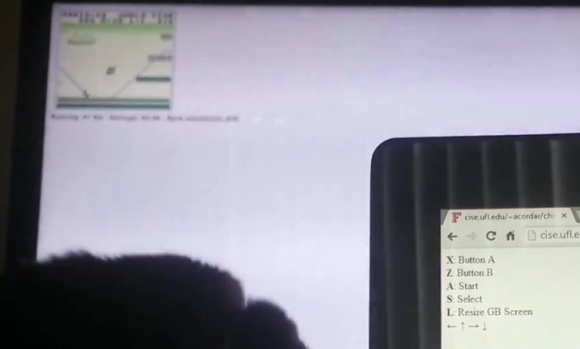
It’s small, it’s blurry, but it’s working. Here’s a proof of concept for playing emulators on a Chromecast which uses the original Game Boy as an example.

Notice that there are two screens shown in the demo. Out of focus in the background is the television with the Chromecast displaying the game play. In the foreground is a computer with a browser open which lists off the control setup. These are the button mappings for an Xbox 360 controller. The emulator is a JavaScript Game Boy emulator. This is loaded on the Chromecast through a simple html file (called the receiver in the repo). The sender — also a simple html file — loads another JavaScript package on the computer which translates the controller’s button presses to keyboard inputs and sends them out to the receiver.

This puts stars in our eyes about emulator hacks. We’d love to see this boiled down to smartphone and Chromecast as the two pieces of hardware, with the touchscreen as the gaming input.

Continue reading “How To Play A Game Boy Emulator On Chromecast”

Trust Hacking: How The Bitcoin System Works

how-bitcoin-network-functions

[Scott Driscoll] sent us a link to his Bitcoin explanation a couple of weeks ago. We glanced at it but moved on rather quickly. It’s been popping up here and there and we finally gave it the time it deserved. This video is interesting in that it doesn’t just focus on what the Bitcoin actually is, but how the Bitcoin system works when it comes time for money to change hands.

Quite early on in the explanation he mentions that “The Bitcoin system is amazingly designed so that no trust is needed”. That’s a powerful statement. For instance, if you sell your car, one of your friends will probably tell you not to take a check. That’s because a check means you’re trusting that the buyer actually has a balance in their account to cover the transaction. With Bitcoin the transaction carries its own proof that the currency is available by including information about the past transactions through which those Bitcoins were acquired.

If you have some idea of what public/private key pairs are you’re already equipped to understand [Scott’s] lecture. After you make it through the 22 minute video maybe you should get down to work doing some Bitcoin mining at home.

Xbox 360 Light Right And RF Module Connected To Raspberry Pi

rpi-connected-to-xbox-lightring

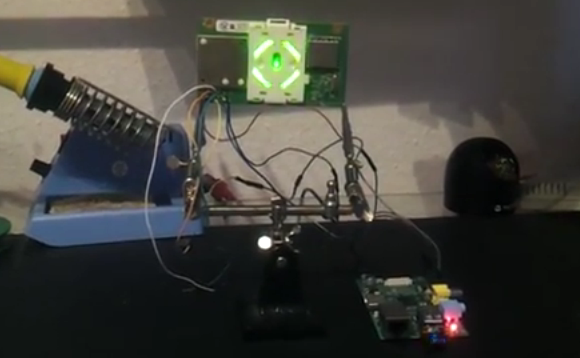
If you want to mess around with your Xbox 360 controllers on a computer Microsoft would be happy to sell you a USB dongle to do so. But [Tino] went a different route. The board that drives the Xbox 360’s status light ring also includes the RF module that wirelessly connects the controllers. He wired this up to his Raspberry Pi using the GPIO header.

The module connects via an internal cable and is treated much like a USB device by the Xbox motherboard. The problem is that it won’t actually handle the 5V rail found on a USB connector; it wants 3.3V. But this is no problem for the RPi’s pin header. Once a few connections have been made the lights are controlled via SPI I2C and [Tino] posted some example code up on Github to work with the RF module. He plans to post a follow-up that interfaces the module with a simple microcontroller rather than an RPi board. If you can’t wait for that we’re sure you can figure out the details you need by digging through his example code.