Adjustable Tesla Coil Build

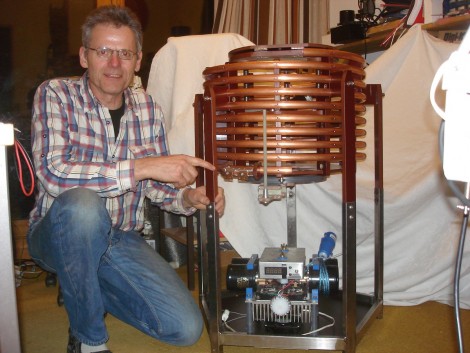
This coil has no trouble shooting sparks across four meters of empty air. [Finn Hammer] has been putting in some long hours on this labor of love, and we put in some time reading through his progress thread. He started down this path about a year ago and every step of the way he produces beautiful work. We enjoy seeing his prototyping techniques, moving from concept to hand drawing to CAD diagram before starting the physical build. Check out the demo video after the break and as you read through his thread look for the green arrows that lead to other videos and resources.

Continue reading “Adjustable Tesla Coil Build”

Most Useless Machine Loses Carbon Footprint

[youtube=http://www.youtube.com/watch?v=lxyQ3PFbK9Y]

[Clayton Boyer] took the electricity out of the useless machine, making one that runs like a clock. To this point, we’ve always seen these useless machine use electric motors. [Clayton’s] clever design uses a wind-up spring and a series of wooden gears to bring the fun, making it a great companion for the binary adder you built. The video above shows the inner workings and the design plans are for sale. We’d love to print out the parts or perhaps just laser-cut them from wood like the legs of this spider bot.

[Thanks llwynog]

Joojoo Alternative OS Installations

Joojoo hacks are starting to trickle in as non-fanboys get their hands on the iPad alternative. The custom OS forum for the device tells the tale of successful installs of Windows 7, OSX, Android, and Jolicloud.

So far the only one to have a how-to is Windows 7, but we’re sure that will change quickly. When Microsoft’s offering is installed on the device it get about four hours of use per charge which is fairly decent. We’d love to get our hands on one and try it out with Android but the $499 price tag is still a hurdle for us. We’re not saying it’s over priced, as it comes with a lot under the hood. Even at that price we think it blows the aPad out of the water.

[Thanks Andy]

Careful! That Gas Pedal Is A Nexus One

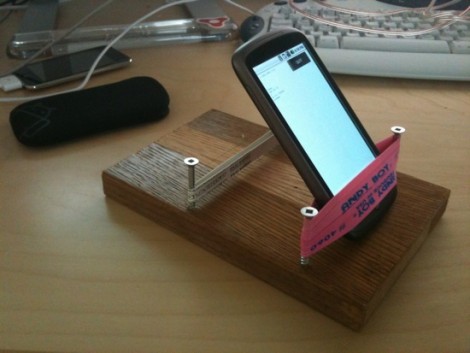
Indeed, the gizmo above is meant to be used as a gas pedal. [Grant Skinner] came up with the idea to control slot cars using an Android phone as a gas pedal. He coded the software for the handset and a computer using Adobe AIR. Once connected, the computer is sent the accelerometer data from the phone, relaying the speed control to the slot car track with the aid of a Phidgets motor controller. See it ‘go’ after the break.

We’ve seen the Phidgets board used in several projects like the augmented vending machine and the plotter white board. What we haven’t seen is hacks that make use of AIR, a framework we looked at two years ago. If you’ve got hacks that make use of AIR we want to hear about them.

Continue reading “Careful! That Gas Pedal Is A Nexus One”

Using IPod Docks With Droid Via An Adapter

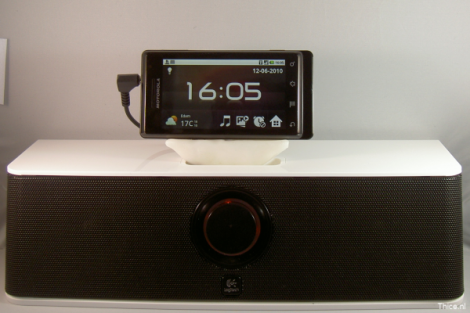
Standard connectors in portable devices would be great for the consumer, but then you wouldn’t purchase separate peripherals for ever portable you buy (lining the pockets of the companies licensing said peripherals). [Thijs] isn’t taking it lying down any longer. Realizing that the shape of the connector is one of the only things standing in the way, he built an adapter to use iPod docks with Droid. The hardware consists of a USB connector, audio jack, iPod connector, and a magnet. After working out the wiring it was just a matter of building a chassis using polymorph material. As you can see above, his expensive dock has no problem playing nicely with Droid because of his handy work.

Great Ball Contraption

[youtube=http://www.youtube.com/watch?v=B1A7VpQ5paU]

The idea of the Great Ball Contraption is to take modules from many builders and combine them into one large machine. The modules need to find some way of moving LEGO soccer balls and basketballs from an input point to an exit are that passes them onto the next module. Some of them sort the balls, but in the end the eight-and-a-half-minute video above shows the orbs going around and around. That’s just fine with us, it’s no secret that we love machines that are overly complicated and may be completely useless.

Preparing Your PCB Design For Manufacture

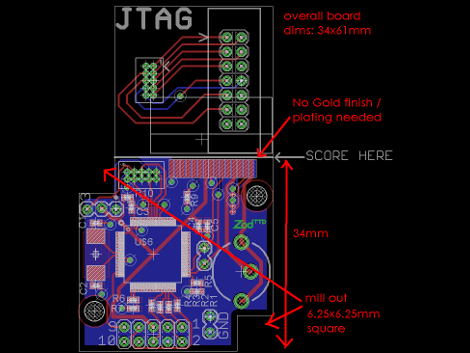
[Colin] has cut his teeth with about fifteen PCB orders. He wrote a tutorial describing the process and sharing his tips on avoiding common problems. You may remember our own How-To prepare designs for manufacture early last year. In that post, [Ian] shared his veteran knowledge by outlining BatchPCB’s board design process. This time, [Colin] is using Advanced Circuits in Colorado as a board house, giving us more insight on how the different companies work. No matter who you choose for manufacturing, make sure you really understand how to properly format and troubleshoot your designs. It’ll end up saving you a lot of time and money.