Nike + IPod As A Tracking Device

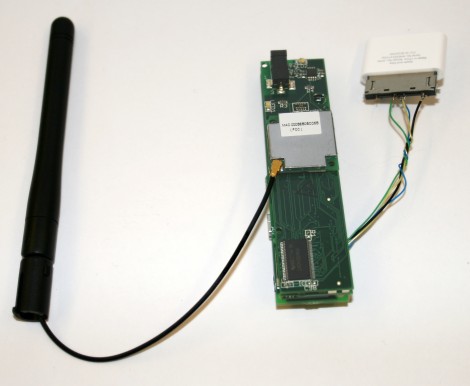
[Thomas] found a paper from 2006 that describes using the Nike + iPod system as inexpensive tracking devices. Yep, it’s old as dirt but we think it’s fascinating reading! [Scott Saponas] and his fellow authors take a hard look at the lack of security in the system in a twelve-page PDF. They cover several different ways to capture and track one of the $29 tags in someone’s shoe, including using the Gumstix reader above, or a slightly modified 3G iPod. If the sensors are not removed or manually switched off when not in use they can be picked up by any RF reader within range. Because the tags are cheap and available, one could be planted on an unsuspecting victim James-Bond-style. Maybe this is what prompted Apple’s half-hearted attempt to restrict hacking the devices to do things like unlock doors.

Of course if you don’t want to do the reading you could download their video presentation or just stream it.

Point And Shoot In A Classic Camera Body

If you think there’s a gun inside that camera you’ve been fooled. We just like the juxtaposition of the 1940’s era camera with the iconic sidearms. What you see is a point-and-shoot cameras inside of the classic Leica II body (this is actually a Zorki 1 knockoff). It is much like the Canon AE-1 hack but this time there’s plenty of build details.

Digital camera makers try to get the smallest form factor possible and consequently the inside of those things is a nightmare of tiny parts and intricate connections.The Sony DSC-WX1 is no exception, and even the battery is disassembled to fit inside. See the final product and its features in the video after the break.

Continue reading “Point And Shoot In A Classic Camera Body”

Midi Gloves

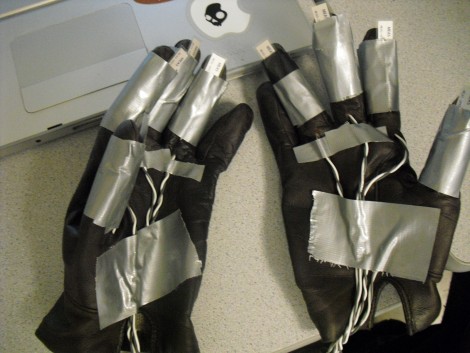
We’re being inundated with glove-based peripheral hacks. This is another final project from Cornell, keyboard out of the equation by adding 8 piezo sensors to a pair of gloves thereby shunning the pinky finger. We like this one because it’s easy to build and the midi interface implementation is well documented if you want to build your own.

As you can see after the break, this is easy to use with music software like Garage Band because it is a standard MIDI device. In addition, a MATLAB interface allows for custom mapping in case you want to change what each finger does.

We remember our first introduction to glove-based performances with Tod Machover’s Bug Mudra many years ago. We hope the music input hacks we’re seeing will lead to a whole new generation of music innovators.

Continue reading “Midi Gloves”

Monitor UV Exposure With Your Sunglasses

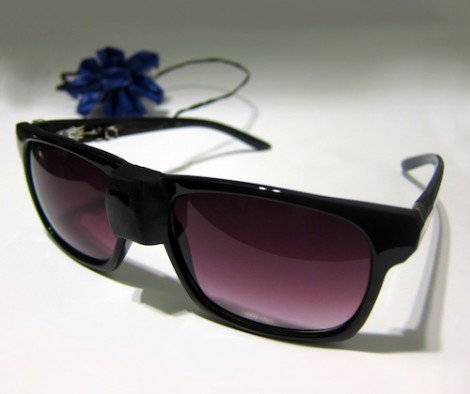
Tired of those awful sunburns? [Nikko Knappe’s] UV sensing glasses will warn you before you become crisp and red as a lobster. The bump added to the bridge support hides a TSL230R light frequency sensor. The device automatically switches on when the arms are unfolded and starts tracking cumulative exposure. If it detects a rising UV level, or you are about to burn based on skin type, an LED inside one arm of the frames will flash to inform you.

This has some potential if you think David Brin’s Earth outlines how climate change is really going to play out. Either way it’s still fun and we give bonus points to [Nikko] for disguising the lilypad that controls this as a flowery hair-pin.

Building Air Variable Capacitors

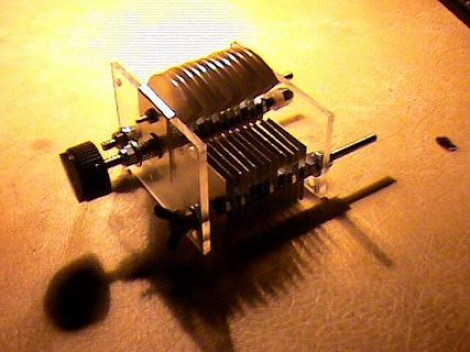
In keeping with our opinion that radio operators were the original electronic hackers here’s a guide to building your own transmitting air variable capacitors. Using some roof flashing, Plexiglas, and various fasteners [David Hammack] was able to make it work. It’s not a perfect solution but he has some ideas to make the next one better. Give this a try after you’re done tweaking your crystals and building input devices.

[Thanks Rich]

Maze Solving

[youtube=http://www.youtube.com/watch?v=63Txt5rLSWU]

[Mitchel Humpherys] and his fellow developers didn’t just develop a maze-solving algorithm, they also built a ping-pong ball maze platform that is computer controlled. Using a webcam the computer picks up the high-contrast maze by peering down from above, calculates the solution, and moves the ping-pong ball to the goal using two different tilt servos controlled by an 8051 microcontroller. But wait, there’s more! Why have the computer solve it when you can make a game out of a maze? Once the PC was thrown into the mix it was pretty easy to add Wii remote and Wii balance board control too. See these alternative inputs in action after the break.

Continue reading “Maze Solving”

PS3 Patch Allows Linux Installation

[Geohot] came up with a patch that allows OtherOS on 3.21 PS3 firmware. You’ll remember that Sony released version 3.21 specifically to prohibit OtherOS which allows the installation of Linux for which they were subsequently sued. Well, now their “fix” doesn’t work on people willing to flash patched firmware which means they’re only punishing those who play by the rules. Ugh.

Wondering why this is a big deal? Check out this article on the effect Sony’s move has on PS3 clusters used for supercomputing; something we hadn’t even thought of initially.

It turns out that this patch was released more than a month ago. Sorry for the late coverage but it’s new to us. You can see the obligatory proof video of the patched OtherOS after the break.

Continue reading “PS3 Patch Allows Linux Installation”