Five Ways To Repair Broken PCB Traces

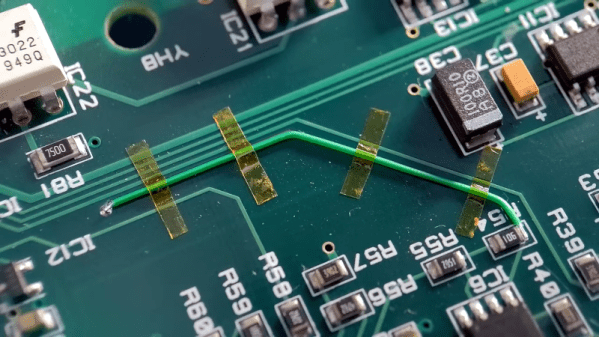
When everything used wires, it was easy to splice them or replace them. Not so much with PC boards, but everyone has their favorite method for repairing a broken trace. [Mr. SolderFix] has his five favorite ways, as you can see in the video below.

Of course, before you can repair a trace, you probably have to expose it since most boards have solder mask now. Unless you plan to shut the trace at both ends, exposing the actual trace is probably the first step.

Continue reading “Five Ways To Repair Broken PCB Traces”

Rulers Of The Ancient World — Literally!

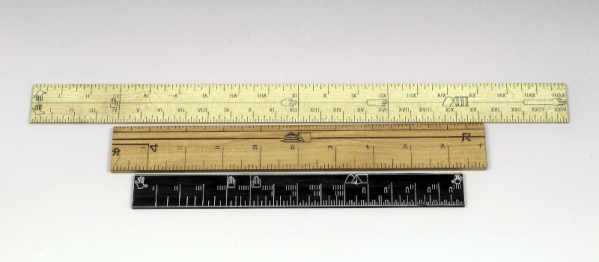
If you were expecting a post about ancient kings and queens, you are probably at the wrong website. [Burn Heart] has a fascination with ancient measuring devices and set out to recreate period-correct rules, although using decidedly modern techniques.

The first example is a French rule for measuring the “pied du Roi” or king’s foot. Apparently, his royal highness had large feet as a the French variant is nearly 13 inches long. The next rulers hail from Egypt and measure cubits and spans. Turns out the pyramid builders left a lot of information about measurements and their understanding of math and tools like dividers.

Other rules from Rome, Japan, and the Indus Valley are also included. According to the post, one set of these rulers used locally sourced wood, but a second “limited” edition used wood that the originals might have. Most of the rulers were etched via CNC, although the French ruler was hand-etched.

The Romans, apparently, had smaller feet than French royalty, as their Pes or foot was about 11.65 inches. There are plenty of little tidbits in the post ranging from the origin of the word inch to why the black wood used for piano keys is called ebony.

We’ll stipulate this isn’t exactly a hack, although it is fine workmanship and part of hacker culture is obsessing over measuring things, so we thought it was fair game. These days, rulers are often electronic. Which makes it natural to put them on a PC board.

Home Automation Panel Looks Industrial

Modern tech is great, but we have to admit that we sometimes miss when electronic things looked complicated. A modern computer looks dull compared to, say, an IBM 360. Control rooms now look no different than a stock trading room, instead of being full of indicators, knobs, and buzzers. [BorisDigital] must have some of those same feelings. He built a very cool control panel for his Home Assistant setup. He based it somewhat on a jet cockpit and a little on a nuclear plant control room, and the result, as you can see in the video below, is great.

This is less of a how-to video and more of an inspirational one. After all, you won’t have the same setup, but there are many details about how it was constructed with a Raspberry Pi, 3D printing, and control of the Home Assistant via web services.

Continue reading “Home Automation Panel Looks Industrial”

Hackaday Podcast Episode 279: Solar Flares, Flash Cells, And Free Airline WiFi

Get your weekly fix of great hacks with your guides, Elliot Williams and Al Williams. This week, the guys talk about hacking airline WiFi, vanishing cloud services, and hobbies adjacent to hacking, such as general aviation. Things go into the weird and wonderful when the topic turns to cavity filters, driving LEDs with a candle, and thermite.

Quick hacks? Everything from vintage automated telescopes to home fusion reactors and ham radio mobile from a bicycle. Then there’s the can’t miss articles about the Solar Dynamics Observatory and an explainer about flash memory technology.

Check out the links below and leave your favorite hack of the week in the comments below!

As always, this week’s episode is freeze-dried as an MP3 for your convenience.

Continue reading “Hackaday Podcast Episode 279: Solar Flares, Flash Cells, And Free Airline WiFi”

Build Your Own Hydroelectric Dam

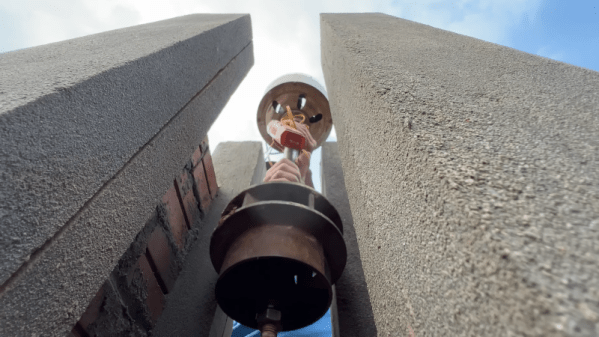
We have to admit that we often think about building unusual things, but we hadn’t really considered building our own hydroelectric dam before. [Mini Construction] did, apparently, and there’s a timelapse of the build in the video below.

We wished this was more of a how-to video, although if you are handy with brickwork, the mechanical construction seems straightforward. Presumably, you’d need to understand how much force the water had but we don’t know if there was math involved or just seat-of-the-pants design.

Continue reading “Build Your Own Hydroelectric Dam”

Hacking Airline WiFi The Hard Way

We’ve all been there. You are on a flight, there’s WiFi, but you hate to pay the few bucks just to watch dog videos. What to do? Well, we would never suggest you engage in theft of service, but as an intellectual exercise, [Robert Heaton] had an interesting idea. Could the limited free use of the network be coopted to access the general internet? Turns out, the answer is yes.

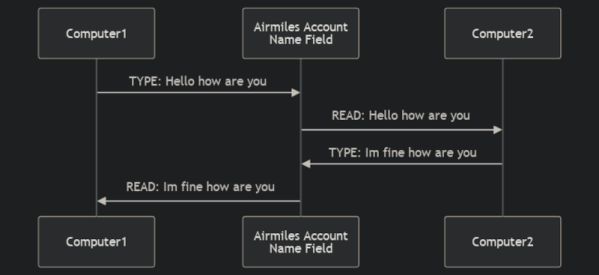
Admittedly, it is a terrible connection. Here’s how it works. The airline lets you get to your frequent flier account. When there, you can change information such as your name. A machine on the ground can also see that change and make changes, too. That’s all it takes.

It works like a drop box. You take TCP traffic, encode it as fake information for the account and enter it. You then watch for the response via the same channel and reconstitute the TCP traffic from the remote side. Now the network is at your fingertips.

There’s more to it, but you can read about it in the post. It is slow, unreliable, and you definitely shouldn’t be doing it. But from the point of view of a clever hack, we loved it. In fact, [Robert] didn’t do it either. He proved it would work but did all the development using GitHub gist as the drop box. While we appreciate the hack, we also appreciate the ethical behavior!

Some airlines allow free messaging, which is another way to tunnel traffic. If you can connect to something, you can probably find a way to use it as a tunnel.

Unlocking The Mystery Of An Aircraft ADI

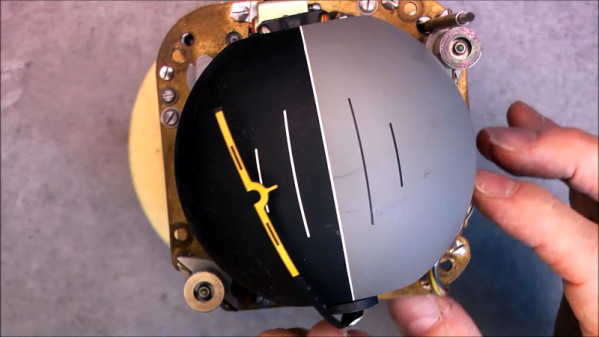
If you’ve ever seen the cockpit of an airplane, you’ve probably noticed the round ball that shows your attitude, and if you are like us, you’ve wondered exactly how the Attitude Direction Indicator (ADI) works. Well, [msylvain59] is tearing one apart in the video below, so you can satisfy your curiosity in less than 30 minutes.

Like most things on an airplane, it is built solidly and compactly. With the lid open, it reminded us of a tiny CRT oscilloscope, except the CRT is really the ball display. It also has gears, which is something we don’t expect to see in a scope.

Continue reading “Unlocking The Mystery Of An Aircraft ADI”