3D Printed DIN Rail Mount Is Attractive

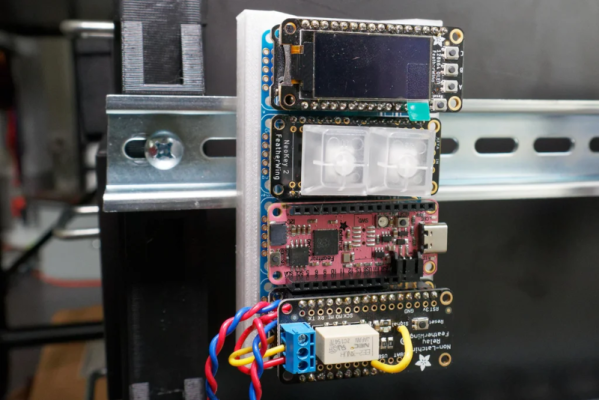
DIN rails aren’t very common in hobby projects, although you do see them occasionally. But in some industries, they are everywhere. The rail is just a piece of aluminum or steel with slots to hold it to a wall or bulkhead. There are two small lips that equipment like circuit breakers, power supplies, or controllers can attach easily. A common 3D printing project is a way to mount something like a printer controller to DIN rails. [NotLikeALeafOnThe Wind] shows a different take on it: a magnetic holder that temporarily attaches a rail to a ferrous surface.

Of course, mounting the rail is only half the equation. After that, you still need things to mount on the rail. Luckily, there’s no shortage of designs for DIN mounts for many common boards and modules.
Continue reading “3D Printed DIN Rail Mount Is Attractive”

Analog Engineer’s Pocket Reference Needs A Big Pocket

We always admire when companies produce useful tools or documentation that aren’t specific to their products. For example, consider LTSpice. Sure, it has the company’s models baked in. But there’s no reason you can’t use it for anything. Thanks! We were interested to see Texas Instrument’s fifth edition of the “Analog Engineer’s Pocket Reference” is still freely available. While we aren’t sure a book with nearly 200 pages in it is a “pocket reference,” we do think you’ll enjoy it, even if you don’t want to use TI’s offerings. This book has been around for 50 years, but it is updated periodically, and this version is the fifth iteration.

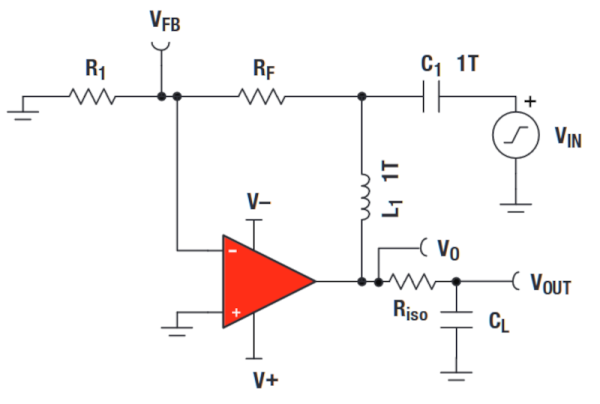
The book has several sections ranging from conversion between units and color codes to amplifier noise calculations and understanding ADC settling times. Want to know more about PCB microstrips? Page 85.

Continue reading “Analog Engineer’s Pocket Reference Needs A Big Pocket”

Wooden Desk Lamp Uses Unusual Dimmer

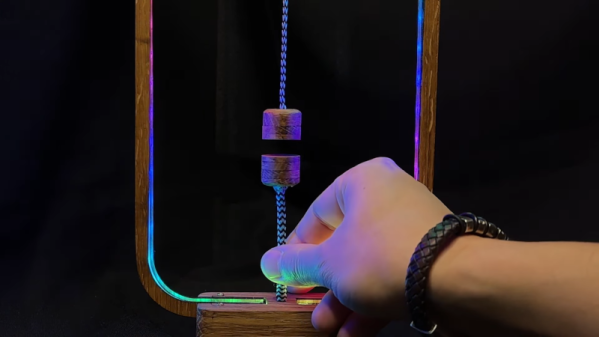
One of the problems with laser cutting projects is that while they look good, they often look like they were laser cut. [Timber Rough] has a wooden desk lamp that not only looks good but has one of the most unusual dimming features we’ve seen.

One thing that stands out is the lamp is made of different kinds of wood, and that helps. But the dimmer is a magnet and Hall effect sensor that levitates. It is hard to explain, but a quick look at the video below will clarify it.

Continue reading “Wooden Desk Lamp Uses Unusual Dimmer”

Simple Magnetic Levitator

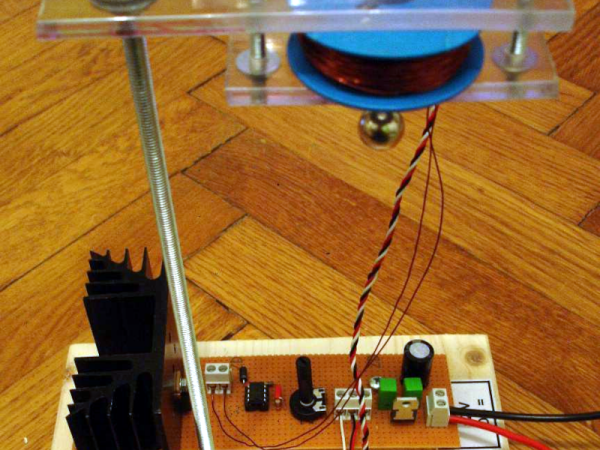
[Stoppi] always has exciting projects and, as you can see in the video below, the latest one is a very simple magnetic levitator design. The design is classic and simple: a 5 V regulator IC, a Hall effect sensor, a 741 op amp, and a MOSFET to turn the electromagnet on and off.

Sure, there are a few passive components and a diode, too, but nothing exotic. The sensor normally presents 2.5 V of output. The voltage rises or drops depending on the polarity of the magnetic field. The stronger the field, the more the voltage changes away from the 2.5 V center.

The op amp acts as a comparator with a potentiometer setting the trip point. As the ball moves up towards the coil, the voltage increases, triggering the comparator, which turns off the FET. With no current through the coil, there’s no more electromagnet, and the ball starts to fall.

Of course, as the ball falls, the voltage from the sensor also drops, and this eventually turns on the electromagnet. The ball eventually reaches a relatively stable position.

This is one of those cases where a simple analog circuit might work better than a digital one. Or make it hard on yourself and use an FPGA.

Continue reading “Simple Magnetic Levitator”

Power Supply Efficiency Measurements

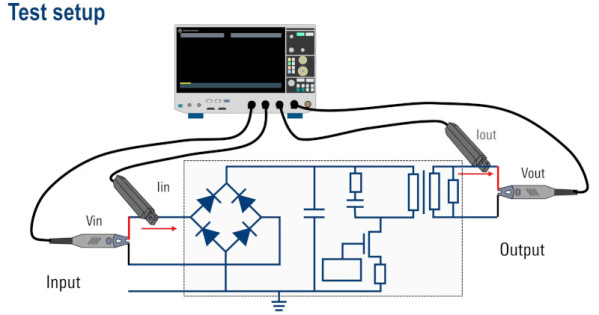
Even if you don’t have a Rohde Schwarz oscilloscope, you can still enjoy their recent video about using an oscilloscope to measure power supply efficiency. Of course, you don’t have to have a scope to do this. You can use a voltmeter and an ammeter, but it is very straightforward if you have a four-channel scope with a pair of current probes.

Of course, if you can measure the voltage and the current at the input, you can calculate the input power. Then again, most scopes these days can do the math for you. Then, you make the same measurement and calculation at the output. If you know the input and output power, you can calculate a percentage or many scopes can do it for you now.

Continue reading “Power Supply Efficiency Measurements”

3D Printing Silicone Parts

Silicone is a useful material for many purposes. Traditionally, creating something out of silicone required injection molding. That’s not difficult, but it does require a good bit of setup. As [Formlabs] points out in a recent video, there are at least three other routes to create silicone parts that utilize 3D printing technology that might fit your application better, especially if you only need a few of a particular item. You can see the video below.

The three methods are either printing silicone directly, printing a mold, casting silicone, or using high-performance elastomers, which are very silicone-like. Of course, as you might expect, some of this is aimed at prompting some of [Formlab’s] products, like a new silicone resin, and you can’t blame them for that.

Continue reading “3D Printing Silicone Parts”

The End Of Landlines?

Imagine if, somehow, telephones of all kinds had not been invented. Then, this morning, someone entered a big corporation board room and said, “We’d like to string copper wire to every home and business in the country. We’ll get easements and put the wires on poles mostly. But some of them will go underground where we will dig tunnels. Oh, and we will do it in other countries, too, and connect them with giant undersea cables!” We imagine that executive would be looking for a job by lunchtime. Yet, we built that exact system and with far less tech than we have today. But cell phones have replaced the need for copper wire to go everywhere, and now AT&T is petitioning California to let them off the hook — no pun intended — for servicing landlines.

The use of cell phones has dramatically decreased the demand for the POTS or plain old telephone service. Even if you have wired service now, it is more likely fiber optic or, at least, an IP-based network connection that can handle VOIP.

Continue reading “The End Of Landlines?”