The Chess Computer From 1912

Who was [Leonardo Torres Quevedo]? Not exactly a household name, but as [IEEE Spectrum] points out, he invented a chess automaton in 1920 that would foreshadow the next century’s obsession with computers playing chess.

Don’t confuse this with the infamous Mechanical Turk, which appeared to be a chess computer but was really a guy hiding inside a fake chess computer. The Spanish engineer’s machine really did play a modified end game. The chessboard was vertical, and pegs represented pieces. There were mechanical arms to move the pegs. The device actually dates back to 1912, with a public demonstration in Paris in 1914. Given [Quevedo’s] native language, the machine was called El Ajedrecista.

Continue reading “The Chess Computer From 1912”

Freq Out With LTSpice

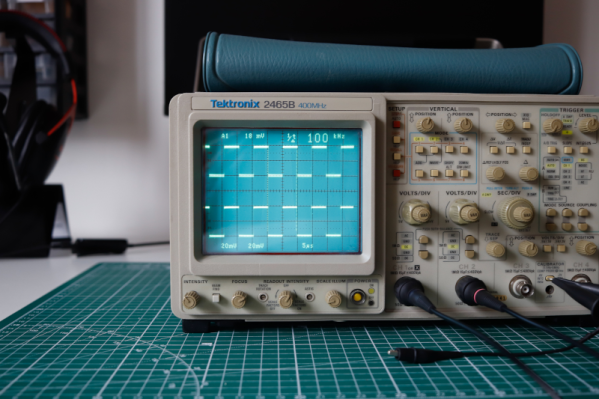
We always enjoy [FesZ’s] videos, and his latest about FREQ function in LTSpice is no exception. In fact, LTSpice doesn’t document it, but it is part of the underlying Spice system. So, of course, you can figure it out or just watch the video below. The FREQ keyword allows you to change component attributes in a frequency-depended way.

Of course, capacitors and inductors are frequency dependent by design. But the FREQ technique allows you to adjust things like voltage sources or resistance in arbitrary ways. By default, you must specify the frequency response data in decibels, which isn’t always convenient. However, [FesZ] shows you how to use other methods to express them using modifiers to the command.

Continue reading “Freq Out With LTSpice”

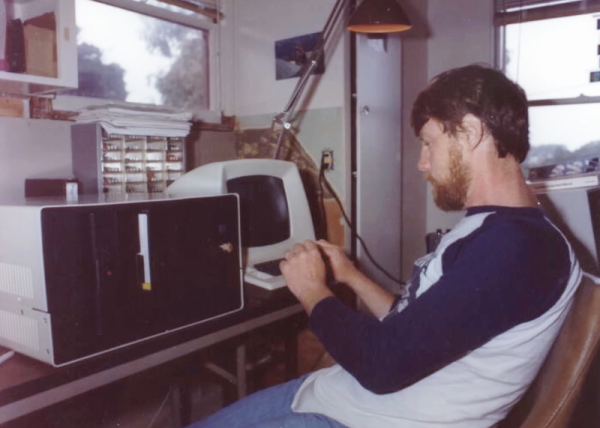
Vintage Computer Festival Southwest: Bil And Al’s Excellent Adventure

There was a time when seeing an actual computer was a big deal. They were in air-conditioned rooms with raised floors and locked doors. Even at a university, you were likely only to get access to a keypunch machine or a terminal. Then small computers came out, but computer stores were few and far between. Now you can go to any local store that sells electronics and put your hands on hardware that would have been black magic in those days. But the computers back then were also much easier to understand completely. Look at your main computer today. Do you know all the assembly language instructions for it? Can you access the GPU and the MMU? Could you build your own memory for it? Sure, you don’t have to do those things, but it was fun knowing that you could. That seemed to be the overwhelming sentiment among the attendees we spoke to at the Vintage Computer Festival last weekend: We like computers that we can completely understand and troubleshoot.

If you weren’t one of the 900 or so attendees, we can help. Check out our video summary, dive into even more interviews with Bil Herd and guests on our YouTube channel, or just keep reading. The festival happens at several locations throughout the year, but this was the first time one has been in the Southwest for about ten years!

Continue reading “Vintage Computer Festival Southwest: Bil And Al’s Excellent Adventure”

Demo Relativity For A C-Note

If you are a science fiction fan, you probably hate the theory of relativity. After all, how can the Enterprise get to a new star system every week if you can’t go faster than the speed of light? [Nick Lucid] wants to set you straight: it is real, and you can prove it to yourself for under $100.

The idea uses muons created in our atmosphere by cosmic rays colliding with gasses in the atmosphere. So how do you detect muons yourself? [Nick] shows you how to do it with a fish tank, dry ice, and rubbing alcohol. If that sounds like a cloud chamber, you aren’t wrong.

A cloud chamber is undeniably cool, but how does it prove relativity? You’ll see several kinds of particles interacting with your cloud chamber, but you can tell which ones are muons by the size and motion of the streaks. The muons don’t last very long. So you’d expect very few muons to make it to the surface of the Earth. But they not only reach the surface but go deep under it, as well.

So how do you explain it? Relatively. The muon experiences its average 2.2 microseconds lifetime in what appears to us to be over 150 microseconds, even if it is moving relatively slowly for a muon. Some muons are faster or live longer, so we see a lot of them hit the Earth every minute of every day. This is due to time dilation and also explains length contraction because the muon moves at a certain speed, yet it appears to go further to us than to the muon.

Coincidentally, we recently discussed this same effect relative to using muons for underground navigation. If you want an easier way to count muons with a computer, you can build a detector for about the same price as the cloud chamber.

Continue reading “Demo Relativity For A C-Note”

A Browser Approach To Parsing

There are few rites of programmer passage as iconic as writing your first parser. You might want to interpret or compile a scripting language, or you might want to accept natural-language-like commands. You need a parser. [Varunramesh] wants to show you parser combinators, a technique used to make practical parsers. But the demonstration using interactive code cells in the web page is nearly as interesting as the technique.

Historically, you parse tokens, and this technique can do that too, but it can also operate directly on character streams if you prefer. The idea is related to recursive descent parsing, where you attempt to parse certain things, and if those things fail, you try again.

Continue reading “A Browser Approach To Parsing”

An Open Source Firmware For Cheap Geiger Counters

It is a time-honored tradition: buy some cheap piece of gear and rewrite the firmware to make it work better. [Gissio] managed to do just that for a cheap FS2011 Geiger counter. Apparently, the firmware will also work with some similar Chinese models, too.

The new firmware boasts an improved UI and multiple measurement units, including Sievert, Rem, and counts per minute or second. You can hold the measurement or compute a dose or average rate. The new firmware also has a host of customizations and can accommodate different tubes.

There are, however, two really key features. First, the new firmware offers about 40% more battery life than the stock version. Second, there is now an onboard nuclear chess game! That way, you can enjoy yourself while you are getting irradiated. There are also a few suggested hardware mods that are optional to improve measurements and increase the buzzer volume, among other things.

If you get a Geiger counter, you might be surprised at what things are slightly radioactive. If you don’t need the microcontroller, you can make a workable counter on the cheap.

Continue reading “An Open Source Firmware For Cheap Geiger Counters”

The Voice Of GPS

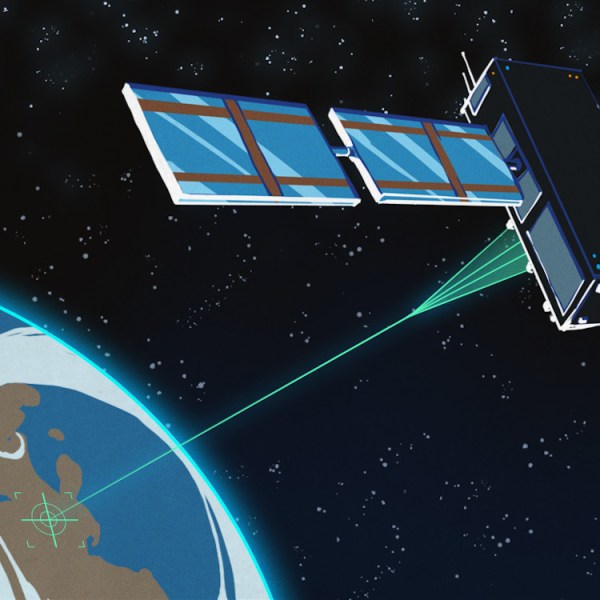
Tuning into a GPS satellite is nothing new. Your phone and your car probably do that multiple times a day. But [dereksgc] has been listening to GPS voice traffic. The traffic originates from COSPAS-SARSAT, which is a decades-old international cooperative of 45 nations and agencies that operates a worldwide search and rescue program. You can watch a video about it below.

Nominally, a person in trouble activates a 406 MHz beacon, and any of the 66 satellites that host COSPAS-SARSAT receivers can pick it up and relay information to the appropriate authorities. These beacons are often attached to aircraft or ships, but there are an increasing number of personal beacons used by campers, hikers, and others who might be in danger and out of reach of a cell phone. The first rescue from this system was in 1982. By 2021, 3,632 people were rescued thanks to the system.

The satellites that listen to the beacon frequencies don’t process the signals. They use a transponder that re-transmits anything it hears on a much higher downlink frequency. These transponders are always payloads on other satellites like navigation or weather satellites. But because the transponder doesn’t care what it hears, it sometimes rebroadcasts signals from things other than beacons. We were unclear if these were rogue radios or radios with spurious emissions in the translator’s input range.

The video has practical tips on how to tune in several of the satellites that carry these transponders. Might be a fun weekend project with a software-defined radio.

We’ve seen homebrew satellite devices, but none for an emergency beacon — we aren’t sure what the legal aspects of that would be. There are other satellites that unknowingly host pirate radio stations, too.

Continue reading “The Voice Of GPS”