VK-01 Is A Bartender You Don’t Need To Tip

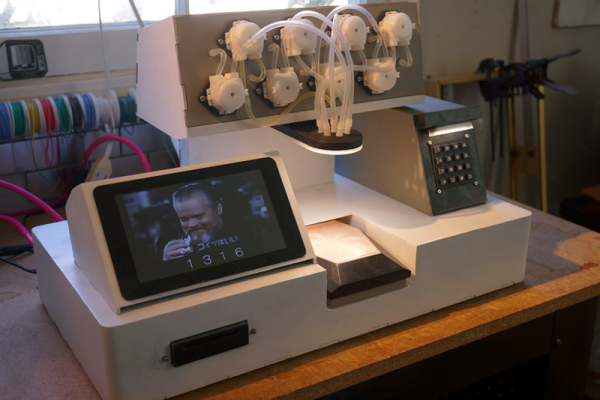
[Donald Bell’s] robotic bartender entry into the 2020 Cocktail Robotics Grand Challenge is one of those things that sounds easy until you start getting into the details. After all, how hard is it to dispense some liquids into a glass? Harder than you might think. Sure there are pumps — [Donald] uses peristaltic pumps — but there’s also two Raspberry Pis, an ESP8622, and at least one more microcontroller lurking underneath. You can see a video about the device below.

Even if you don’t want a refreshing libation, you’ll probably like the VK-01’s Bladerunner cyberpunk styling. What we really enjoyed about the post was that it took you through the concept sketches, some of the design trades, and even a cardboard prototype.

Continue reading “VK-01 Is A Bartender You Don’t Need To Tip”
Inside A $30,000 8 GHz Scope

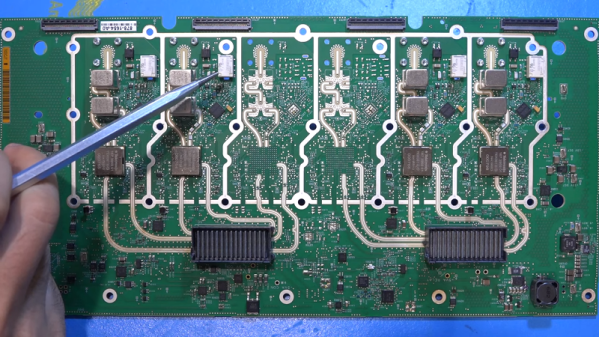
One of the best things about the Internet — especially the video part — is that you can get exposed to lots of things you might otherwise not be able to see. Take oscilloscopes, for example. If you were lucky, you might have one or two really nice instruments at work and you certainly weren’t going to be allowed to tear them open if they were working well. [The Signal Path], as a case in point, tears down a $30,000 MSO6 8 GHz oscilloscope.

Actually, the base price is not quite $30,000 but by the time you outfit one, you’ll probably break the $30K barrier. Compared to the scopes we usually get to use, these are very different. Sure, the screens are larger and denser, but looking at the circuit boards they look more like some sort of high-end computer than an oscilloscope. Of course, in a way, that’s exactly what it is.

Continue reading “Inside A $30,000 8 GHz Scope”

Ultracapacitors Might Have Bad Fruity Smell

You might think the smell of an electrolytic capacitor boiling out is bad, but if scientists from the University of Sydney have their way, that might be nothing. They’ve devised an ultracapacitor — that uses biomass from the stinky durian fruit along with jackfruit. We assume the capacitors don’t stink in normal use, but we wouldn’t want to overload one and let the smoke out.

One of the things we found interesting about this is that the process seemed like something you might be able to reproduce in a garage. Sure, there were a few exotic steps like using a vacuum oven and a furnace with nitrogen, and you’d need some ability to handle chemicals like vinylidene fluoride. However, the hacker community has found ways to create lots of things with common tools, and we would imagine creating aerogels from some fruit ought not be out of reach.

Continue reading “Ultracapacitors Might Have Bad Fruity Smell”

Trunking Police Scanning With SDRTrunk

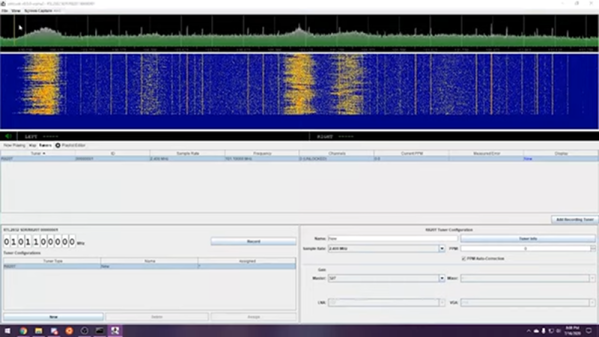
There was a time when it was easy to eavesdrop on police and other service radio networks. Police scanners fans can hear live police, fire, and ambulance calls. However, it isn’t as easy as it used to be because nearly all radios now are trunked. That means conversations might jump from channel to channel. However, P25 can unscramble trunked radio calls intercepted by a cheap SDR dongle and let you listen in. [SignalsEverywhere] shows you how to set it up for Windows or Linux and you can see the video below.

Trunking radio makes sense. In the old days, you might have a dozen channels for different purposes. But most channels would be empty most of the time. With trunking radio, a radio’s computer is set to be in a talk group and a control channel sorts out what channel the talk group should use at any given time. That means that one channel might have several transmissions in a row from different talk groups and one talk group might hop to a new channel on each transmission.

Continue reading “Trunking Police Scanning With SDRTrunk”

FCC Fines Hobby King Almost $3 Million For Illegal Drone Transmitters

We take wireless devices for granted these days, and it is easy to forget that the use of the airwaves is subject to government control — the FCC in the United States. HobbyKing got a sharp reminder when the FCC levied a nearly $3 million fine for the company selling uncertified drone transmitters.

It was hardly a surprise, though. The FCC has been cracking down on these noncompliant transmitters for a while now and had issued a notice of apparent liability to the company back in 2018 and the investigation goes back to 2016. The problems included radios being sold that were on unauthorized frequencies, radios with higher than legal output power, and selling radios that were not type accepted.

Continue reading “FCC Fines Hobby King Almost $3 Million For Illegal Drone Transmitters”

New Release Of FidoCadJ Draws Schematics Everywhere

Do you remember drawing your first schematic? Presumably you used a pen or a pencil and some kind of paper. Schematic capture software, though, makes it so much easier to draw schematics. There are many to choose from, but we spent some time checking out FidoCadJ and found it capable. Of course, there are many other options, but we did like that FidoCadJ runs locally and since it uses Java will run on just about any computer. Since it is open-source, you can modify it and you don’t have to worry about licensing it for your many computers or your team.

The program is a JAR file, and our first attempt to run it ran afoul of our older Java version that was the default Java Runtime Environment. But that was easy to fix, especially since a newer version was there, just not the default.

Continue reading “New Release Of FidoCadJ Draws Schematics Everywhere”

Breadboarding Console Has The Power

It is hard to remember how expensive an electronic hobby used to be. It wasn’t long ago, for example, that a solderless breadboard was reasonably expensive and was likely to have some sort of baseboard. The nicer ones even had a power supply or some simple test instruments. While you can still buy that sort of thing today, the low cost of bare breadboards have made them much more common. [Sebastian] decided to use his 3D printer to give those cheap breadboards a nice home.

The design looks great, and frankly isn’t much of a technical triumph, but it is useful and clean looking. The build uses some banana jacks, a switch, an LED, a 9V battery, and a common small power supply module. Of course, you also need a few breadboards.

Continue reading “Breadboarding Console Has The Power”