Making Aerogel, It’s Not For The Faint-Hearted

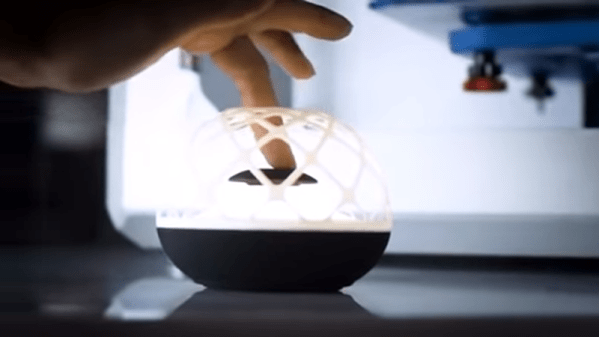
Aerogel — that mixture of air and silica — is one of those materials that seems like a miracle. It is almost not there since the material is 99% air. [NileRed] wanted to make his own and he documented his work in a recent video you can see below.

If you decide to replicate his result, be careful with the tetramethyl orthosilicate. Here’s what he says about it:

And the best part is, that when it’s in your eyes, it gets under the surface, and the particles are way too small to remove. For this reason, you could go permanently blind.

It can also mess up your lungs, so you probably need a vent hood to really work with this. It isn’t cheap, either. The other things you need are easier to handle: methanol, distilled water, and ammonia.

Continue reading “Making Aerogel, It’s Not For The Faint-Hearted”
A Really Garbage Project

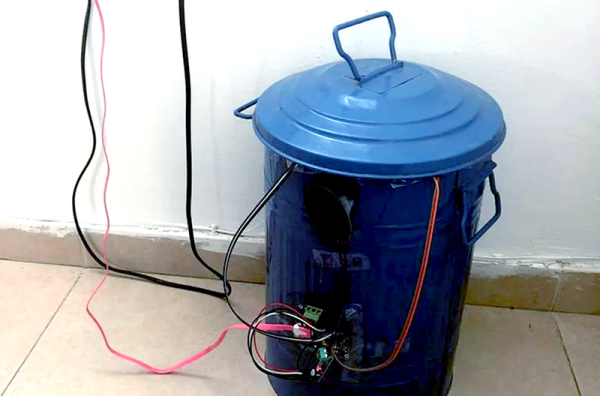
No matter who you are,  you produce garbage of some kind or another. Two students decided they wanted to create a smart garbage can that could alert them when the can is full or even when it is stinky.

We will go on on the record: we didn’t know that an alcohol sensor could tell if your garbage is stinky, so if that works, that’s a new one on us. However, it makes a certain kind of sense because garbage ferments. We thought garbage smelled because of hydrogen sulfide and methane.

Trash cans have a tough life, so if you really want to duplicate this, you’ll probably want to mount things a bit more securely. The software, however, runs everything through a cloud service and from there can use Blynk for a phone app and IFTTT to ship things to a spreadsheet, should you care to track your garbage history statistics.

Continue reading “A Really Garbage Project”

NASA Spinoff Prints Electronics

NASA says that Electronic Alchemy’s eForge 3D printer is another space program spinoff. The printer looks a lot like a conventional 3D printer but unlike its mundane cousin it can print sensors, lights, and other electronic components. It does that by using one of six or eight different materials.

Six of the eight spools each have some sort of electronic property. According to the company they have conductive filament, resistive filament, insulating filament, capacitive filament, and both N- and P-type semiconductors.

Continue reading “NASA Spinoff Prints Electronics”

What’s In A Name For A Tool Battery Pack?

Power tools have come a long way. It used to be you needed extension cords or a generator for your tools, but now you can get just about anything with a nice rechargeable battery pack. As it turns out, most of those packs are made by the same company, and [syonyk] wanted to see how similar two different Makita packs and a Rayovac pack were. What he found was surprising. The outsides were very similar, but what was on the inside?

The Rayovac pack was easy to open and had a controller, a thermal cutoff device, and two layers of 18650 batteries. The similar Makita pack looked identical from the outside until he tried to take it apart. The maker had plugged one screw hole and used security screws instead of the Phillips heads like on the Rayovac.

Continue reading “What’s In A Name For A Tool Battery Pack?”

Two Perspectives On James Clerk Maxwell And His Equations

We are unabashed fans of [The History Guy’s] YouTube channel, although his history videos aren’t always about technology, and even when they are, they don’t always dig into the depths that we’d like to see. That’s understandable since the channel is a general interest channel. However, for this piece on James Clerk Maxwell, he brought in [Arvin Ash] to handle the science side. While [The History Guy] talked about Maxwell’s life and contributions, [Arvin] has a complementary video covering the math behind the equations. You can see both videos below.

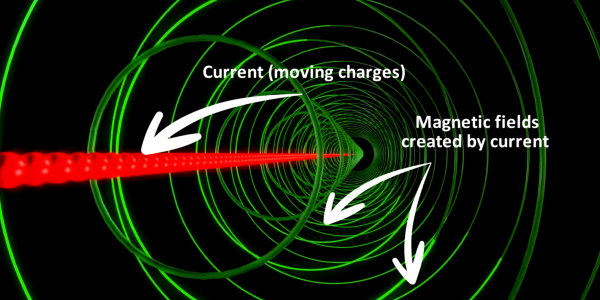
Of course, if you’ve done electronics for long, you probably know at least something about Maxwell’s equations. They unified electricity and magnetism and Einstein credited them with spurring one of his most famous theories.

Continue reading “Two Perspectives On James Clerk Maxwell And His Equations”

Automating Hand Sanitizer — If You Can Find Any

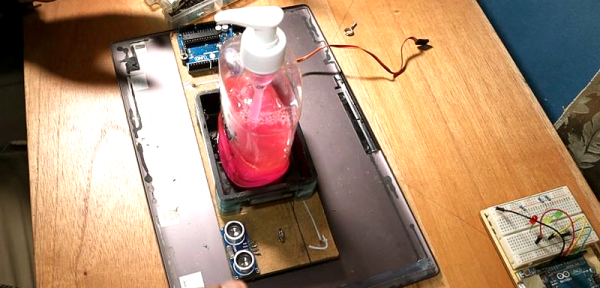
We once saw a Romeo and Juliet production where the two families were modern-day mob families with 3-piece suits and pistols. If they made King Richard III set in this week, the famous line might be: “Hand sanitizer, hand sanitizer, my kingdom for hand sanitizer!” Even if you have a supply stashed in your prepper cache, you have to touch the bottle so you could cross-contaminate with other users. Public places often have automatic dispensers to combat this, and now you can too. [Just Barran] shows the device in a video, you can see below.

Sourcing parts for projects is sometimes a problem, but right now we are betting the hand sanitizer will be the hardest component. Of course, the Internet is ripe with homemade brews that may or may not be effective based on beer, grain alcohol, or a variety of other base materials.

Continue reading “Automating Hand Sanitizer — If You Can Find Any”

Table Held Up By Strings Teaches Physics

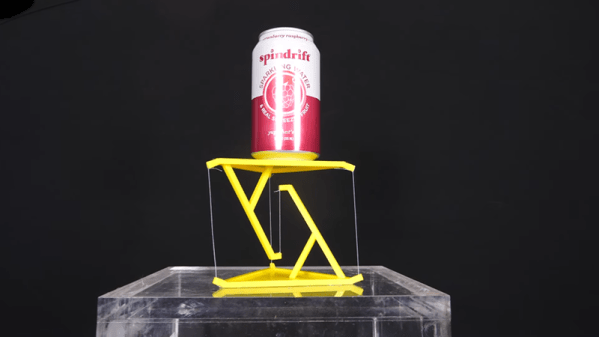
If you’ve never heard of a tensegrity structure, you should stop now and watch the video below. In it, [The Action Lab] shows a 3D printed table that is held up only with strings. We didn’t say suspended by strings but held up. Or so it appears. The model is from Thingiverse, but it is one of those things you have to see to believe.

The basic idea is pretty simple. Strings have a lot of tensile strength but collapse under the slightest compressive force. The arrangement of strings puts the force on the center string which is essentially hanging — the force is pulling the string down. The other three strings aren’t just for show, though, they keep the structure from tipping over in any one direction.

There are actually real-life examples of these kinds of structures. The video shows the Skylon at the Festival of Britain as one example and an Australian bridge. The video also makes the point that the human body uses tensegrity, since tendons are very similar to the strings in the model.

This would be a great experiment for a homeschooler or even kids cooped up in quarantine. The print itself doesn’t look very challenging, although the assembly might be a bit tricky.

This isn’t the first structure like this that we’ve seen. If the talk about tendons makes you think this might be useful in robotics, you’d be correct.

Continue reading “Table Held Up By Strings Teaches Physics”