Color Sensor Demystified

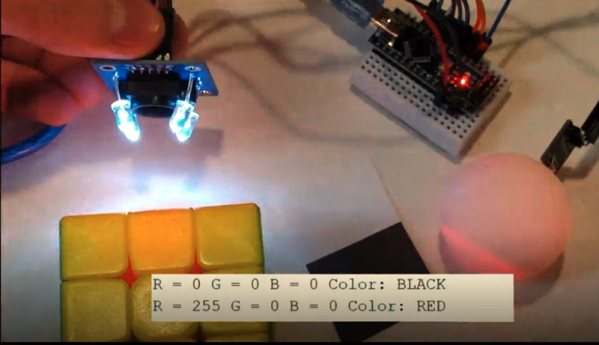
When [millerman4487] bought a TCS230-based color sensor, he was expecting a bit more documentation. Since he didn’t get it, he did a little research and some experimentation and wrote it up to help the rest of us.

The TCS3200 uses an 8×8 array of photodiodes. The 64 diodes come in four groups of 16. One group has a blue filter, one has green and the other has a red filter. The final set of diodes has no filter at all. You can select which group of diodes is active at any given time.

Continue reading “Color Sensor Demystified”

The Xerox Star On A Desktop Near You

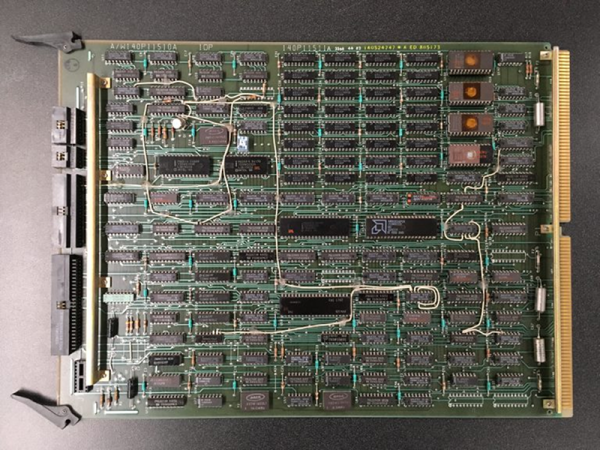
It is 1980-something and you see someone typing on a keyboard. The display is graphical, and they use a mouse to finish a document, send it over the network to another similar computer, where another user edits it a bit and prints it on a laser printer. Given the time-frame you might think the computer is a Mac, but you’d be wrong. The Xerox Star had all the features Apple “invented” about three years before the Macintosh arrived. If you never heard of the Star, that’s not surprising. At $16,500 each, there were only about 25,000 sold. Your chances of finding a working one now are slim, but thanks to emulation created by [Josh Dersch] you can try the Star out on your hardware today. If you want a preview, have a look at the 1982 video, below.

The machine had a surprisingly complex architecture. The main CPU was a microcoded computer with multiple registers that would run a sort of microcode program to execute different instruction sets depending on what was running. In addition, there was an intel 8085 that loaded the right microcode and serviced the keyboard, the mouse, the floppy, and the serial ports.

Continue reading “The Xerox Star On A Desktop Near You”

Understanding Modulated RF With [W2AEW]

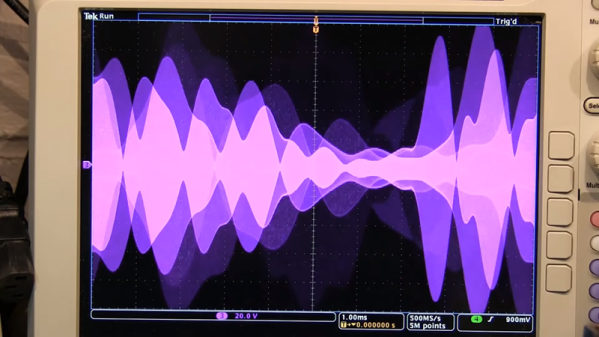
There was a time — not long ago — when radio and even wired communications depended solely upon Morse code with OOK (on off keying). Modulating RF signals led to practical commercial radio stations and even modern cell phones. Although there are many ways to modulate an RF carrier with voice AM or amplitude modulation is the oldest method. A recent video from [W2AEW] shows how this works and also how AM can be made more efficient by stripping the carrier and one sideband using SSB or single sideband modulation. You can see the video, below.

As is typical of a [W2AEW] video, there’s more than just theory. An Icom transmitter provides signals in the 40 meter band to demonstrate the real world case. There’s discussion about how to measure peak envelope power (PEP) and comparison to average power and other measurements, as well.

Continue reading “Understanding Modulated RF With [W2AEW]”

Radio Telescopes Horn In With GNU Radio

Who doesn’t like to look up at the night sky? But if you are into radio, there’s a whole different way to look using radio telescopes. [John Makous] spoke at the GNU Radio Conference about how he’s worked to make a radio telescope (PDF) that is practical for even younger students to build and operate.

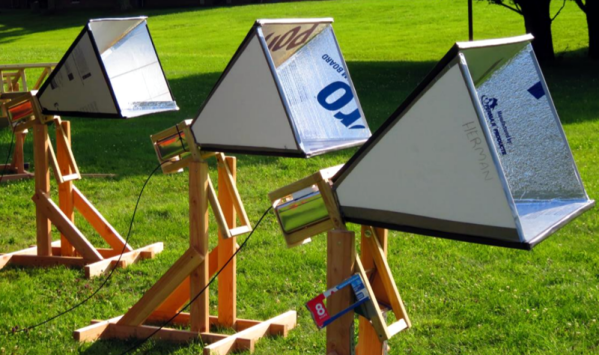
The only real high tech part of this build is the low noise amplifier (LNA) and the project is in reach of a typical teacher who might not be an expert on electronics. It uses things like paint thinner cans and lumber. [John] also built some blocks in GNU Radio that made it easy for other teachers to process the data from a telescope. As he put it, “This is the kind of nerdy stuff I like to do.” We can relate.

The telescope is made to pick up the 21 cm band to detect neutral hydrogen from the Milky Way. It can map the hydrogen in the galaxy and also measure the rotational speed of the galaxy using Doppler shift. Not bad for an upcycled paint thinner can. These are cheap enough, you can even build a fleet of them.

This would be a great project for anyone interested in radio telescopes or space. However, it is particularly set up for classroom use. Students can flex their skills in math, engineering, programming, and — of course — astronomy and physics.

Continue reading “Radio Telescopes Horn In With GNU Radio”

Epsom Salts Restores Lead Acid Battery

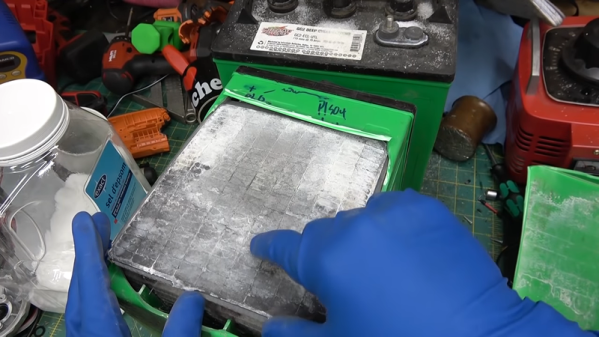
Despite a lot of advances in battery technology, lead acid batteries are still used in many applications due to cost and their ability to provide a lot of surge current. But they don’t last forever. However, [AvE] shows that in some cases a failed battery can be restored with — of all things — epsom salts. If it makes you feel funny to use the stuff grandpa soaks in when he has a backache, you can call it magnesium sulfate.

You can find a complete explanation in the video below (which includes [AvE’s] very colorful language), but fundamentally, the magnesium sulfate dissolves lead sulfate build-up on the battery plates. The fix is usually temporary because this build-up occurs with other failure mechanisms like plate material shedding and collecting at the bottom of the battery. Obviously, epsom salt can’t repair damaged plates or do any other magic cure.

Continue reading “Epsom Salts Restores Lead Acid Battery”

Lime SDR (and Pluto, Too) Sends TV

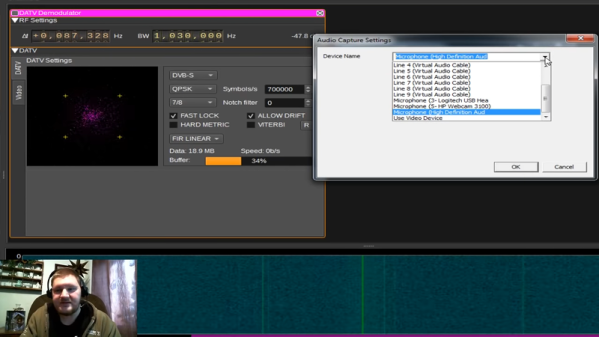
If you have experienced software defined radio (SDR) using the ubiquitous RTL SDR dongles, you are missing out on half of it. While those SDRs are inexpensive, they only receive. The next step is to transmit. [Corrosive] shows how he uses DATV Express along with a Lime SDR or a Pluto (the evaluation device from Analog Devices) to transmit video. He shows how to set it all up in the context of ham radio. An earlier video shows how to receive the signal using an SDR and some Windows software. The receiver will work with an RTL SDR or a HackRF board, too. You can see both videos, below.

The DATV Express software has plenty of options and since SDR if frequency agile, you ought to be able to use this on any frequency (within the SDR range) that you are allowed to use. At the end, he mentions that to really put these on the air you will want a filter and amplifier since the output is a bit raw and low powered.

Continue reading “Lime SDR (and Pluto, Too) Sends TV”

Is That A Vintage Computer In Your Pocket?

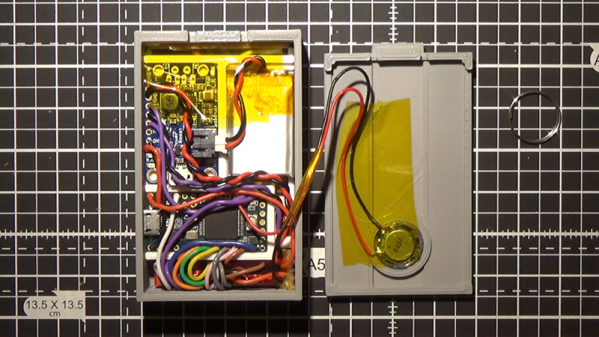
There’s a lot of debate over which of several contenders was the first modern computer. One of those first operating computers was the University of Cambridge’s EDSAC — the brainchild of Dr. Maurice Wilkes. The EDSAC scored a lot of firsts and used a serial data path along with mercury delay line memories. Over on Hackaday.io, [David Boucher] wanted to simulate the EDSAC in a much smaller form factor than the original room full of racks.

As you can see in the video below, he succeeded in that task, using a Teensy and a small LCD display. We’re reminded EDSAC was among the first machines so some of the terms we would employ were not in use yet. An order is an instruction, for example. Initial orders are akin to a bootloader. Continue reading “Is That A Vintage Computer In Your Pocket?”