MIPI CSI-2 Implementation In FPGAs

[Adam Taylor] always has interesting FPGA posts and his latest is no exception. He wanted to use a Zynq for image processing. Makes sense. You can do the high-speed parallel parts in the FPGA fabric and do higher-level processing on the built-in CPU. The problem is, of course, you need to get the video data into the system. [Adam] elected to use the Mobile Industry Processor Interface (MIPI) Camera Serial Interface Issue 2 (CSI-2).

This high-speed serial interface is optimized for data flowing in one direction. The camera, or the master, sends a number of bits (at least one) serially with one clock. To increase speed, data transfers on both rising and falling clock edges. The slave also has a pretty standard I2C master to send commands to the camera which, for the purposes of I2C, is the slave.

Continue reading “MIPI CSI-2 Implementation In FPGAs”

Linux Fu: Controlling The Terminal

A Linux terminal has a lot more features than the TeleType of yore. On a TeleType, text spews out and scrolls up and is gone forever. A real terminal can use escape characters to do navigate around and emulate most of what you like about GUIs. However, doing this at the lowest level is a chore and limits portability. Luckily, all the hard work has already been done.

First, there’s a large database of terminal capabilities available for you to use: terminfo.  And in addition, there’s a high-level library called curses or ncurses that simplifies writing programs to control the terminal display. Digging deep into every nook and cranny of ncurses could take years. Instead, I’m going to talk about using a program that comes with ncurses to control the terminal, called tput. Using these two commands, you can figure out what kind of terminal you’re dealing with, and then manipulate it nearly to your heart’s content. Let’s get started!

Continue reading “Linux Fu: Controlling The Terminal”

Blimpduino Hits Version 2

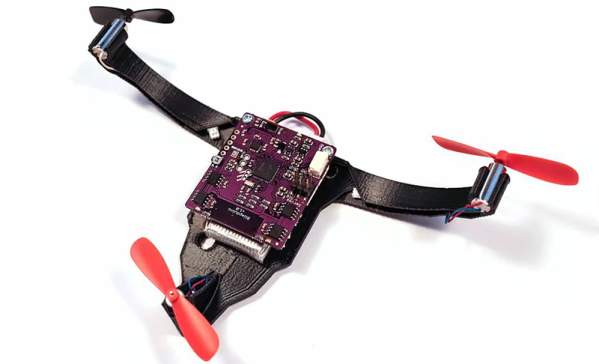
We always think that crossing the Atlantic in a blimp would be very serene — at least once they put heaters on board. The Hindenburg, the R-101, and the Shenandoah put an end to the age of the airship, at least for commercial passenger travel. But you can still fly your own with a helium balloon and some electronics. One notable project — the Blimpduino — has evolved into the Blimpduino 2. The open-source software is on GitHub. We couldn’t find the PCB layout, so we aren’t sure if it is or will be open. The 3D printed parts are available, though.

The PCB is the heart of the matter, a four-layer board with an ARM M0 processor, an ESP8266 WiFi module, four motor outputs, two servo motor outputs, a 9-axis inertial navigation system, an altimeter, and a forward object detection system. There’s also a battery charger onboard.

Continue reading “Blimpduino Hits Version 2”

The Electronics Of Cold War Nightmares

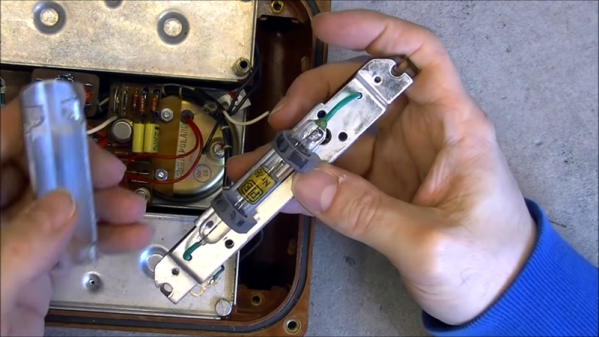
It is a good bet that if you look around you, you’ll be able to find at least one smoke detector in sight. If not, there’s probably one not too far away. Why not? Fires happen and you’d like to know about a fire even if you are sleeping or alert others if you are away. During the cold war, there were other things that people didn’t want to sleep through. [Msylvain59] tears down two examples: a Soviet GSP-11 nerve agent detector and a Polish RS-70 radiation alarm. You can see both videos, below.

In all fairness, the GSP-11 is clearly not meant for consumer use. It actually uses a test strip that changes colors and monitors the color change. Presumably, the people operating it were wearing breathing gear because the machine could take quite a while to provide a positive output. Inside reminded us of a film processing machine, which isn’t too far off.

The radiation monitor looks more like a miniature version of an old floor-standing radio. The case design, the thick-traced, single-sided, hand-drawn printed wiring board, and the –by today’s standards — huge parts within all contribute to making this look like a piece of radio gear from the 1970s or even earlier.

Continue reading “The Electronics Of Cold War Nightmares”

Video Details Construction Of Transparent Wood

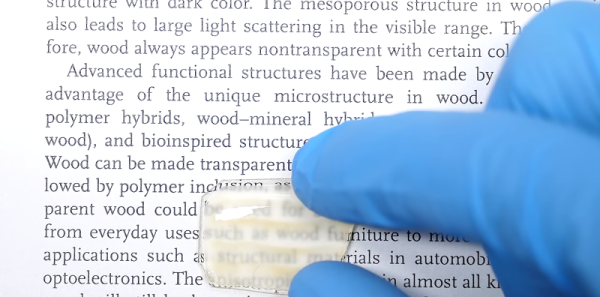
We’ve talked about transparent wood before. However, the process can be difficult to get just right. [NileRed] recently posted a video with very detailed instructions on how he’s doing it. Aside from the dangerous way he uses a table saw — something he realized after he watched the video — it is some great information.

This isn’t some hand-waving explanation. For nearly 36 minutes, you get an actual demonstration of the steps along with some explanations about why it works and why certain steps are done in a particular way.

Continue reading “Video Details Construction Of Transparent Wood”

FCC Gets Complaint: Proposed Ham Radio Rules Hurt National Security

On November 10th, [Theodore Rappaport] sent the FCC an ex parte filing regarding a proposed rule change that would remove the limit on baud rate of high frequency (HF) digital transmissions. According to [Rappaport] there are already encoded messages that can’t be read on the ham radio airwaves and this would make the problem worse.

[Rappaport] is a professor at NYU and the founding director of NYU Wireless. His concern seems to relate mostly to SCS who have some proprietary schemes for compressing PACTOR as part of Winlink — used in some cases to send e-mail from onboard ships.

Continue reading “FCC Gets Complaint: Proposed Ham Radio Rules Hurt National Security”

RISC-V CPU Gets A Peripheral

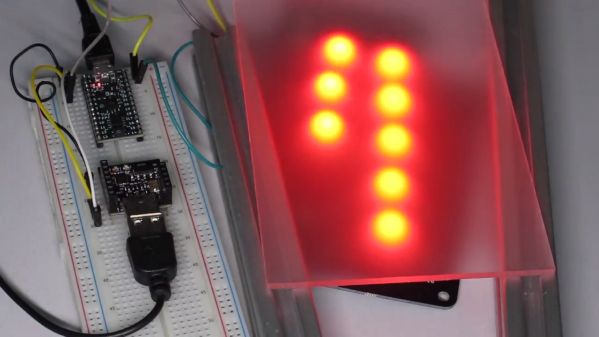
One of the ways people use FPGAs is to have part of the FPGA fabric hold a CPU. That makes sense because CPUs are good at some jobs that are hard to do with an FPGA, and vice versa. Now that the RISC-V architecture is available it makes sense that it can be used as an FPGA-based CPU. [Clifford Wolf] created PicoSOC — a RISC-V CPU made to work as a SOC or System on Chip with a Lattice 8K evaluation board. [Mattvenn] ported that over to a TinyFPGA board that also contains a Lattice FPGA and shows an example of interfacing it with a WS2812 intelligent LED peripheral. You can see a video about the project, below.

True to the open source nature of the RISC-V, the project uses the open source Icestorm toolchain which we’ve talked about many times before. [Matt] thoughtfully provided the firmware precompiled so you don’t have to install gcc for the RISC-V unless you want to write you own software. Which, of course, you will.

Continue reading “RISC-V CPU Gets A Peripheral”