Ears To You: Sensing Facial Expressions With An Ear Plug

Electronics keep getting smaller, but human fingers don’t. This leads to a real challenge with highly-embedded wearable computers. Sure, voice command has come a long way, but it has its own challenges. You might not want to verbally command your Borg implants in some situations. Maybe you need to be quiet. Or perhaps you are worried about accidentally triggering the device. Researchers in Germany want to monitor facial expressions instead. So to snap a picture, you might wink and to fast forward your movie playing on the inside of your eyelids, perhaps you’d look to the right twice. You can see a video presentation about the paper, below.

The paper looks at several different methods to read facial movements. Some were pretty intrusive. However, a promising technique used Ear Field Sensing (EarFS). An earplug with an electrode senses electrical changes in the ear canal resulting from facial muscle movement. Other techniques examined included electromyography, capacitive sensing, and a different form of electrical field sensing.

Continue reading “Ears To You: Sensing Facial Expressions With An Ear Plug”

How Hertha Ayrton Enabled The Titanic To Call SOS

[Kathy] recently posted an interesting video about the connection of an electronics pioneer named [Hertha Ayrton] to the arc transmitter. The story starts with the observation of the arc lamp — which we learned was a typo of arch lamp.

[Hertha] was born into poverty, but — very odd for the day — obtained a science education. That’s probably a whole story in of itself. During her schooling, she fell in love with her professor [William Ayrton] and they wed.

Continue reading “How Hertha Ayrton Enabled The Titanic To Call SOS”

ESP32 Boards With Displays: An Overview

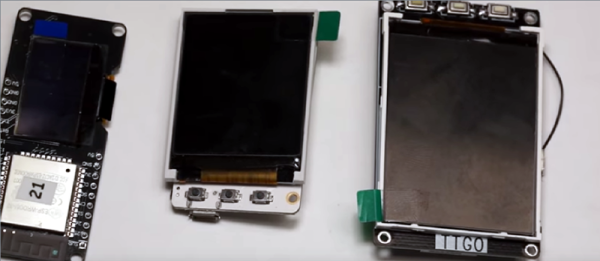
The ESP8266 has become practically the 555 chip of WiFi connected microcontrollers. Traditionally, you’d buy one on a little breakout board with some pins and a few connectors, and then wire up anything else you need. The ESP8266’s big brother, the ESP32, hasn’t quite taken over from the ESP8266, but it has a lot more power and many more options. [Andreas] has a new video that shows seven new ESP32 boards that have integral displays. These boards can simplify a lot of applications where you need both WiFi and a user interface.

Of the boards examined, six of them have OLED displays, but one has an E-paper display. To summarize results, [Andreas] summarized his findings on these seven along with others in an online spreadsheet.

Continue reading “ESP32 Boards With Displays: An Overview”

Machine Learning Crash Course From Google

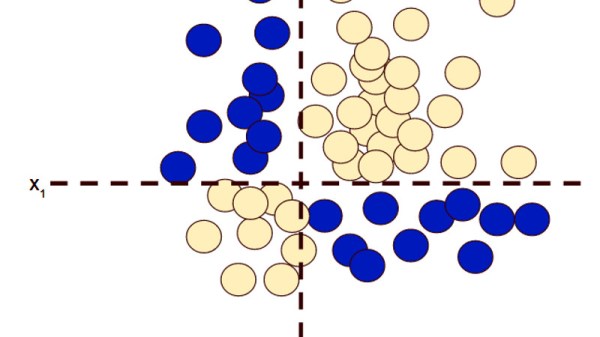
We’ve been talking a lot about machine learning lately. People are using it for speech generation and recognition, computer vision, and even classifying radio signals. If you’ve yet to climb the learning curve, you might be interested in a new free class from Google using TensorFlow.

Of course, we’ve covered tutorials for TensorFlow before, but this is structured as a 15 hour class with 25 lessons and 40 exercises. Of course, it is also from the horse’s mouth, so to speak. Google says the class will answer questions like:

  • How does machine learning differ from traditional programming?
  • What is loss, and how do I measure it?
  • How does gradient descent work?
  • How do I determine whether my model is effective?
  • How do I represent my data so that a program can learn from it?
  • How do I build a deep neural network?

Continue reading “Machine Learning Crash Course From Google”

Hands-On: Flying Drones With Scratch

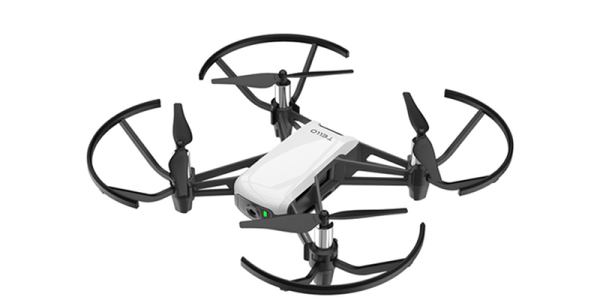
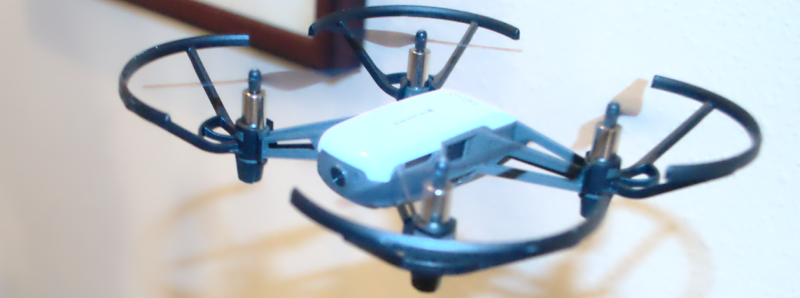
I’ll admit it. I have a lot of drones. Sitting at my desk I can count no fewer than ten in various states of flight readiness. There are probably another half dozen in the garage. Some of them cost almost nothing. Some cost the better part of a thousand bucks. But I recently bought a drone for $100 that is both technically interesting and has great potential for motivating kids to learn about programming. The Tello is a small drone from a company you’ve never heard of (Ryze Tech), but it has DJI flight technology onboard and you can program it via an API. What’s more exciting for someone learning to program than using it to fly a quadcopter?

For $100, the Tello drone is a great little flyer. I’d go as far as saying it is the best $100 drone I’ve ever seen. Normally I don’t suggest getting a drone with no GPS since the price on those has come down. But the Tello optical sensor does a great job of keeping the craft stable as long as there is enough light for it to see. In addition, the optical sensor works indoors unlike GPS.

But if that was all there was to it, it probably wouldn’t warrant a Hackaday post. What piqued my interest was that you can program the thing using a PC. In particular, they use Scratch — the language built at MIT for young students. However, the API is usable from other languages with some work.

Information about the programming environment is rather sparse, so I dug in to find out how it all worked.

Continue reading “Hands-On: Flying Drones With Scratch”

Raspberry Pi Keeps Cool

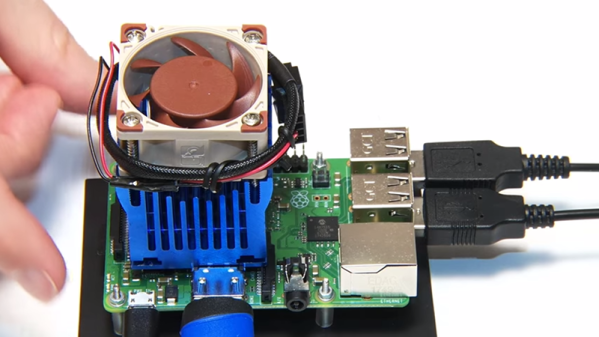
In general, heat is the enemy of electronics. [Christopher Barnatt] is serious about defeating that enemy and did some experiments with different cooling solutions for the Raspberry Pi 3. You can see the results in the video below.

A simple test script generated seven temperature readings for each configuration. [Barnatt] used a bare Pi, a cheap stick-on heatsink, and then two different fans over the heatsink. He also rigged up a large heatsink using a copper spacer and combined it with the larger of the two fans.

Continue reading “Raspberry Pi Keeps Cool”

Dual SDR Receives Two Bands At Once

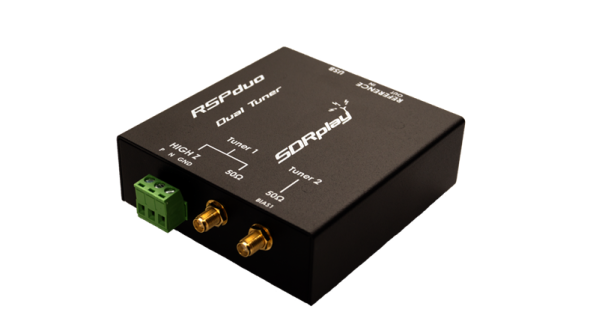
There was a time when experimenting with software defined radio (SDR) was exotic. But thanks to cheap USB-based hardware, this technology is now accessible to anyone. While it is fun to play with the little $20 USB sticks, you’ll eventually want to move up to something better and there are a lot of great options. One of these is SDRPlay, and they recently released a new piece of hardware — RSPduo — that incorporates dual tuners.

We’ve talked about using the SDRPlay before as an upgrade from the cheap dongles. The new device can tune either a single 10 MHz band over the range of 1 kHz to 2 GHz, or you can select two 2 MHz bands. This opens up a lot of applications where you need to pick up signals in different areas of the spectrum (e.g., monitoring both sides of a cross-band repeater).

Continue reading “Dual SDR Receives Two Bands At Once”