Atomic Arduino (and Other) Development

Even the most die-hard Arduino fan boys have to admit that the Arduino development environment isn’t the world’s greatest text editor (they’d probably argue that its simplicity is its strength, but let’s ignore that for now). If you are used to using a real code editor, you’ll probably switch to doing your Arduino coding in that and then use the external editor integration in the IDE.

That works pretty well, but there are other options. One we noticed, PlatformIO, extends GitHub’s Atom editor. That makes it cross-platform, powerful, and with plenty of custom plug ins. It also supports a range of platforms including Arduino, many ARM platforms, MSP430, and even desktop computers running Linux or Windows.

Continue reading “Atomic Arduino (and Other) Development”

Death, Taxes, And Laundry

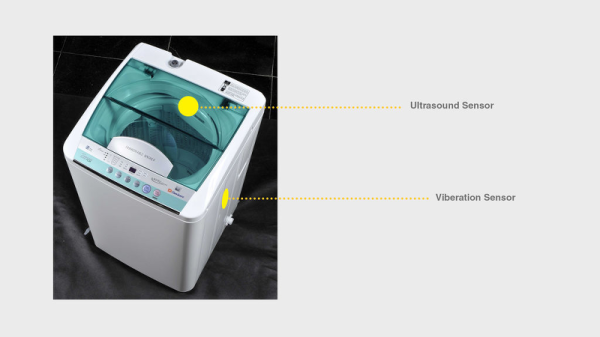
There’s an old saying that the only two things that are certain are death and taxes. However, unless you live in a nudist colony, there’s probably also laundry. [Darpan Bajaj] and some friends were at a hackathon and decided to put their washing machine on the Internet.

Most of us here at Hackaday — and many Hackaday readers, judging by the comments — are a little suspicious about how much we really need everything attached to the Internet. However, a washing machine is probably not a bad idea: you use it often, you need to know when it is done, and you probably don’t want to just sit and watch it spin. Besides, the intended installation is in a hostel where there are multiple machines and many potential users.

Continue reading “Death, Taxes, And Laundry”

Super Thin Display Makes Your Skin Your Screen

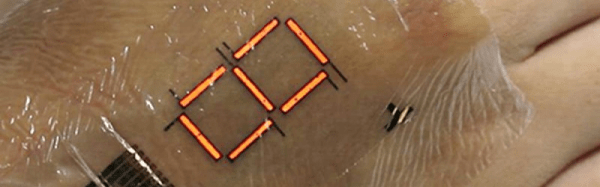
Researchers in Japan have created a 3-micrometer display that looks like plastic wrap and can make any part of your skin into an electronic display. The idea isn’t new, but this display is far thinner and more durable than previous devices. It also lasts longer (several days) and has increased brightness.

The display uses polymer LEDs to form a seven-segment digit, so you aren’t going to stream Netflix to the back of your hand anytime soon.  However, the team wants to build more advanced displays that could one day replace smartwatch or smartphone screens.

Continue reading “Super Thin Display Makes Your Skin Your Screen”

RFID Lock Keeps Your Bike Safe

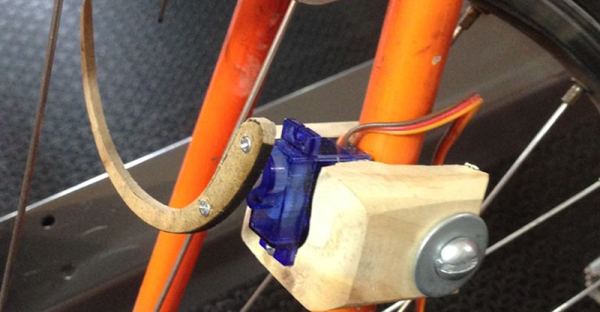
What do you do with an RFID chip implanted in your body? If you are [gmendez3], you build a bike lock that responds to your chip. The prototype uses MDF to create a rear wheel immobilizer. However, [gmendez3] plans on building a version using aluminum.

For the electronics, of course, there’s an Arduino. There’s also an RC522 RFID reader. We couldn’t help but think of the Keyduino for this application. When the system is locked, the Arduino drives a servo to engage the immobilizer. To free your rear wheel, simply read your implanted chip. The Arduino then commands the servo to disengage the immobilizer. You can see the system in operation in the video below.

Continue reading “RFID Lock Keeps Your Bike Safe”

Poor Man’s Time Domain Reflectometer

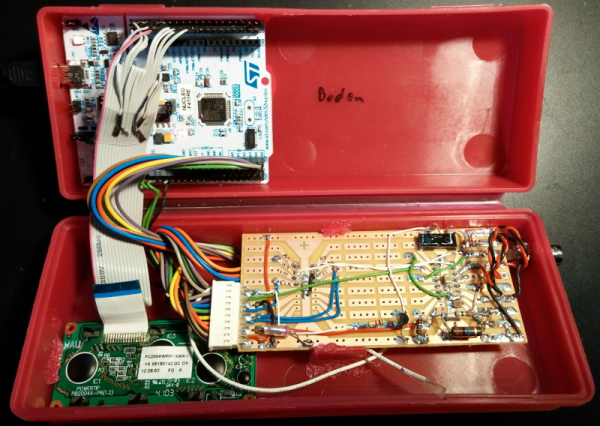
A time domain reflectometer, or TDR, is an essential piece of test gear when working on long cables. The idea is simple: send a pulse down the cable and listen for the reflection from the far end. The catch is that pesky universal constant, the speed of light.

The reason the speed of light is an issue is that, in a traditional system, the pulse needs to be complete before the reflection. Also, time is resolution, so a 1 GHz sampling rate provides a resolution of about 10 centimeters. [Krampmeier] has a different design. He sends variable length pulses and measures the overlap between the outgoing and reflected pulses. The approach allows a much simpler design compared to the traditional method.

Continue reading “Poor Man’s Time Domain Reflectometer”

What’s A Piezo Optomechanical Circuit?

Ever hear of a piezo-optomechanical circuit? We hadn’t either. Let’s break it down. Piezo implies some transducer that converts motion to and from energy. Opto implies light. Mechanical implies…well, mechanics. The device, from National Institute of Standards and Technology (NIST),  converts signals among optical, acoustic and radio waves. They claim a system based on this design could move and store information in future computers.

At the heart of this circuit is an optomechanical cavity, in the form of a suspended nanoscale beam. Within the beam are a series of holes that act as mirrors for very specific photons. The photons bounce back and forth thousands of times before escaping the cavity. Simultaneously, the nanoscale beam confines phonons, that is, mechanical vibrations. The photons and phonons exchange energy. Vibrations of the beam influence the buildup of photons and the photons influence the mechanical vibrations. The strength of this mutual interaction, or coupling, is one of the largest reported for an optomechanical system.

In addition to the cavities, the device includes acoustic waveguides. By channeling phonons into the optomechanical device, the device can manipulate the motion of the nanoscale beam directly and, thus, change the properties of the light trapped in the device.  An “interdigitated transducer” (IDT), which is a type of piezoelectric transducer like the ones used in surface wave devices, allows linking radio frequency electromagnetic waves, light, and acoustic waves.

The work appeared in Nature Photonics and was also the subject of a presentation at the March 2016 meeting of the American Physical Society. We’ve covered piezo transducers before, and while we’ve seen some unusual uses, we’ve never covered anything this exotic.


3D Printed Microscope Chamber Saves Big Bucks

Optical microscopy is over 400 years old, and in that time, it has come a long way. There are many variations of microscopes both in the selection of lenses, lighting, and other tricks to allow an instrument to coax out more information about a sample.

One proven way to increase the resolving power of a microscope is oil immersion. The sample and the lens are placed in oil that is transparent and has a high refractive index. This prevents light from refracting at the air-coverslip interface, improving the microscope’s overall performance.

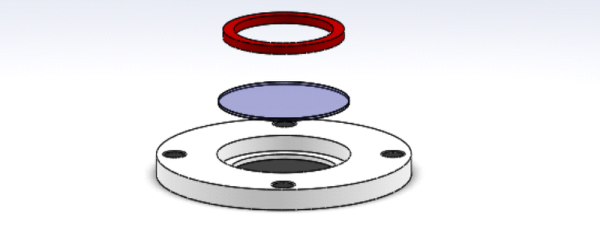
The University of New South Wales has a lab that uses such a microscope. They use a special (and expensive) chamber to hold down the glass coverslip and contain the oil. The problem? At nearly $400 a pop, the chambers are a constant expense to replace, and they are not flexible enough to handle custom size requirements.

[Ben Goodnow], a first year student at the university, applied his 3D printing and laser cutting know-how to design and build a suitable chamber that costs much less and can be adapted to different projects. In addition to all the design files on GitHub, there’s also a document (PDF) that describes the design iterations and the total cost savings.

Continue reading “3D Printed Microscope Chamber Saves Big Bucks”