Stronger 3D Printed Parts

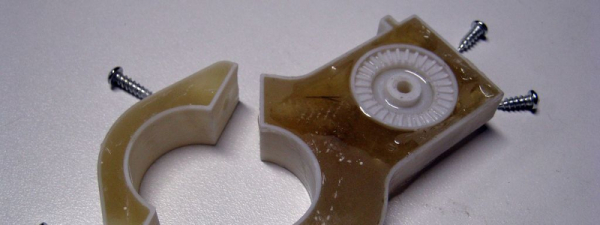
When [hobbyman] wanted some 3D printed parts to attach a bag to his bike, he was worried that the parts would not be strong enough to hold when the bag was full. He decided to find a way to reinforce the part with fiberglass and epoxy. His first model had holes and grooves to be filled in with epoxy.

However, after working with the part for a bit, he decided to take a different approach. Instead of making the part nearly solid plastic with space for the epoxy, he instead created the part as a shell and then filled it with fibers and epoxy. After it all cured, a little sanding started removing some of the plastic shell and what was left was mostly a cast fiberglass part (although some of the plastic was left on).

Continue reading “Stronger 3D Printed Parts”

Speaker Science Project

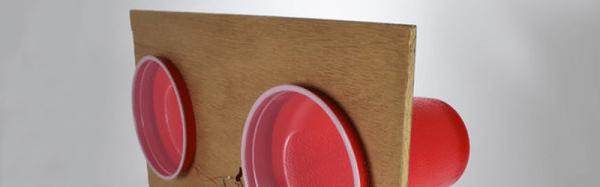
They probably won’t please the audiophiles, but [KJMagnetics] shows you that can create a pair of speakers with some magnets, some plastic cups, and a bit of magnet wire. Creating speakers out of junk isn’t a new idea, of course. However, there’s something pleasant about the build. Maybe it is the symmetry of the cups or the workbench look of the woodworking.

We couldn’t help but think that this would make a good science fair project or a classroom activity. Especially since there is a good write up on how speakers work and it would be easy to make simple changes to test different hypothesis about speakers. For example, what happens with more or less wire in the coils? What magnets work best? What does best even mean? Is it louder? Less distortion?

Continue reading “Speaker Science Project”

TV Going The Distance: Propagation

It has to be hard to be a kid interested in radio these days. When I was a kid, there was a lot of interesting things on shortwave. There wasn’t any cable TV (at least, not where I lived) so it was easy to hack antennas and try to pull in weak TV and broadcast stations. The TV stations were especially interesting.

It was one thing for me to build a dish antenna to pick up Star Trek from a station just barely out of range. But sometimes you’d get some really distant TV station. The world’s record is the reception of a BBC TV station in Australia (a distance of 10,800 miles). That’s extreme, but even from my childhood home near New Orleans, I’ve personally picked up TV stations from as far away as New Mexico. Have you ever wondered how that’s possible?

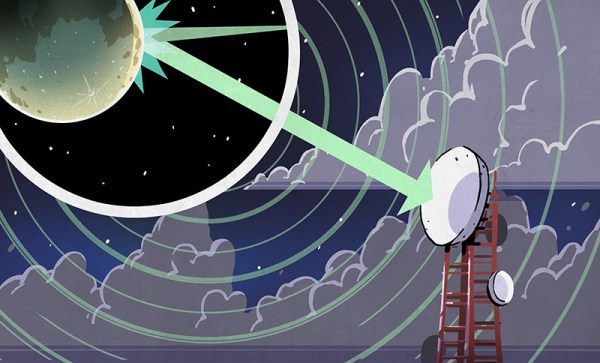
Radio signals behave differently depending on their frequency. The TV frequencies used in the old analog signals were VHF signals (well, the channels between 2 and 13 in the United States, anyway). In general, those signals usually travel through the air, but don’t bounce off any part of the atmosphere. So if you aren’t in a line of sight with the transmitter, you can’t see the broadcast. The other problem is that local stations tend to drown out weak distant stations. A TV DXer (ham lingo for someone trying to hear distant signals) has to wait for local stations to go silent or listen on frequencies where there are no local stations.

Continue reading “TV Going The Distance: Propagation”

Belkin WeMo Teardown

[Brian Dipert] over at EDN has a teardown of Belkin’s answer to the Internet of Things (IoT) craze: the WeMo. This little WiFi gadget plugs into an outlet and lets you turn a connected device on and off from a smart phone app or something like Amazon Echo.

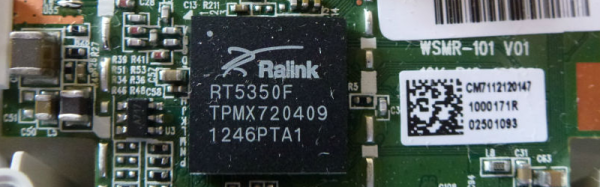
As you might expect from a cheap piece of consumer hardware, there’s not a whole lot inside. The digital board contains a Ralink WiFi chip, an antenna etched on the PCB, and a handful of components, including an SDRAM and some flash memory.

Continue reading “Belkin WeMo Teardown”

Microsoft, Minecraft, And Kids

Code.org annually sponsors an Hour of Code (December 7th to the 13th will be the third one). The goal is to try to teach kids the basics of computer science in just an hour. Microsoft has announced they will team with Code.org to bring Minecraft-based lessons to this year’s hour.

It makes sense when you remember that Microsoft bought Mojang (the company behind Minecraft) last year. Users can sign up for the free Hour of Code Minecraft module and learn how to make characters adventure through a Minecraft world using programming. There are other themed modules, too, including Star Wars, Frozen, and other kid-attracting motifs. There’s also a lot of videos (like the one below) that explain why you might want to learn about computer science.

If you think Minecraft isn’t a sufficient programming language, don’t be so sure. There are many Minecraft CPUs out there as well as a (very slow) word processor. If you want real hardware, you might check out our review of Minecraft-related projects from earlier this year.

Continue reading “Microsoft, Minecraft, And Kids”

Powdered Glue Activates When Squished

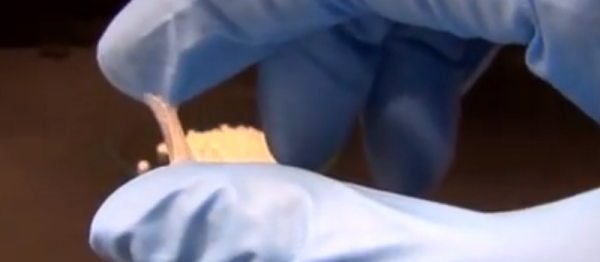
Sometimes a hack needs something more than duct tape. Cyanoacrylate glue is great, if you don’t mind sticking your fingers together. But it doesn’t stick to everything, nor does it fill gaps. Epoxy is strong, but isn’t nearly as convenient. The point is, one type of glue doesn’t fit every situation, and that’s why you have to keep a lot of options.  [Syuji Fujii] of Japan’s Osaka Institute of Technology (and his colleagues) have a new option: a glue that goes on dry and sticks when squished.

According to New Scientist,  the researchers rolled spheres of a latex liquid in a layer of calcium-carbonate nanoparticles. The resulting spheres are a few millimeters across and pour easily. When put under pressure for a few seconds, the nanoparticles are pushed inside, and the sticky liquid contacts the surface. The source paper is also available if you want to read the gory details. Or you can cut right to the video below to see it in action.

If you don’t think glue is a good hacking material, you don’t know [Kevin Dady]. You can even glue wires if you really hate soldering, although we’d rather solder.

Continue reading “Powdered Glue Activates When Squished”

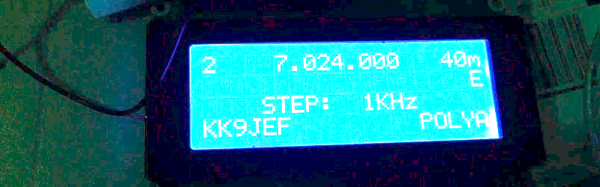
Polyakov Direct Digital Synthesis Receiver

Direct conversion receivers are popular among ham radio operators and others who build radios. Suppose you want to listen to a signal at 7.1 MHz. With a direct conversion receiver, you’d tune a local oscillator to 7.1 MHz, and mix it with the incoming signal. The resulting sum and differences of the input frequencies will include the audio of an AM signal on the desired frequency.

Continue reading “Polyakov Direct Digital Synthesis Receiver”