Take Your Robots Tubing

When you think of a robot, you might think of one with wheels, tracks, or even legs. But today’s robots are as likely to have wings, props, or even some way to propel it through the water. If you are bored with quadcopters and want to build a water-going robot, you should check out Jalcboat, an open source robot/boat. Although the project is under development, the videos (see below) show that they’ve made a good bit of progress.

As you might expect, 3D printing is a key ingredient and the files are available on Thingiverse linked above. In addition, the robotic boat has a Raspberry Pi onboard to control brushless motors. The main web site is more of a discussion forum and some of it is in Spanish, so you might want to keep Google translate handy.
Continue reading “Take Your Robots Tubing”

Light Speed: It’s Not Just A Good Idea

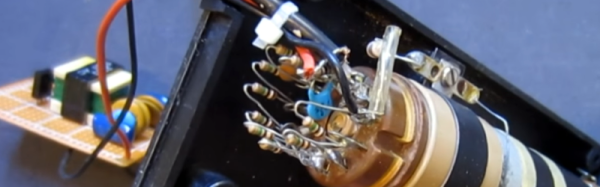
[Kerry Wong] took apart a PM2L color analyzer (a piece of photography darkroom gear) and found a photomultiplier tube (PMT) inside. PMTs are excellent at detecting very small amounts of light, but they also have a very fast response time compared to other common detection methods. [Kerry] decided to use the tube to measure the speed of light.

There are several common methods to indirectly measure the speed of light by relating frequency to wavelength (for example, using microwave ovens and marshmallows). However, measuring it directly is difficult because of the scale involved. In only a microsecond, light travels almost 1000 feet (986 feet or 299.8 meters).

Continue reading “Light Speed: It’s Not Just A Good Idea”

Georgia Tech Pumps Water Through Silicon For Chip Cooling

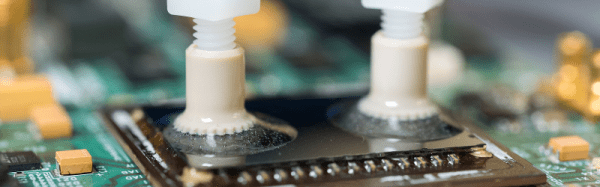
One of the things that stops electronic devices from going faster is heat. That’s why enthusiasts go as far as using liquid nitrogen to cool CPU chips to maximize their overclocking potential. Researchers at Georgia Tech have been working on cutting fluid channels directly into the back of commercial silicon die (an Altera FPGA, to be exact). The tiny channels measure about 100 micron and are resealed with another layer of silicon. Water is pumped into the channels to cool the device efficiently.

A comparable air-cooled device would operate at about 60 degrees Celsius. With the water cooling channels cut into the die and 20 degree water pumped at 147 ml/minute, the researchers kept the chip operating about less than 24 degrees Celsius.

Continue reading “Georgia Tech Pumps Water Through Silicon For Chip Cooling”

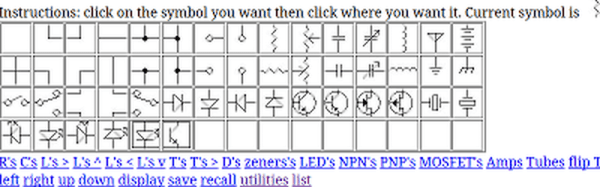
The Worst CAD Package Ever Is Still Handy

A lot of great schematics wind up on the back of bar napkins or diner place mats. When inspiration strikes, you have to capture it, after all. Today, you are as likely to draw schematics on a computer and there are plenty of options for that; if you can install software your options are almost limitless. And if you have a modern Web browser, there are lots of good options that don’t even require an install.

But what about those times when you need a quick schematic to pop into a presentation? You are on some ancient conference room computer where you can’t install anything and it’s still running a browser that understands the <BLINK> tag? Try out the Klunky Schematic Editor. Your browser will need Javascript, but that’s about all. No HTML 5 or anything fancy.

Continue reading “The Worst CAD Package Ever Is Still Handy”

Just Don’t Call It An Old Remote

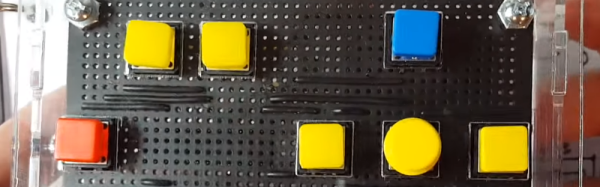
[Hari Wiguna’s] father is ninety years young. He started having trouble pushing the buttons on his TV remote, so [Hari] decided to build a custom remote that just has the buttons his dad needs. Oh, and the buttons are big.

There are a few interesting things about this project. [Hari] wanted to maximize battery life, so he went through a good bit of effort to keep the processor asleep and minimize power consumption. The remote is programmable, but [Hari] didn’t have access to his dad’s remotes. His answer was elegant. He used his Android phone to mimic the required remotes and provided a way for the remote to learn from another remote (in this case, the phone).
Continue reading “Just Don’t Call It An Old Remote”

Maximizing A Solar Panel

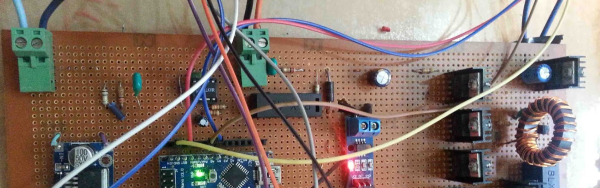
Solar panels seem like simple devices: light in and electricity out, right? If you don’t care about efficiency, it might be that simple, but generally you do care about efficiency. If you are, say, charging a battery, you’d like to get every watt out of the panel. The problem is that the battery may not draw all the available current, basically leaving capacity on the table.

The solution is a technique called MPPT (Maximum Power Point Tracking). Despite sounding like a Microsoft presentation add on, MPPT uses a DC to DC converter to present a maximum load to the solar cell while providing the desired current and voltage to the load. MPPT is what [Abid Jamal] implemented to manage his solar charger.

Continue reading “Maximizing A Solar Panel”

Etch-A-SDR

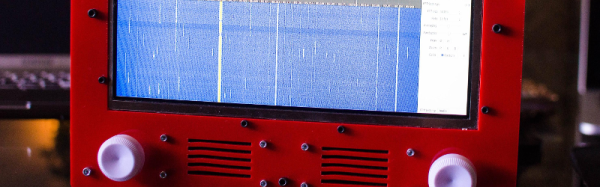
What do you get if you cross a software defined radio (SDR) and an iconic children’s drawing toy that we are sure is a trademarked name? If you are [devnulling], you wind up with the Etch-A-SDR. The box uses an Odroid C1, a Teensy, and the ubiquitous RTL-SDR.

The knobs work well as control knobs (as you can see in the video below). When you are bored listening to the radio, you can reset the box and go into Etch-a… um, drawing mode. The knobs work like you’d expect and you can even erase the screen with a vigorous shake.

Continue reading “Etch-A-SDR”