A Brief History Of Teleportation

OK, I know. We don’t have practical teleportation. But that hasn’t stopped generations of science fiction authors and movie makers from building stories around it. If you ask most ordinary people, they’d tell you the idea originated with the Star Trek transporter, but that’s far from the truth. So when did people start thinking about teleporting?

Ground Rules

Maybe it isn’t fair, but I will draw the line at magic or unexplained teleportation. So “The Tempest”, for example, doesn’t use technology but magic. To get to Barsoom, John Carter wished or slept to teleport to Mars. So, while technology might seem like magic, we’re focusing on stories where some kind of machine can send something — usually people — to somewhere else.

Of course, there’s a fine line between pure magic and pure technology where they overlap. For example, in the opera “Der Ring des Nibelungen”, a magic helmet gives people powers, including that of teleportation. While you could argue that Tarnhelm — the name of the magic helmet — was a technological artifact, it is still explained by magic, not science.

Some systems need a transmitter and a receiver. Sometimes, you only need the transmitter. Sometimes, you can only teleport within a limited range, but other make-believe systems can transport an entire starship across the galaxy.

Early Teleporters

The Man without a Body is a story from 1877 in which a scientist is able to transmit a cat via a telegraph wire. Encouraged, he attempts the same feat with himself, but the battery dies in the middle, leaving him with a disembodied head. The ending is decidedly devoid of science, but the story is possibly the earliest one with a machine sending matter across a distance.
Continue reading “A Brief History Of Teleportation”

LongChat For Ham Radio

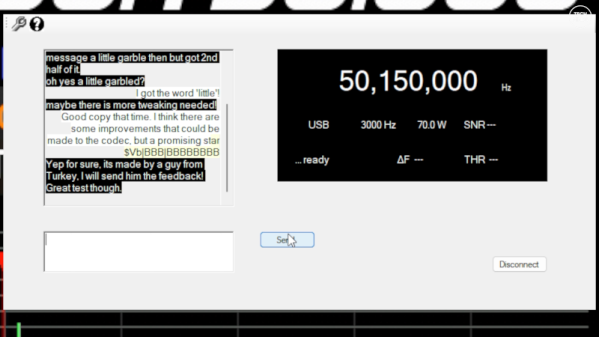
There was a time when ham radio operators were known for having long conversations over the radio — rag chewing, as they called it. A new program, LongChat, is a new entry into the ham radio software world that could bring chatting back to ham radio. [Tech Minds] has a video covering it (and using it), which you can see below.

While some people do talk using microphones or Morse code keys, there are a lot of digital modes now. Some, like RTTY or PSK31, can support conversations, but the more popular ones, like FT-8, are very stripped down. Your computer exchanges basic information with the other station’s computer, and that’s it.

Continue reading “LongChat For Ham Radio”

Fluke Meter Fails With A Simple Problem

[TheHWcave] found a Fluke 27 multimeter that looked like it had had quite a rough life. At first, the display flashed an overload indicator until he gave it a good smack—or, as he likes to call it, percussive maintenance. Even then, it would not give good readings, so it was time to open it up.

The display did work, so the obvious theory was something wrong with the analog board. Removing the shields showed what looked like a normal enough PCB. Or at least, the components looked fine. But on the solder side of the board, there was some corrosion on two contacts, so some careful cleaning and resoldering fixed the meter to be as good as new on at least some scales.

Tracing the pins, the corrosion put a resistor between two pins of an op-amp. The only remaining problem was the milliamp scale, but that was a simple blown fuse in the line. Since it was working, it was worth some time to clean up the ugly exterior, which is only cosmetic but still worth a little effort. He left the plastic case cracked and beaten, but he put a lot of effort into clearing up the display window.

You might wonder why you’d fix a meter when you can get one so cheap. However, these name-brand meters are high-quality and new, quite expensive. Even older ones can be worth the effort. While you usually don’t need an X-ray machine to fix something like this, it can’t hurt.

Continue reading “Fluke Meter Fails With A Simple Problem”

A Month Without IPV4 Is Like A Month Without…

Recently, there was a Mastodon post from [nixCraft] challenging people to drop their NAT routers for the month of November and use only IPv6. What would it be like to experience “No NAT November?” [Alex Haydock] decided to find out.

What did he learn? You’d imagine he’d either wholeheartedly embrace IPv6 or stagger back in and warn everyone not to mess with their configuration. Instead, he recommends you go IPv6 mostly. He notes he is only talking about a home network, not necessarily networks for a big company or an Internet carrier. That’s a different topic.

IPv6 has been around since 1998, but it has been slow to catch on. However, OS support seems universal at this point. [Alex] was able to easily switch on IPv6 only using Windows, macOS, and several Linux flavors. He didn’t use any Android devices, but they should be OK. His iOS phones were fine.

Continue reading “A Month Without IPV4 Is Like A Month Without…”

3D Printing Threaded Replacements

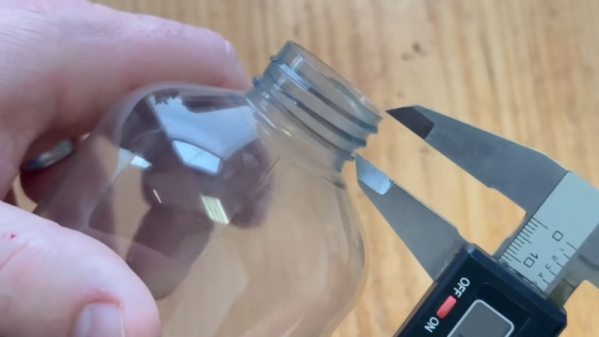
Printing an object with threads is nothing new. If you know the specifications on the other thread or you are in control of it, no problem. But [Shop Therapy] wanted to print parts that mate with an existing unknown thread. Out come the calipers.

The first measurement is the height. He rounded that up in the video but mentioned in the comments that it should really be a little smaller so that it seats properly.

Continue reading “3D Printing Threaded Replacements”

Car Radio Chip Goes Into DIY Build

[Sjef Verhoeven] still loves radio and enjoys the challenge of listening to radio signals from far away. He wanted to build his own radio and turned to the TEF6686 chip, a device often found in car radios. It is known to be very sensitive and seemed perfect for pulling in weak signals. So [Sjef] built this DIY radio and shares the details in this recent Spectrum post.

Unlike older radio-on-chip devices, the TEF6686 is a DSP, which, according to the post, is part of the reason it is ultrasensitive. Even though it is made for car radios, the device is versatile and can pick up shortwave as well as the usual broadcast bands, with the right configuration.

Continue reading “Car Radio Chip Goes Into DIY Build”

A Brief History Of Calculator Watches

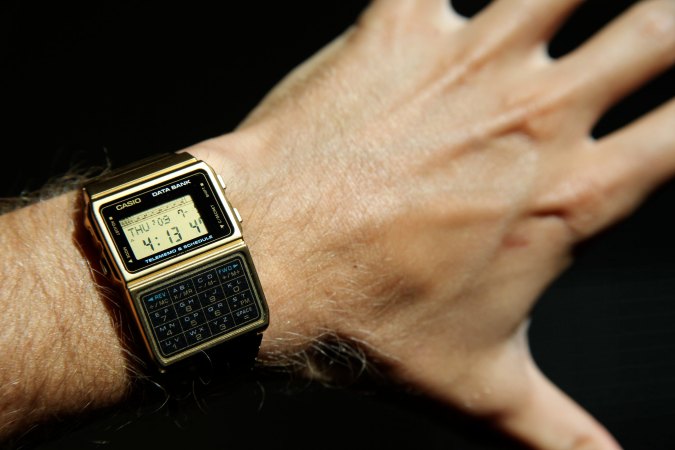
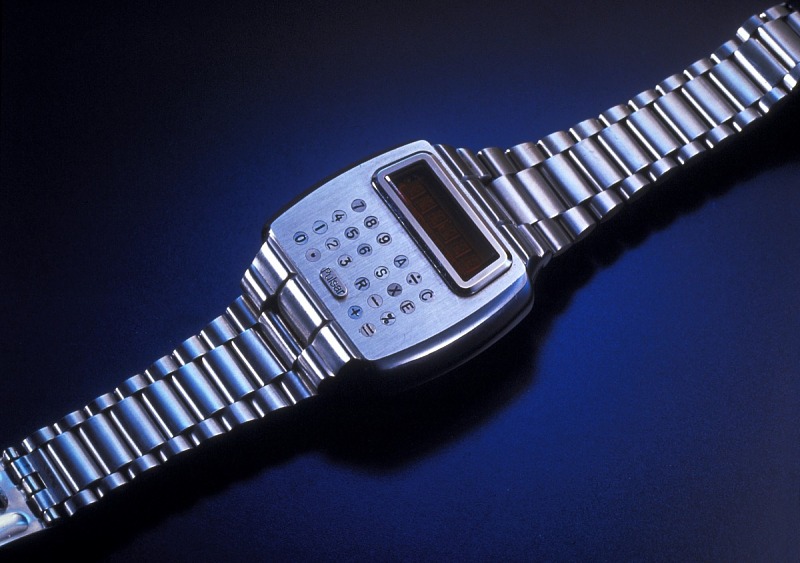
When humans counted on their fingers, everyone had a state-of-the-art (at the time) calculator at all times. But as we got smarter about calculation, we missed that convenience. When slide rules were king, techies were known to carry them around like swords swinging from their belts. These were replaced with electronic calculators, some also swinging from belt loops, but no matter how small they were, they still were not that handy, no pun intended. That changed around 1975. The Time Computer Calculator company produced an amazing calculator watch for Pulsar. At the time, Pulsar was a brand of the Hamilton Watch Company.

A Pulsar calculator watch (photo: The Smithsonian)

There were a few problems. First, the watch was thick. Despite its size, it had tiny keys, so you had to use a little stylus to push the keys — not as handy as you might wish. On top of that, 1975 display technology used power-hungry LEDs. So, the display was prone to turning off quickly, and the batteries died quickly.

Unsurprisingly, Hamilton, in conjunction with Electro/Data, had earlier rolled out the first LED watch in 1972. With an 18-karat gold case, it went for a cool $2,100 — a whole lot of money in 1972. The first calculator watch was also gold and went for almost $4,000. Soon, though, they brought out a stainless and a gold-filled version that came in at under $500.

Continue reading “A Brief History Of Calculator Watches”