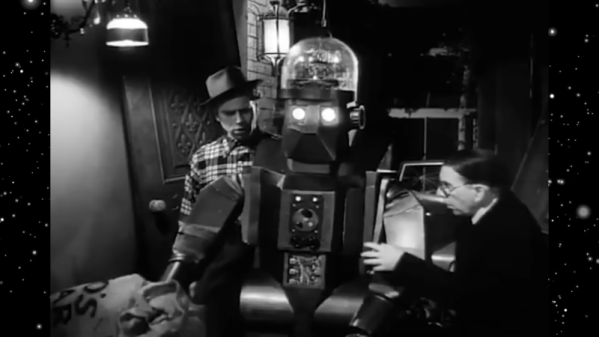
Even if you don’t like to build replicas of movie robots, you can often draw inspiration from cinema. Everyone knows Robby the Robot, Gort, and R2D2. But [Atomic Snack Bar] treats us to some lesser-known robots from movies in the 1930s, 40s, and 50s. While we are pretty up on movies, we have to admit that the video, which you can see below, has a few we didn’t know about.
The robots are mostly humanoid. The comedy vampire flick from the 1950s could have inspired Robby, who appeared four years later. The exception that proves the rule is the Twonky which was a TV set turned robot turned mind controller.
In the late 1800s, the stereograph — sometimes incorrectly called a stereopticon — was a big craze. You’d view two side-by-side images through some lenses and see a three-dimensional image. This, of course, later would morph into View-Masters and, eventually, virtual reality headsets. But if you have an old stereograph, where do you get new images for it? If you are [Engineers Need Art], you write a program to convert MPO files (a common 3D image format) to printable stereograms. Interestingly, he used AI to assist in the project and has observations about where it helped and where it didn’t.
The post goes into a lot of detail about how the author experimented with 3D imaging for many years. However, it eventually discusses a MacOS application built with the help of an AI chatbot.
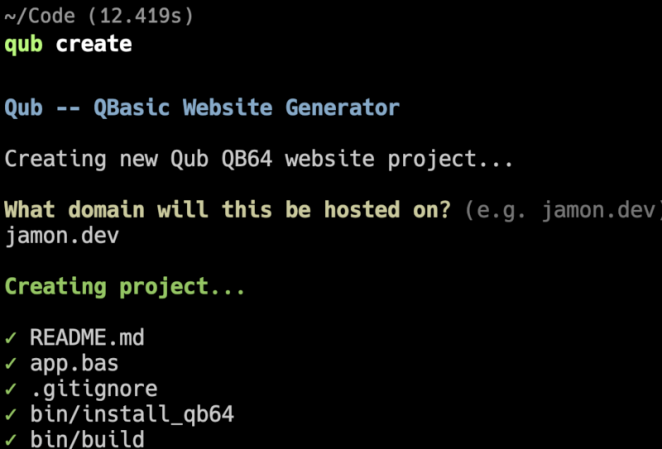
You can only imagine that when they made Star Trek back in the 1960s, they would have laughed if anyone suggested they’d still be making the show nearly six decades later. If you told [John Kemeny] at Dartmouth back in 1964 that people would be serving websites in Basic in the year 2024, he’d probably be amazed after you explained what a website was. But that’s what [Jamonholmgren] is doing.
[Jamon] wrote his first Basic program when he was 12, which was a common thing to do. Recently, he decided to build and deploy a website using Basic, and so this project, qub (pronounced like cube), was born. The web server is modified from an existing source but adds features and many new features are planned.
There was a time — not so long ago — when a handheld terminal would have been an expensive and exotic piece of kit. Now, all it takes is a Raspberry Pi and an off-the-shelf TFT display, as [ZitaoTech] shows us.
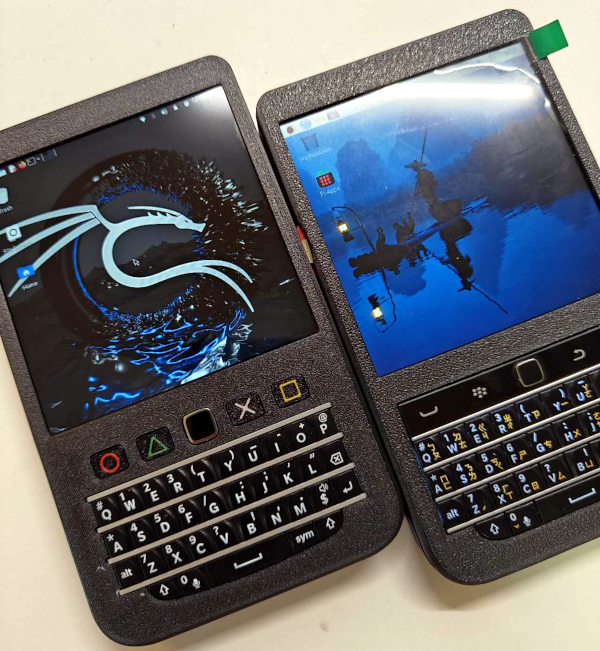
The resemblance to a Blackberry isn’t a coincidence
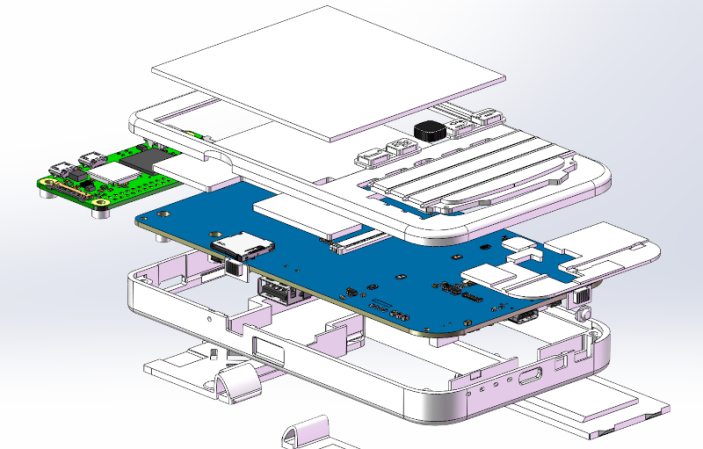
Admittedly, we are now seeing these all over the place, but this build looks well thought out. It looks suspiciously like a Blackberry, which isn’t a bad thing. It also has an interesting dual-battery system that lets you swap between two identical Nokia BL-5C batteries without missing a beat.
The device looks like a Blackberry because it uses the Q10 or Q20 Blackberry keyboard. There is a pass-through switch that lets you use the keyboard and pointer as a USB device on a different host computer.
Rounding out the design are three USB ports, an I2C port, and a TF card slot. Size-wise, the device is about 140 mm tall and 82 mm wide. The thickness is less than 16 mm. Even with the batteries, it weighs a lot less than 200 grams.
In the “Something-you-can-try” directory, there are images for Windows 3.1, mini VMAC, and — of course — DOOM. As you might expect, most of the project is 3D printing the intricate case.
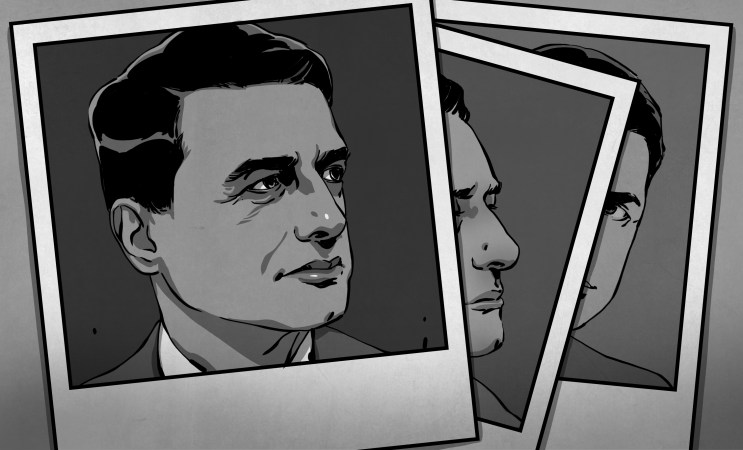
Edwin Land, were he alive, would hate this post. He wanted to be known for this scientific work and not for his personal life. In fact, upon his death, he ordered the destruction of all his personal papers. However, Land was, by our definition, a hacker, and while you probably correctly associate him with the Polaroid camera, that turns out to be only part of the story.
Land in 1977
It was obvious that Land was intelligent and inquisitive from an early age. At six, he blew all the fuses in the house. He was known for taking apart clocks and appliances. When his father forbade him from tearing apart a phonograph, he reportedly replied that nothing would deter him from conducting an experiment. We imagine many Hackaday readers have similar childhood stories.
Optics
He was interested in optics, and at around age 13, he became interested in using polarized light to reduce headlight glare. The problem was that one of the best polarizing crystals known — herapathite — was difficult to create in a large size. Herapathite is a crystalline form of iodoquinine sulfate studied in the 1800s by William Herapath, who was unable to grow large sizes of the crystal. Interestingly, one of Herapath’s students noticed the crystals formed when adding iodine to urine from dogs that were given quinine.
Land spent a year at Harvard studying physics, but he left and moved to New York. He continued trying to develop a way to make large, practical, light-polarizing crystals. At night, he would sneak into labs at Columbia University to conduct experiments.
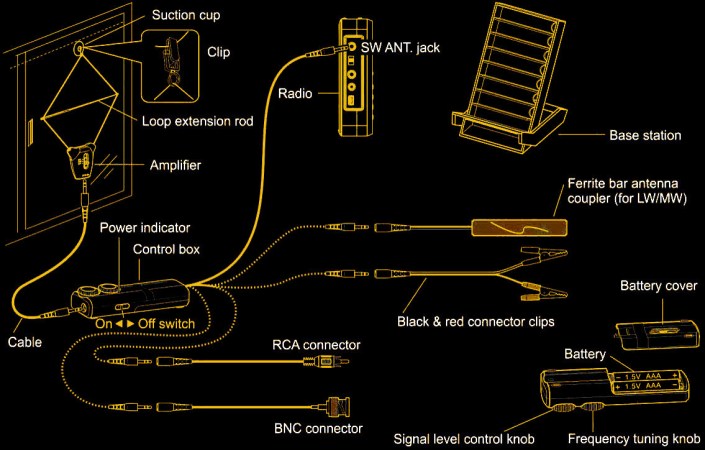
It is one of Murphy’s laws, we think, that you can’t get great things when you need them. Back in the heyday of shortwave broadcasting, any of us would have given a week’s pay for even a low-end receiver today. Digital display? Memory? Digital filtering? These days, you have radios, and they aren’t terribly expensive, but there isn’t much to listen to. Making matters worse, it isn’t easy these days to string wires around in your neighborhood for a variety of reasons. Maybe you don’t have a yard, or you have deed restrictions, or your yard lacks suitable space or locations. This problem is so common that there are a crop of indoor antennas that seem attractive. Since I don’t often tune in shortwave and I don’t want to have to reset my antenna after every storm, I decided to look at the Tecsun AN-48X along with a YouLoop clone from China. Let’s start with the Tecsun. Continue reading “An Antenna To Throw You For A Loop”→
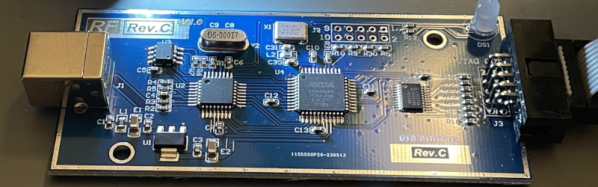
The last time we checked in with [Downtown Doug Brown], he had some cheap Altera USB Blaster clones that didn’t want to work under Linux. The trick at that time was to change the device’s 24 MHz clock to 12 MHz. This month, he’s found some different ones that don’t work, but now the clock change doesn’t work. What’s the problem?
He also picked up a Terasic clone, which does work on Linux and is considered, according to [Doug], the best of the clones. The units were superficially similar. So what follows is a lot of USB tracing and dumping of the CPLD chip’s configuration.