Circuit Bent CD Player Is Glitch Heaven

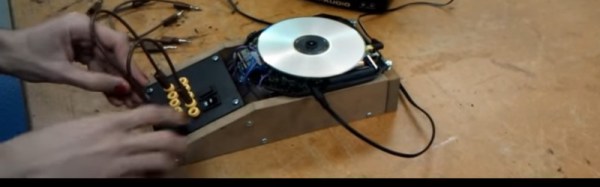
Circuit bending is the art of creatively short circuiting low voltage hardware to create interesting and unexpected results. It’s generally applied to things like Furbys, old Casio keyboards, or early consoles to create audio and video glitches for artistic effect. It’s often practiced with a random approach, but by bringing in a little knowledge, you can get astounding results. [r20029] decided to apply her knowledge of CD players and RAM to create this glitched out Sony Discman.

Continue reading “Circuit Bent CD Player Is Glitch Heaven” →

Run Your Own Numbers Station

Numbers stations are shortwave stations that broadcast cryptic messages that are widely assumed to be used for communications between nation states and spies. But who’s to say it’s up to the government to have all the fun? If you’ve always dreamed of running your own spy ring, you’ll need a way to talk to them too. Start with this guide on how to run your own numbers station.

The requirements are simple – you just need random numbers, one time pads for each recipient (available from our store!) and a way to send the audio – ideally a powerful shortwave transmitter, but for an intelligence agency on a budget, online streaming will work. Then you’re ready to send your message. [Jake Zielke] shares techniques on how to easily encode a message into numbers for transmission, and how to encrypt them with one time pad techniques. Done properly, this is an unbreakable form of encryption. [Jake] then rounds out the guide with tips on how to format your station’s transmissions to address multiple secret agents effectively.

It’s a great way to get started in the world of spooky secret radio communications. All the tools needed to get started are available on the page, so you’ll be up and running in no time. Meanwhile, why not do a little more research on the history of numbers stations?

Mod Your Camera With ModBus

Industrial hardware needs to be reliable, tough, and interoperable. For this reason, there are a series of standards used for command & control connections between equipment. One of the more widespread standards is ModBus, an open protocol using a master-slave architecture, usually delivered over RS-485 serial. It’s readily found being used with PLCs, HMIs, VFDs, and all manner of other industrial equipment that comes with a TLA (three letter acronym).

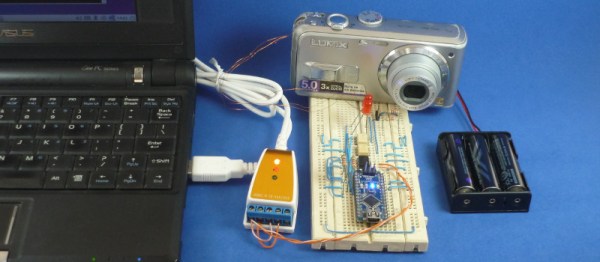
[Absolutelyautomation] decided to leverage ModBus to control garden variety digital cameras, of the type found cluttering up drawers now that smartphones have come so far. This involves getting old-school, by simply soldering wires to the buttons of the camera, and using an Arduino Nano to control the camera while talking to the ModBus network.

This system could prove handy for integrating a camera into an industrial production process to monitor for faults or defective parts. The article demonstrates simple control of the camera with off-the-shelf commercial PLC hardware. Generally, industrial cameras are very expensive, so this hack may be useful where there isn’t the budget for a proper solution. Will it stand up to industrial conditions for 10 years without missing a beat? No, but it could definitely save the day in the short term for a throwaway price. One shortfall is that the camera as installed will only save pictures to its local memory card. There’s a lot to be said for serving the images right to the engineer’s desk over a network.

We’ve seen [Absolutelyautomation]’s work before – check out this implementation of Pong on an industrial controller.

Anti-Emulation Tricks On GBA-Ported NES Games

Emulation is a difficult thing to do, particularly when you’re trying to emulate a complex platform like a game console, with little to no public documentation available. Often, you’ll have to figure things out by brute force and dumb luck, and from time to time everything will come unstuck when a random piece of software throws up an edge case that brings everything screeching to a halt.

The Classic NES series was a handful of Nintendo Entertainment System games ported to the Game Boy Advance in the early 2000s. What makes them unique is a series of deliberately obtuse programming decisions that make them operate very differently from other titles. These tricks utilize advanced knowledge of the way the Game Boy Advance hardware operates and appear to have been used to make the games difficult to copy or emulate.

The games use a variety of techniques to confuse and bamboozle — from “mirrored memory” techniques that exploit addressing anomalies, to putting executable code in video RAM and writing to the audio buffers in unusual manners.

Even more confusingly, these techniques only appear to have been used in the Classic NES series of games, and not other Game Boy Advance titles. It’s not obvious why Nintendo went to special effort to protect these ports over other titles; perhaps the techniques used were for other reasons than just an attempt at copy protection. Speculate amongst yourselves in the comments.

This isn’t the first time we’ve discussed emulation of Nintendo systems — check out this effort to reverse engineer the Sony Pocketstation.

[Thanks to [[[Codifies]]] for sending this in!]

Sansa MP3 Player Runs Doom Unplayably

DOOM, is there anything it won’t run on? Yes. Your front lawn cannot currently play DOOM. Pretty much everything else can though. It’s a testament to the game’s impact on society that it gets ported to virtually every platform with buttons and a graphical screen.

This video shows a Sansa Clip playing DOOM, but it’s only just barely recognizable. The Sansa Clip has a single color screen, with yellow pixels at the top and grey for the rest of the screen. The monochrome display makes things hard to see, so a dithering technique is used to try and make things more visible. Unfortunately it’s not particularly effective, and it’s difficult to make out little more than the gun at the bottom of the screen.

Continue reading “Sansa MP3 Player Runs Doom Unplayably” →

NES Classic Edition – Controller Mod

The Nintendo Classic Mini took the world by storm this year — finally, an NES in a cute, tiny package that isn’t 3D printed and running off a Raspberry Pi! It’s resoundingly popular and the nostalgic set are loving it. But what do you do when you’re two hours deep into a hardcore Metroid session and you realize you need to reboot and reload. Get off the couch? Never!

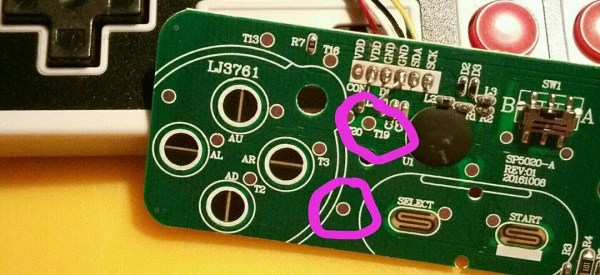
[gyromatical] had already bought an Emio Edge gamepad for his NES Mini. A little poking around inside revealed some unused pads on the PCB. Further investigation revealed that one pad can be used to wire up a reset button, and two others can be used to create a home switch. Combine this with the turbo features already present on the Emio Edge, and you’ve got a pretty solid upgrade over the stock NES Mini pad. Oftentimes, there’s extra functionality lurking inside products that manufacturers have left inactive for the sake of saving a few dollars on switches & connectors. It’s always worth taking a look inside.

Now, back in 2006, the coolest hack was running Linux on everything — and somebody’s already trying to get Linux on the NES Mini.

Continue reading “NES Classic Edition – Controller Mod” →

How To Nail A Technical Presentation

Whether you’re an engineer, a maker, a hacker or a baker, at some point you’ll want to share your work with other people. Perhaps it’s a meeting at work to discuss process improvements, or a talk at a conference discussing some research you’ve done into hacking a new embedded platform. Or maybe you’ve developed a brand new cooking profile for rye breads that cuts energy usage in half. Whatever it is, there are techniques you can use to help you communicate effectively to a room full of people, and have fun doing it. Unlike some, I actually enjoy getting up in front of a crowd to present my work, so I’ve written this article to share with you some tips that can help you make a technical presentation that everyone will love — including you!

Editor’s Note: We planned the art for this article before the passing of Carrie Fisher. Leia certainly knew how to give a compelling technical presentation. We publish this in memory of a great actress.

Continue reading “How To Nail A Technical Presentation” →