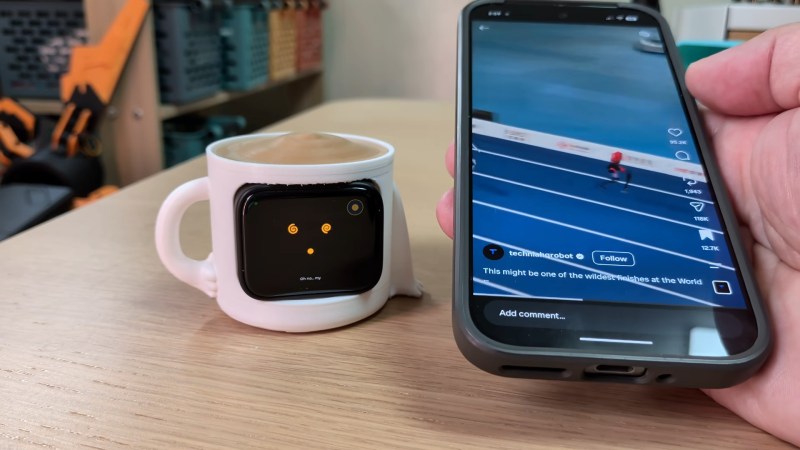
The virtual pet showing a distressed face while a phone is in use

Anti-Doomscroll Tamagotchi Only Lives If You Do

The odds are, you have a device deliberately designed to be addictive in your pocket or on the table next to you if you aren’t staring at it right now– your smartphone. We’ve seen a number of projects that try and help people control or moderate their phone usage using a variety of techniques; this vitual pet by [brenpoly] does it by weponizing human empathy, and our bizzare ability to pack-bond with literally anything.

The virtual pet itself is based on an ESP32 in a cutesy 3D-printed case, and we think it would probably work well enough if it just had hard-coded behaviors based on hooks in what you’re doing on your phone– the “my little buddy is sick because I’m doomscrolling” should be effective enough on its own, and that part is hardcoded on the ESP32 along with the regular virtual pet behaviour–but this is the year of our Llama 2026, so there has to be an LLM in there somewhere, right?

Some people would leave this part out, but we think [brenpoly]’s use of a local LLM on the phone does improve the project. The local agent doesn’t just have access to his screen time, but his notifications, too, and runs a whisper model linked to a microphone in the virtual pet via bluetooth. So you can get the contents or a summary of your notifications without looking at your phone, or just ask the little guy to tell you a joke. Giving the pet a voice with a the local piper model is also more effective at getting you to put your phone down when you hit the limits.

They’ve put the whole thing up on GitHub if you want to make your own– and if we can keep one person from strapping themselves to a shock collar, then this project is doing good in the world. If helps [brenpoly] or any of his fans do less scrolling and more hacking, that’s even better. Of course there’s a whole spectrum between “electrocute yourself” and “lovable virtual pet” when it comes to controlling your phone use, a spectrum that includes phone stands or even smart vaults for your device.

Thanks to [brenpoly] for the tip! Remember, all of your doomscrolling is justified if you find something to send to our tipsline. 

Continue reading “Anti-Doomscroll Tamagotchi Only Lives If You Do”
Are Desktop PC-ABS Prints Outperformed By Industrial FDM? Not Really

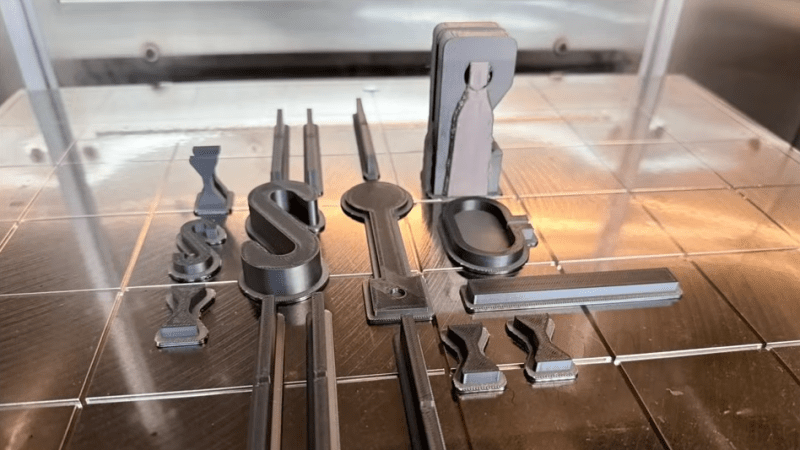
[Igor] of [My Tech Fun] set out to discover what differences, if any, can be found between parts printed in PC-ABS filament on an industrial 3D printer, and those from prosumer-grade machines and filament. His video is full of his usual attention to detail as he compares a test suite of parts printed at home in Polymaker PC-ABS with those from a Stratasys Fortus 450mc using proprietary PC-ABS filament.

PC-ABS is a filament that strives to deliver the benefits of both polycarbonate and ABS. It’s durable and has fantastic impact resistance, but it costs a bit more than either PC or ABS and requires a heated chamber.

In the end, PC-ABS from a home printer compares favorably to an industrial system, at a fraction of the price.

[Igor] has previously compared industrial ABS with comsumer ABS, but what made him curious about PC-ABS in particular was the large difference in print temperatures between Polymaker PC-ABS, and Stratasys’s own proprietary PC-ABS.

[Igor] prints Polymaker filament at 280º C in a 60-65º C  chamber, whereas the Stratasys filament prints at 325º C with a chamber temperature of 95º C. That’s quite a difference. The industrial printer has over double the print time, to boot. Would test objects printed from the industrial filament, on an industrial machine, be noticeably different from those printed at home?

To find out, [Igor] orders a test suite of parts from a company with a Stratasys Fortus 450mc (who was also kind enough to take a short video of the machine in action) and prints his own on both a Prusa Core One L, and a Bambu Labs H2D. He then proceeds to compare them in a variety of ways while testing them to destruction.

What’s the bottom line? The industrial prints have better dimensional accuracy, but the home prints have the edge in appearance. When it comes to performance the differences are mostly minor, and not always in the industrial system’s favor. Broadly speaking, PC-ABS from the home workshop compares very favorably from an expensive industrial system and proprietary filament, at a fraction of the price. See it for yourself in the video, embedded just below.

Continue reading “Are Desktop PC-ABS Prints Outperformed By Industrial FDM? Not Really”

Fixing A 1990s LEGO Electric Train Speed Regulator

Before LEGO train sets moved to battery-powered locomotives with plastic rails, all of them worked pretty much like any other train set of the era. This meant metal rails that the locomotive’s wheels would use to pick up power from and a central controller that would inject said power and also regulate the train’s speed and direction. The LEGO 2868b Electric Train Speed Regulator is one such example, and [Nonsense Wars] recently had one under the knife to repair it.

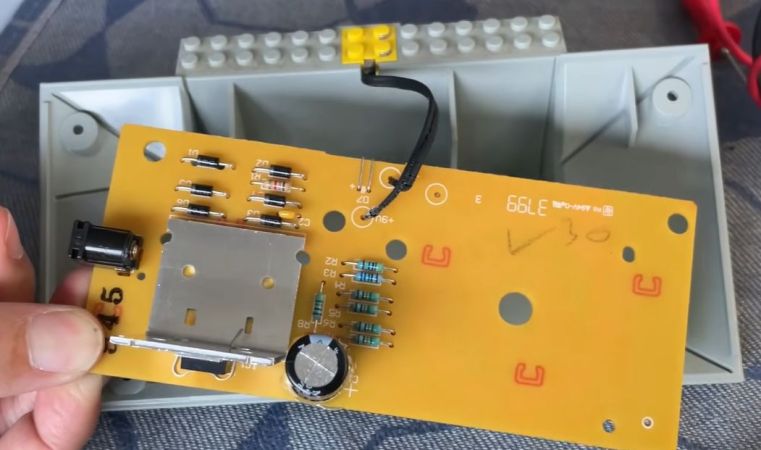
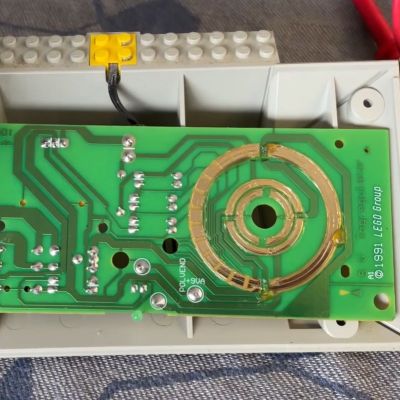
The single PCB inside is quite straightforward, with the 9-12 VAC supply input from an external power adapter, and a variable voltage regulator that sees its target voltage switched by a bank of resistors.

It are these resistors that the big yellow control switches between when you operate it, changing the output voltage and also output polarity you cross the midway point. Effectively this means that there is just one non-passive component on the PCB, in the form of the TO-220 package strapped to the big heatsink.

In this particular unit it was found to be a Fairchild KA317, which is for all intents and purposes here the same as an LM317T. One quick swap later and this controller was back in business like it was 1995.

Compared to the engineering crammed into a modern “smart brick”, things really have come quite a ways in the world of LEGO.

Continue reading “Fixing A 1990s LEGO Electric Train Speed Regulator”

Hackaday Europe 2026: Outdoors With Robots

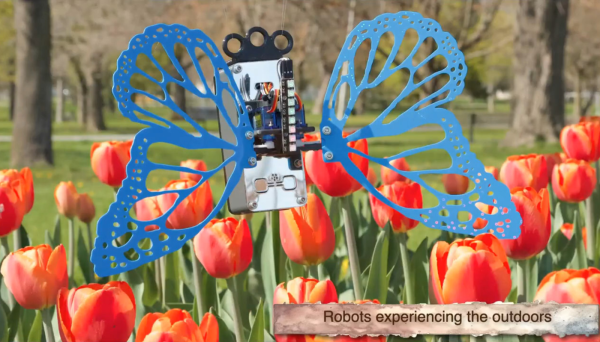
Erin Kennedy has been building robots for over a decade now, with a focus on smaller bots that interact with, or maybe even clean up, the outdoor environment. Still other bots are made to interact with people, and when the people are outside in the park, that’s where your robot needs to go.

Whatever the reason, Erin’s talk at Hackaday Europe 2026 is an invitation to take your projects out into the outdoors. But the great wide world outside of your lab is not necessarily the most friendly place for a little bot, and the other half of this talk is about practical design tips and lessons learned to help it survive. Continue reading “Hackaday Europe 2026: Outdoors With Robots”

Disassembling A Mini Air Blower To Make RC Airplanes

As a certified RC airplane fan, the [RCMakerLab] on YouTube found themselves looking at one of those nifty mini air blowers that provide an alternative to a compressor and canned air for dusting and other high-volume, high-pressure air-related tasks.

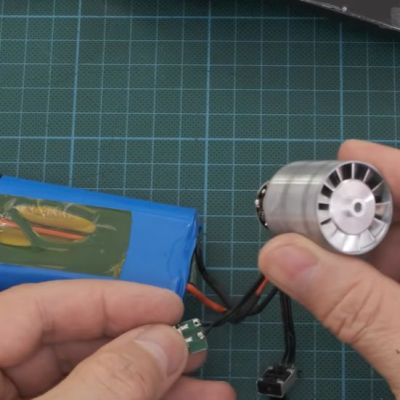
Inside these quite affordable units is a ducted fan (EDF) that can produce fairly high levels of airflow to get to every last dust bunny hiding on a PCB or inside a keyboard, raising the question of whether you could use these to fly a model airplane with.

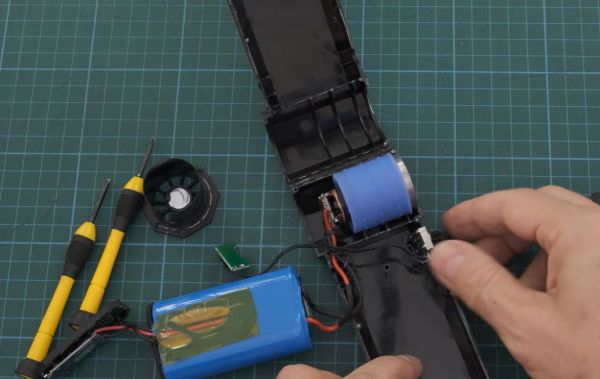
As can be seen in the torn down unit, there isn’t a lot to these air blowers, with the ESC bolted onto the EDF and only the speed regulator and on/off switch being external controls. This would make it very easy to integrate into an airplane, but leaves the question of whether it can generate enough thrust to make it worth the effort.

Using a custom rig, it was shown to generate up to 110 grams of thrust with a current of 16.5 A, which would at least go a long way to carrying its own battery pack. In order to create an airplane with it, probably two of these motors are needed. There’s also the potential of reducing weight by changing the ESC and such, making reusing these little EDFs from any discarded or broken mini air blowers at least worth a shot.

At the very least, it seems like it has a better shot of working than a plane powered by an electric leaf blower.

Continue reading “Disassembling A Mini Air Blower To Make RC Airplanes”

A 1024 Byte Python Interpreter

Like many of us, [Austin] finds writing code satisfying — especially if it is challenging. His latest challenge: shoehorn something that looks like Python into 512 bytes. Ok, that didn’t work out, but would you believe 1024 bytes of source code?

The goal was to properly execute a fizzbuzz program using a decidedly Python-like syntax. Since he is only interpreting Python, some things were simplified. In addition, he tried hard to minimize things like whitespace and variable names. Still, there were other things to do, and he borrowed from tips for code golfing.

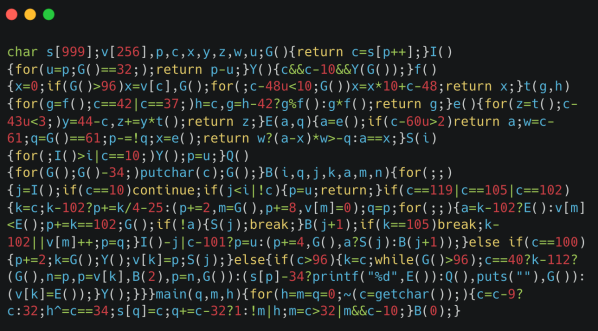
The resulting code is essentially illegible, but it handles integer variables and literals, assignment, arithmetic, many control structures, functions, and even print. Not bad for 1 K.

Despite being tiny, the parser does a lot, but it does cut corners. No bytecode, no syntax tree, and no error handling. Variables have to be a single lowercase letter. So, ok, it isn’t really Python. But it is something.

Naturally, this reminded us of the obfuscated C code contest. If you really want to go small, we appreciate small Forth.

Old IPad Keyboard Makes For A Modern Netbook

Netbooks were a class of tiny laptops which hit their peak over a decade ago, with the idea being that you could use the Internet and do your computing on the move with ease. Unfortunately manufacturers were scared of them eating their profits from bigger computers, and they were invariably built to a very disappointing spec. That doesn’t lessen the appeal of small form factor laptops though, and [bob-foss] is here with a simple hack to make one.

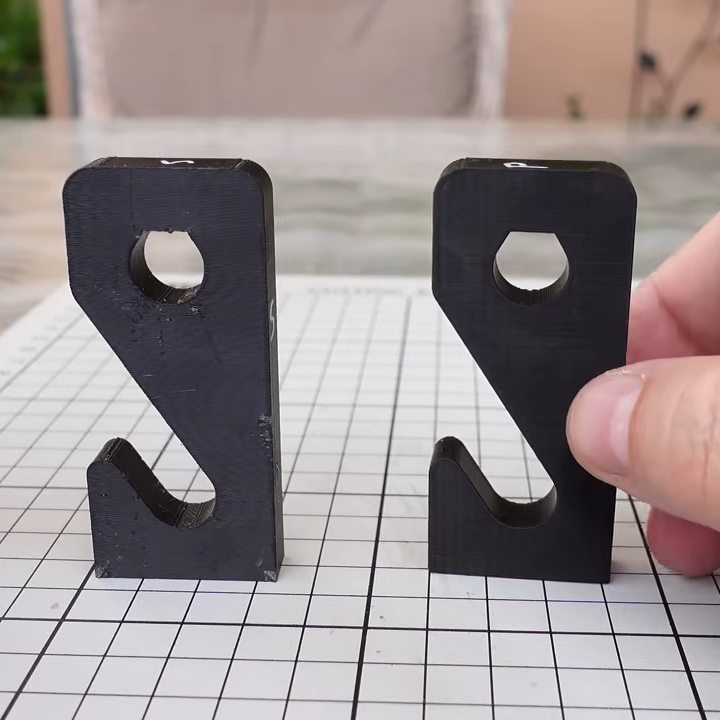
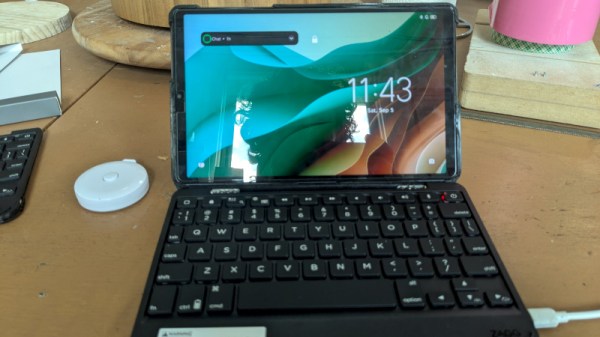
He’s taken a hinged keyboard case made for one of the previous generations of iPad Mini, and paired it with a high-end Lenovo gaming tablet by way of a 3D printed replacement for the original Apple-grabber. We said it was a simple hack and it is, but it’s no less elegant for that as the detail is what matters. This isn’t a mess-of-wires cyberdeck, instead it’s a machine you could pull out on a train and get some work done.

Meanwhile, if you’d like to take a wallow in what that netbook thing was all about, we took a look at the phenomenon back in 2020.