Announcing: International Hack Day, August 11th.

There is no single and definitive definition of what hacking is. We all have different versions of similar ideas in our head, but depending on your background and area of enthusiasm, hacking means something different. While dictionary.com has many definitions of the word itself, none seem to cover what we see on a daily basis.

We set out to define “hacking” ourselves. We tossed around words like “modify”, “kludge”, “explore”, and “create”. Each time we committed an increasingly vague definition onto the page, we decided it was too narrow and tossed it in the proverbial trash. The variations were just too many.

What we do know is that “hacking” seems to breed advancement and innovation. Much like mutations in an evolutionary chain, each hack pushes the topic in a slightly new direction, inspiring others and thereby perpretuating the evolutary event. In a very short time we’ve witnessed hacking bring forth the evolution of wagons to cars, kites to airplanes, and the creation of the computer.

We at Hackaday would like to declaire August 11th to be “International Hack Day”. A day to celebrate hacking in all of its diverse forms. From soldering to sewing, coding to carbonating, knitting to knurling, we want you to keep on hacking. Take August 11th as a day to show pride in your hacking. Waive your hacker flag high and educate those around you.

We have asked many of our friends to contribute their personal definition of hacking. Here they are, in the order they were received.

Continue reading “Announcing: International Hack Day, August 11th.”

Hackaday Southwest Tour

Earlier this summer, I took a trip through the southeast of the country. On this trip I was able to visit several hackerspaces and meet some really great people. We started at Squidfoo in Springfield Missouri. Then Moved on to Makers Local 256 in Huntsville Alabama. After that we saw 7hills hackerspace in Rome Georgia as well as Freeside hackerspace in Atlanta Georgia. The final leg of the trip took us to Chatt*Lab in Chattanooga Tennessee and the Hacker Consortium in Nashville.

For this trip, I am taking my family to the Grand Canyon. Well, that’s the part the kids are looking forward to. I’m looking forward to more hackerspaces and fantastic people. If you’re along the route from Springfield Missouri to Flagstaff Arizona, let me know (we’ll be hitting roswell NM on the way back too). We can go a little out of our way, but not hours.  I would really love to visit some hackerspaces on this trip and do a video tour. You can comment here or hit me directly at caleb@hackaday.com.

Continue reading “Hackaday Southwest Tour”

Geeks Living Off The Grid Are Hard On Batteries

Many of you will remember [Mikey Sklar] from the multitude of times he’s been on hackaday. What you may not have noticed is that he is an ubergeek, living off the grid.

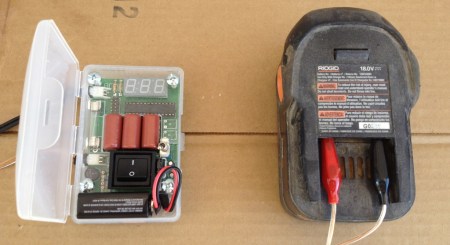
He has Solar PV battery bank, three electric vehicles, a shipping container loaded with battery powered tools and a small army of iRobot Roomba’s for cleaning. Getting the maximum lifetime out of a battery by removing sulfation is essential to keep expenses down.

Keeping expenses down is nearly a full time job when trying to live the homestead lifestyle. Our current culture makes it extremely difficult to survive completely on self made/grown things and bartering. They seem to be doing pretty well though. One way he can reduce his costs while still getting to enjoy some modern gadgets is to get longer life out of his batteries.  He does this by using a capacitive battery charger and desolfator that he designed and affectionately calls “Da Pimp”. He also brings in a little bit of income by selling kits!

 A capacitive charger behaves like a constant current power supply dynamically adjusting the voltage to get over the batteries internal resistance. Plus there is a pulse from the AC/DC conversion. This allows for old batteries to last longer and for dumpster dived to be used as replacements. Capacitive chargers are small, silent and super efficent (up to 60% more so than cheap transformer based chargers).

Of course, [Mikey] is a supporter of sharing information so you can also go to his site and download the schematics,bill of materials, gerber files, and files for the housing,  to build one yourself.

Putting QR Codes In Copper

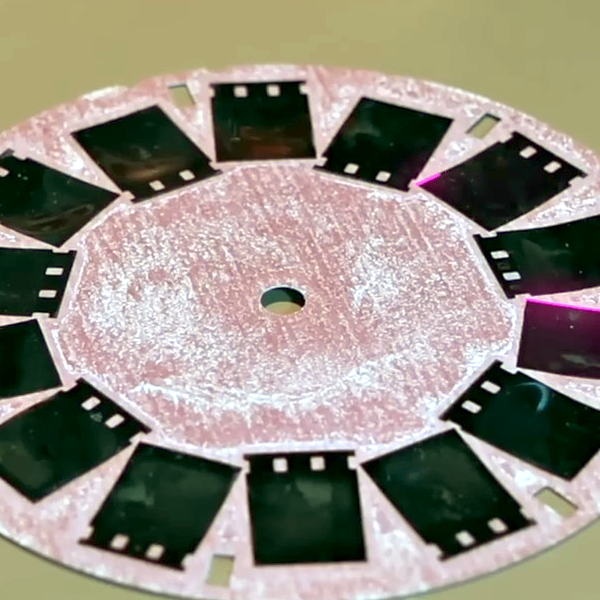
Former Hackaday contributor [mikeysklar] has been trying to etch a QR code into a sheet of copper. Although his phone can’t read the CuR codes he’s made so far, he’s still made an impressive piece of milled copper.

The biggest problem [mikey] ran into is getting Inkscape to generate proper cnc tool paths instead of just tracing a bitmap image. He’s got the CNC part of his build under control, but he still can’t find a QR code reader that will register his work.

We’re no stranger to QR codes here at Hack a Day, and it’s very possible the only thing that could be stopping [mikey]’s QR code from being read by a phone is the contrast of the image. We’re thinking a little bit of printer’s ink forced into the non-copper part of the PCB would make the QR code register. Since [mikey] already has a very nice negative etching of his QR code, he could easily use his new board as a printing plate, making infinite paper copies of his copper-based QR code.

If you’ve got any ideas on how [mikey] can get his QR code working, post them in the comments.

Give Yourself A Sixth Sense On The Cheap

sixth-sense-magnetic-ring

Hackaday regular [Mikey Sklar] is no stranger to body modifications. He enjoys tweaking his body in ways that help him with day to day tasks, including a ruler tattoo on his arm and an RFID chip embedded in the web of his hand. Lately, he has been toying around with a less invasive means of getting a better feel for magnetic fields in his surroundings.

Turned on to magnetic rings by a friend, he now wears an epoxy-coated rare earth ring every day, changing the way he interacts with the world. He says that besides the obvious ability to tell when he’s near iron-heavy material, he can also feel cell phone calls, as the speaker draws the ring closer while producing sound.

He says that holding the electric cord of his tea kettle gave him the biggest start, making him feel as if he had been electrocuted, minus the actual shock.

While it’s not the most high-tech hack, [Mikey] is quite happy with the “sixth sense” this reasonably price ring has been able to provide – we just might have to try it out ourselves.

Refurbishing A Refrigerator For Fermenting

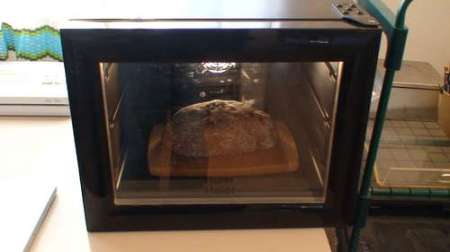
[Mikey Sklar] wrote in to show us how he refurbished a neighbors useless refrigerator as a fermentation chamber. [Mikey] is a fan of making breads, kemchi, yogurt, and tempeh. To make these, it helps to have a completely controlled temperature for them to ferment in. [Mikey] developed a temp controller for this in the past, but had to either build a control box or use a giant chest freezer.  This is not optimal for limited space, such as a kitchen. He got lucky when a neighbor tossed a wine cooler into the trash. These little coolers are perfectly sized for a kitchen and even have a glass front so you can keep an eye on what is going on inside without having to open it and effect your temps. [Mikey] ripped it open, replaced the peltier cooler with a large heat lamp and his temp controller. Since he was making yogurt with this one, he needed only to heat it. The final product turned out pretty effective.

Chest Freezer Temperature Controller

[Mikey Sklar] finds himself in need of a temperature regulated refrigerator for fermenting foods like yogurt, kimchi, bread, and beer. After some testing he found that by building his own controller he can get a chest freezer to outperform an upright refrigerator at this task by 2-to-1.

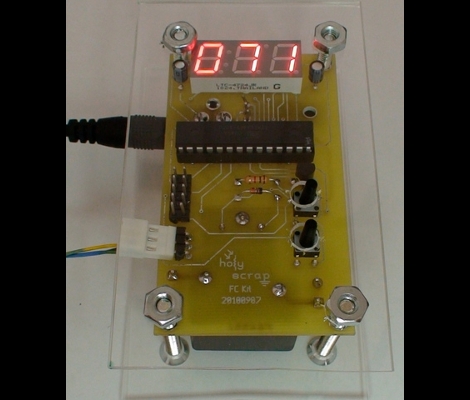
The controller is based around an ATmega48. It includes a remote temperature sensors which you can see connected to the lower left header in the image above. On the back of the board there’s a relay used to switch the freezer’s power on and off. [Mikey] is selling a kit but the hardware and software for the project are both open source so build it yourself if you have the know-how.

A chest freezer is a great place to store Cornelius kegs… we’ll keep our eyes open for one.