This Week In Security: The Internet Archive, Glitching With A Lighter, And Firefox In-the-wild

The Internet Archive has been hacked. This is an ongoing story, but it looks like this started at least as early as September 28, while the site itself was showing a creative message on October 9th, telling visitors they should be watching for their email addresses to show up on Have I Been Pwnd.

There are questions still. The site defacement seems to have included either a subdomain takeover, or a long tail attack resulting from the polyfill takeover. So far my money is on something else as the initial vector, and the polyfill subdomain as essentially a red herring.

Troy Hunt has confirmed that he received 31 million records, loaded them into the HIBP database, and sent out notices to subscribers. The Internet Archive had email addresses, usernames, and bcrypt hashed passwords.

In addition, the Archive has been facing Distributed Denial of Service (DDoS) attacks off and on this week. It’s open question whether the same people are behind the breach, the message, and the DDoS. So far it looks like one group or individual is behind both the breach and vandalism, and another group, SN_BLACKMETA, is behind the DDoS.

Continue reading “This Week In Security: The Internet Archive, Glitching With A Lighter, And Firefox In-the-wild”

This Week In Security: Kaspersky Ban, Project Naptime, And More

The hot news this week is that Kaspersky is banned in the USA. More specifically, Kaspersky products will be banned from sale in the US starting on September 29. This ban will extend to blocking software updates, though it’s unclear how that will actually be accomplished. It’s reasonable to assume that payment processors will block payments to Kaspersky, but will ISPs be required to block traffic that could contain antivirus updates?

WordPress Plugin Backdoor

A Quartet of WordPress plugins have been found to have recently included backdoor code. It’s a collection of five Open Source plugins, seemingly developed by unrelated people. Malicious updates first showed up on June 21st, and it appears that all five plugins are shipping the same malicious code.

Rabbit AI API

The Rabbit R1 was released to less than thunderous applause. The idea is a personal AI device, but the execution has been disappointing, to the point of reviewers suggesting some of the earlier claims were fabricated. Now it seems there’s a serious security issue, in the form of exposed API keys that have *way* too many privileges.

The research seems to be done by the rabbitude group, who found the keys back in May. Of the things allowed by access to the API keys, the most worrying for user privacy was access to every text-to-speech call. Rabbitude states in their June 25 post, that “rabbit inc has known that we have had their elevenlabs (tts) api key for a month, but they have taken no action to rotate the api keys.” On the other hand, rabbit pushed a statement on the 26th, claiming they were just then made aware of the issue, and made the needed key rotations right away.

Continue reading “This Week In Security: Kaspersky Ban, Project Naptime, And More”

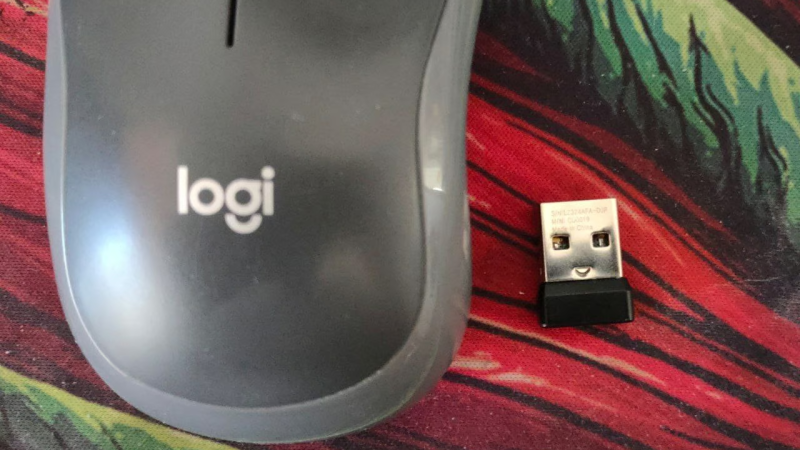
the Logitech receiver in question next to the mouse it's paired to

Uncovering Secrets Of Logitech M185’s Dongle

[endes0] has been hacking with USB HID recently, and a Logitech M185 mouse’s USB receiver has fallen into their hands. Unlike many Logitech mice, this one doesn’t include a Unifying receiver, though it’s capable of pairing to one. Instead, it comes with a pre-paired CU0019 receiver that, it turns out, is based on a fairly obscure TC32 chipset by Telink, the kind we’ve seen in cheap smart wristbands. If you’re dealing with a similarly obscure MCU, how do you even proceed?

In this case, GitHub had a good few tools developed by other hackers earlier — a Ghidra integration, and a tool for working with the MCU using a USB-UART and a single resistor. Unfortunately, dumping memory through the MCU’s interface was unreliable and frustrating. So it was time to celebrate when fuzzing the HID endpoints uncovered a memory dump exploit, with the memory dumper code helpfully shared in the blog post.

From a memory dump, the exploration truly began — [endes0] uncovers a fair bit of dongle’s inner workings, including a guess on which project it was based on, and even a command putting the dongle into a debug mode where a TC32-compatible debugger puts this dongle fully under your control.

Yet another hands-on course on Ghidra, and a wonderful primer on mouse dongle hacking – after all, if you treat your mouse’s dongle as a development platform, you can easily do things like controlling a small quadcopter, or pair the dongle with a SNES gamepad, or build a nifty wearable.

We thank [adistuder] for sharing this with us!

Displays We Like Hacking: HDMI

I don’t like HDMI. Despite it being a pretty popular interface, I find crucial parts of it to be alien to what hackers stand for. The way I see it, it manages to be proprietary while bringing a lot of the old cruft in. It doesn’t have a native alternative like DisplayPort, so portable implementations tend to suffer power-wise; the connector situation is interesting, and the HDMI Foundation has been doing some weird stuff; in particular, they are pretty hostile to open-source technology.

This article is not the place for such feelings, however, especially since I’ve expressed them enough in the DisplayPort article. We the hackers deserve to be able to handle the interfaces we stumble upon, and I firmly believe in that way more than in my right to animosity towards HDMI.

The HDMI interface is seriously prominent wherever you look, in part because it’s the interface created by the multimedia-involved companies for the multimedia-involved companies. Over the years we’ve had it, it’s been more than sufficient for basically everything we do video-wise, save for the highest resolutions.

It’s also reasonably simple to wire up, hack on, and even bitbang. Let’s go through what makes it tick.

The Core

HDMI is, at its core, three differential pairs for data, plus one pair to clock them and in the darkness bind them. It’s a digital interface, though it is a fun one. This makes it way more suitable for higher-distance video transmissions than interfaces like VGA, and as long as you stick to relatively low resolutions, HDMI won’t have as many asks in terms of PCB layout as DisplayPort might, thanks to HDMI link speeds scaling proportionally with the display resolution.

Continue reading “Displays We Like Hacking: HDMI”

This Week In Security: Default Passwords, Lock Slapping, And Mastodown

The UK has the answer to all our IoT problems: banning bad default passwords. Additionally, the new UK law requires device makers to provide contact info for vulnerability disclosures, as well as a requirement to advertise vulnerability fix schedules. Is this going to help the security of routers, cameras, and other devices? Maybe a bit.

I would argue that default passwords are in themselves the problem, and complexity requirements only nominally help security. Why? Because a good default password becomes worthless once the password, or algorithm leaks. Let’s lay out some scenarios here. First is the static default password. Manufacturer X makes device Y, and sets the devices to username/password admin/new_Complex_P@ssword1!. Those credentials make it onto a default password list, and any extra security is lost.

What about those devices that have a different, random-looking password for each device? Those use an algorithm to derive that password from the MAC address and/or serial number. That may help the situation, but the algorithm can be retrieved from the firmware, and most serial numbers are predictable in one way or another. This approach is better, but not a silver bullet.

So what would a real solution to the password problem look like? How about no default password at all, but no device functionality until the new password passes a cracklib complexity and uniqueness check. I have seen a few devices that do exactly this. The requirement for a disclosure address is a great idea, which we’ve talked about before regarding the similar EU legislation.

Continue reading “This Week In Security: Default Passwords, Lock Slapping, And Mastodown”

This Week In Security: Loop DOS, Flipper Responds, And More!

Here’s a fun thought experiment. UDP packets can be sent with an arbitrary source IP and port, so you can send a packet to one server, and could aim the response at another server. What happens if that response triggers another response? What if you could craft a packet that continues that cycle endlessly? That is essentially the idea behind Loop DoS (Denial of Service).

This unique avalanche of packets has been managed using specific implementations of several different network services, like TFTP, DNS, and NTP. There are several CVEs being used to track the issue, but CVE-2024-2169 is particularly odd, with the description that “Implementations of UDP application protocol are vulnerable to network loops.” This seems to be a blanket CVE for UDP, which is particularly inappropriate given that the first DoS of this sort was first reported in 2009 at the latest.

More details are available in a Google Doc. There some interesting tidbits there, like the existence of cross-protocol loops, and several legacy protocols that are vulnerable by design. The important thing to remember here is you have to have an accessible UDP port for this sort of attack to take place, so if you’re not using it, firewall it.

Flipper Flips Back

We’ve covered the saga of the Flipper Zero vs the Canadian government, in the context of car theft. The short version is that Canada has seen an uptick of car thefts from organized crime. Rather than meaningfully dealing with this problem, the Canadian government went looking for scapegoats, and found the Flipper Zero.

Well now, Flipper has responded, and put simply, the message is “stop the madness”. There has never been a confirmed case of using a flipper to steal a car, and it’s very unlikely it’s ever happened. On a modern car with proper rolling-code security, it’s not meaningfully possible to use the Flipper Zero for the theft. The two primary ways criminals actually steal cars are with dedicated keyfob repeaters and CAN bus hackers.

There is a petition to sign, and for Canadians, Flipper suggests contacting your local member of parliament. Continue reading “This Week In Security: Loop DOS, Flipper Responds, And More!”

This Week In Security: WebP, Cavium, Gitlab, And Asahi Lina

Last week we covered the latest 0-day from NSO group, BLASTPASS. There’s more details about exactly how that works, and a bit of a worrying revelation for Android users. One of the vulnerabilities used was CVE-2023-41064, a buffer overflow in the ImageIO library. The details have not been confirmed, but the timing suggests that this is the same bug as CVE-2023-4863, a Webp 0-day flaw in Chrome that is known to be exploited in the wild.

The problem seems to be an Out Of Bounds write in the BuildHuffmanTable() function of libwebp. And to understand that, we have to understand libwebp does, and what a Huffman Table has to do with it. The first is easy. Webp is Google’s pet image format, potentially replacing JPEG, PNG, and GIF. It supports lossy and lossless compression, and the compression format for lossless images uses Huffman coding among other techniques. And hence, we have a Huffman table, a building block in the image compression and decompression.

What’s particularly fun about this compression technique is that the image includes not just Huffman compressed data, but also a table of statistical data needed for decompression. The table is rather large, so it gets Huffman compressed too. It turns out, there can be multiple layers of this compression format, which makes the vulnerability particularly challenging to reverse-engineer. The vulnerability is when the pre-allocated buffer isn’t big enough to hold one of these decompressed Huffman tables, and it turns out that the way to do that is to make maximum-size tables for the outer layers, and then malform the last one. In this configuration, it can write out of bounds before the final consistency check.

An interesting note is that as one of Google’s C libraries, this is an extensively fuzzed codebase. While fuzzing and code coverage are both great, neither is guaranteed to find vulnerabilities, particularly well hidden ones like this one. And on that note, this vulnerability is present in Android, and the fix is likely going to wait til the October security update. And who knows where else this bug is lurking. Continue reading “This Week In Security: WebP, Cavium, Gitlab, And Asahi Lina”