Early PCs and other computers had serial ports, sometimes as their main interfaces for peripherals. Serial ports still survive, but these days they are more likely to have a USB connection into the main computer. However, when you are working with a microcontroller, you probably don’t want a proper RS232 port with its plus and minus 12 volt signals.
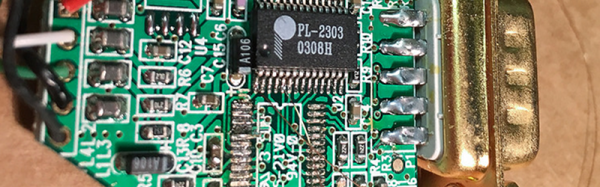
You can get converters that specifically output logic-level signals but you probably can’t pick one up at the local office supply store. They might, though, have a normal USB to serial cable. [Aaron] had the same problem so he hacked into a cable to pull out the logic level signals.
On the one hand, hacks like this are a good inspiration for when you have a similar problem. On the other hand, you probably won’t wind up with the same cable as [Aaron]. He got lucky since the board inside his cable was clearly marked. Just to be sure, he shorted the transmit and receive lines to see that he did get an echo back from a terminal program.
No, that watch isn’t broken. In fact, it’s better.
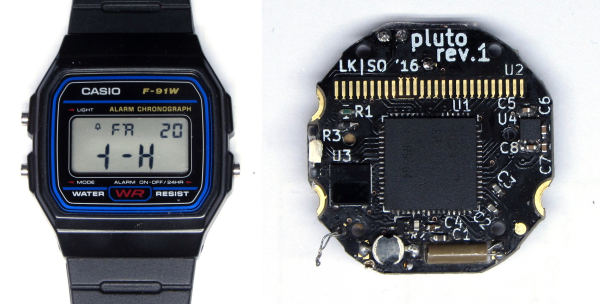
[Lukas] got so used to his binary-readout ez430 Chronos watch that when the strap disintegrated he had to build his own to replace it. But most DIY wristwatches are so clunky. [Lukas] wanted something refined, something small, and something timeless. So he shoe-horned some modern components, including an MSP430, into a Casio F-91W watch.
The result is a watch that tells time in binary, has a built-in compass, and with some more work will be updatable through an IR receiver that he also managed to fit in there somehow. Now he has the watch that Casio would make today, if fashion had stayed stuck firmly in the early 1990s. (Or not. Apparently, Casio still makes and sells the F-91W. Who knew?)
Anyway, back to an epic and pointless hack. Have a look at the tiny, tiny board that [Lukas] made. Marvel in the fact that he drove the original LCD screen. Dig the custom Kicad parts that match the watch’s originals. To get an accurate fit for the case, [Lukas] desoldered the piezo buzzer contact and put the board onto a scanner, which is a great trick when you need to get accurate dimensions. It’s all there, and well-documented, in his GitHub, linked above.
All in all, it’s an insane hack, but we love the aesthetics of the result. And besides, sometimes the hacking is its own reward.
We are entering a new era of radio technology. A new approach to building radios has made devices like multi-band cell phones and the ubiquitous USB TV receivers that seamlessly flit from frequency to frequency possible. That technology is Software Defined Radio, or SDR.
A idealized radio involves a series of stages. Firstly, an antenna receives the radio signal, converting it into an electrical signal. This signal is fed into a tuned resonator which is tuned to a particular frequency. This amplifies the desired signal, which is then sent to a demodulator, a device which extracts the required information from the carrier signal. In a simple radio, this would be the audio signal that was encoded by the transmitter. Finally, this signal is output, usually to a speaker or headphones.
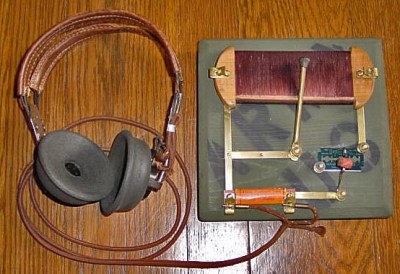
A replica foxhole crystal set. Photo: Bill Jackson
That’s how your basic crystal radio works: more sophisticated radios will add features like filters that remove unwanted frequencies or additional stages that will process the signal to create the output that you want. In an FM radio, for example, you would have a stage after the demodulator that detects if the signal is a stereo one, and separates the two stereo signals if so.
To change the frequency that this radio receives, you have to change the frequency that the resonator is tuned to. That could mean moving a wire on a crystal, or turning a knob that controls a variable capacitor, but there has to be a physical change in the circuit. The same is true of the additional mixing stages that refine the signal. These circuits may be embedded deeply in the guts of the radio, but they are still there. This is the limitation with normal receivers: the radio can’t receive a signal that is outside the range that the resonator circuit can tune to, or change the way it is demodulated and processed. If you want to receive multiple frequency bands or different types of signals, you need to have separate pathways for each band or type of signal, physically switching the signal between them. That’s why you have physical AM/FM switches on radios: they switch the signal from an AM radio processing path to an FM one.
Software Defined Radios remove that requirement. In these, the resonator and demodulator parts of the radio are replaced by computerized circuits, such as analog to digital converters (ADCs) and algorithms that extract the signal from the stream of data that the ADCs capture. They can change frequencies by simply changing the algorithm to look for another frequency: there is no need for a physical change in the circuit itself. So, an SDR radio can be tuned to any frequency that the ADC is capable of sampling: it is not restricted by the range that a resonator can tune to. Similarly, the demodulator that extracts the final signal you want can be updated by changing the algorithm, changing the way the signal is processed before it is output.
This idea was first developed in the 1970s, but it didn’t really become practical until the 1990s, when the development of flexible field-programmable gate array (FPGA) chips meant that there was enough processing power available to create single chip SDR devices. Once programmed, an FPGA has no problem handing the complex tasks of sampling, demodulating and processing in a single device.
Most modern SDRs don’t just use a single chip, though. Rather than directly converting the signal to digital, they use an analog front end that receives the raw signal, filters it and converts it down to a fixed frequency (called the intermediate frequency, or IF) that the ADCs in the FPGA can more easily digitize. This makes it cheaper to build: by converting the frequency of the signal to this intermediate frequency, you can use a simpler FPGA and a cheaper ADC, because they don’t have to directly convert the maximum frequency you want to receive, only the IF. As long as the front end can convert a band of signals down to an intermediate frequency that the FPGA can digitize, the SDR can work with it.
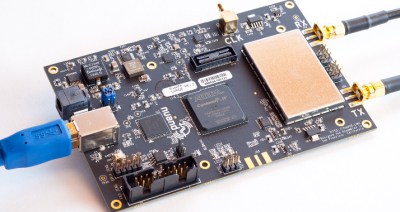
The BladeRF, a modern SDR device that can receive and transmit signals between 300 MHz and 3 GHz
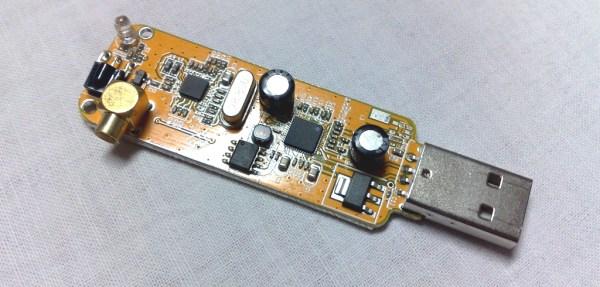
This flexibility means that SDR devices can handle a huge range of signals at relatively low cost. The $420 BladeRF, for instance, can receive and transmit signals from 300 MHz to 3.8 GHz at the same time, while the $300 HackRF One can work with signals from 1 MHz up to an incredible 6 GHz. The ability of the BladeRF to both receive and transmit means that you can use it to build your own GSM phone network, while the low cost of the HackRF One makes it a favorite of radio hackers who want to do things like make portable radio analyzers. Mass produced models are even cheaper: by hacking a $20 USB TV receiver that contains an SDR, you can get a radio that can, with a suitable antenna, do things like track airplanes or receive satellite weather images. And all of this is possible because of the idea of Software Defined Radio.
Hamvention was last weekend, and just like Hackaday’s expedition to Maker Faire, it was only fitting to find a bunch of Hackaday fans and take over a bar. This was in Dayton, Ohio, and you would think the nightlife for Hamvention would be severely lacking. Not so, as downtown Dayton is home to Proto BuildBar, a bar, arcade, and hackerspace all wrapped into one.
We’ve heard about Proto BuildBar a few years ago when it first opened. The idea is relatively simple; instead of having a hackerspace, with alcohol and video games on the side, Proto BuildBar is first and foremost a bar, with 3D printing services, a few workstations for soldering, and a few arcade games. It’s the perfect place for an impromptu meetup.
Humanity is better when we work together. Nowhere is this more true than when it comes to Citizen Scientists — the concept that scientific advancement isn’t reserved to the trained professionals, but benefits when a larger population of thinkers collaborates with the community of trained researchers. This is the goal of the Citizen Scientist challenge round for the Hackaday Prize. Let’s build something that enables citizens to be scientists.
We’ll divide $20,000 evenly between twenty projects that target Citizen Scientists. Enter now and build your prototype by July 11th for your chance to win. Even better, if you are selected as one of those 20 finalists you’ll compete for the top prizes, $150k and a residency at the Supplyframe Design Lab in Pasadena. Second through fifth place finishers will get $25k, $10k, $10k, and $5k.
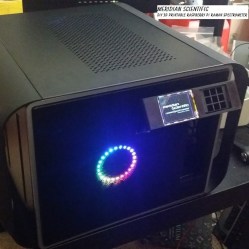
You love design challenges and this one has powerful potential. We’ve seen builds like this in the finals during previous years of the Hackaday Prize. In 2014, RamanPi was recognized as the 5th place winner. The project seeks to reduce the expense of acquiring a Raman Spectrometer which is used for analyzing chemical substances. The design used parametric models for the optic jigs used by the machine. The idea is that a university could buy their own optics, adjust the models for the properties of those lenses and mirrors, then 3D print the parts to build the apparatus.
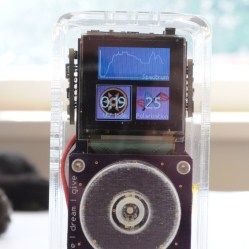
Also a winner in 2014, the Open Science Tricorder was recognized as the fourth place finisher. Based on the form factor and functionality of the iconic Star Trek technology, the Open Science Tricorder combines three or more sensor technologies with a user interface. It provides a hands-on experience for students learning about the properties of the world around them, and a handheld sensor suite to anyone interested in undertaking their own research projects.
The Citizen Scientist challenge round begins right now. Get started on your build today and show us what you can do to solve a technology problem with your prototyping skills. Good luck!
In February 2015, Radio Shack–an icon in American malls and towns–filed for bankruptcy. You could say a lot of critical things about Radio Shack, but in many parts of the country, it was the only place you were going to go find electronic components on short notice. A lot of people of a certain age got their exposure to electronics via Radio Shack kits and parts.
Radio Shack did close a lot of stores. In fact, from 4,000 stores they are down to about 1,700. A New York hedge fund named Standard General bought all the Radio Shack assets and formed a new company (also called, oddly enough, Radio Shack). They just named [Dene Rogers] as CEO. He’s a veteran at retail sales, having been with Target in Australia and Sears in Canada.
The term ‘Internet of Things’ was coined in 1999, long before every laptop had WiFi and every Starbucks provided Internet for the latte-sucking masses. Over time, the Internet of Things meant all these devices would connect over WiFi. Why, no one has any idea. WiFi is terrible for a network of Things – it requires too much power, the range isn’t great, it’s beyond overkill, and there’s already too many machines and routers on WiFi networks, anyway.
There have been a number of solutions to this problem of a WiFi of Things over the years, but none have caught on. Now, finally, there may be a solution. Nest, in cooperation with ARM, Atmel, dialog, Qualcomm, and TI have released OpenThread, an Open Source implementation of the Thread networking protocol.
The physical layer for OpenThread is 802.15.4, the same layer ZigBee is based on. Unlike ZigBee, the fourth, fifth, and sixth layers of OpenThread look much more like the rest of the Internet. OpenThread features IPv6 and 6LoWPAN, true mesh networking, and requires only a software update to existing 802.15.4 radios.
OpenThread is OS and platform agnostic, and interfacing different radios should be relatively easy with an abstraction layer. Radios and networking were always the problem with the Internet of Things, and with OpenThread – and especially the companies supporting it – these problems might not be much longer.



 You love design challenges and this one has powerful potential. We’ve seen builds like this in the finals during previous years of the Hackaday Prize. In 2014,
  Also a winner in 2014, the