Smartphones are the opium of the people. If you need proof, just watch the average person’s reaction when they break “their precious”. Repairing smartphones has become a huge business. The most often broken item on phones is of course the front glass. In most cases, the screen itself doesn’t break. On newer smartphones, even the touchscreen is safe. The front glass is only a protective lens.
The easiest way to repair a broken front glass is to swap the entire LCD assembly. For an iPhone 6 plus, this will run upwards of $120 USD. However, the glass lens alone is just $10. The problem is that the LCD, digitizer and front glass are a laminated package. Removing them without breaking the wafer thin LCD glass requires great care. The hardest part is breaking down the optical glue securing the glass to the LCD. In the past that has been done with heat. More recently, companies from China have been selling liquid-nitrogen-based machines that cool the assembly. Now immersing a phone screen in -196° C liquid nitrogen would probably destroy the LCD. However, these machines use a temperature controller to keep a surface at -140° C. Just enough to cause the glue to become brittle, but not kill the LCD.
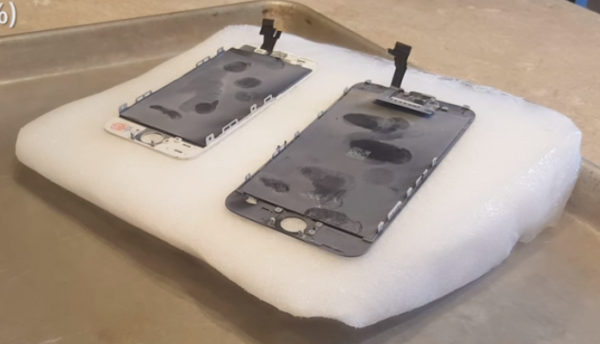
[JerryRigEverything] doesn’t have several thousand dollars for a liquid nitrogen machine, but he does have a $5 block of dry ice. Dry ice runs at -78.5°C. Balmy compared to liquid nitrogen, but still plenty cold. After laying the phone screens down on the ice for a few minutes, [Jerry] was able to chip away the glass. It definitely takes more work than the nitrogen method. Still, if you’re not opening your own phone repair shop, we think this is the way to go.
Broken phones are a cheap and easy way to get high-resolution LCD screens for your projects. The problem is driving them. [Twl] has an awesome project on Hackaday.io for driving phone screens using an FPGA. We haven’t seen it done with iPhone 6 yet though. Anyone up for the challenge?
Continue reading “Dry Ice Is Nice For Separating Broken Phone Screens”
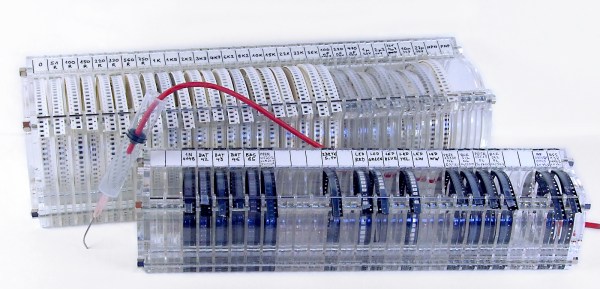
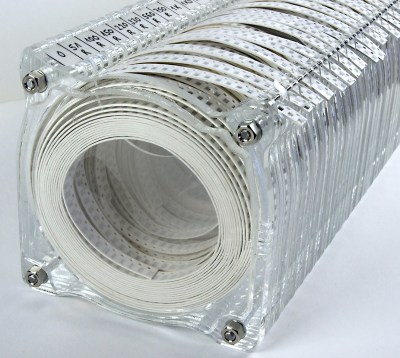 SMD resistors are packed in thick paper tapes that don’t bend easily, and thus need larger containers than other components, which are packed mainly in flexible PE tapes. The first version of this organizer was built with a 96mm diameter space for resistors and 63mm diameter for other components, but it seems that there is no need for such large compartments. If I were to make it again, I would probably scale everything down to about 80% of it’s current size.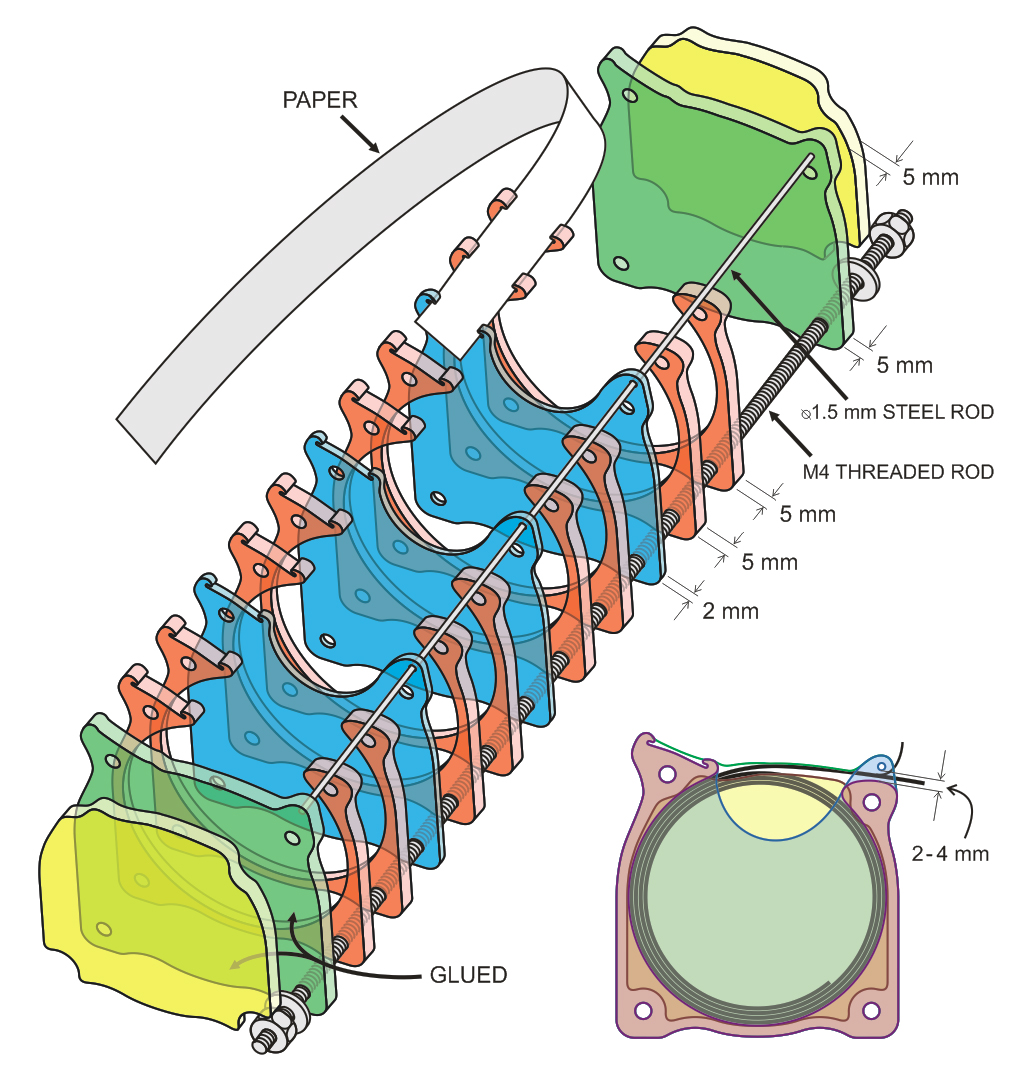

 Version 1 of [Roger]’s robot is only semi-vermiform and is more of