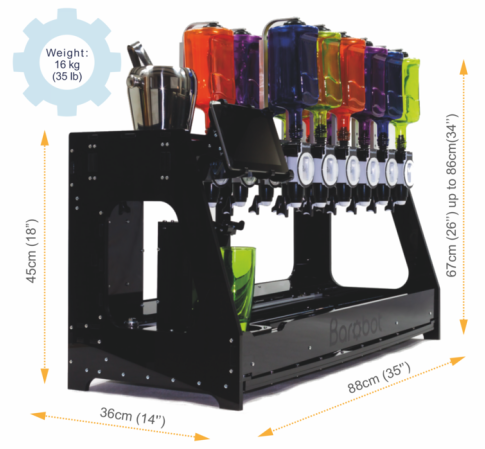
Oh for the day when we can stop repeatedly looking up our favorite drink recipes on Wikipedia. Those may be just around the corner and you’ll have your choice of single-click delivery or toiling away in the workshop for a scratch build. That’s because Barobot is satisfying both the consumer market and our thirst for open hardware goodness. They’re running a Kickstarter but to our delight, the software and mechanical design files are already posted. Before you dig into the design files there’s a really good look at the constituent parts in the assembly manual (PDF) — that’s a lot of pieces! — and a tiny bit on the tech-stuff page.
This remind us of the Drinkmo we saw earlier in the year. That one cames complete with the high-pitched whine of stepper motors. We didn’t get to hear Barobot’s ambient noise in the promo vid after the break. But one place this desing really shines is a swiveling caddy that allows for a double-row of bottles in a similar footprint. One thing we’d be interesting in finding out is the cleaning procedure. If anyone know what goes into cleaning something like this let us know in the comments.
Continue reading “Barobot Serves Cocktails While Using Open Design The Right Way”