DVD Laser Diode Used To Build A Laser Engraver

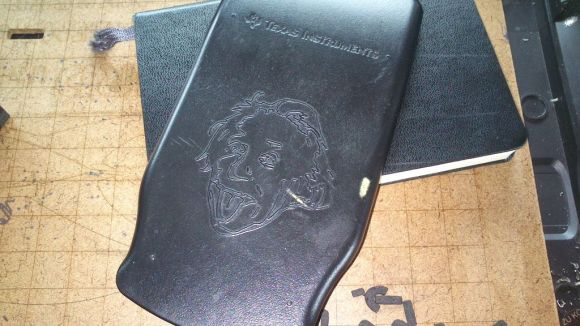
[Johannes] has been reading Hackaday for years but this is the first project he’s tipped us off about. It’s a laser engraver built from a DVD burner diode (translated). It turned out so well we wonder what other projects he’s forgotten to tip us off about?

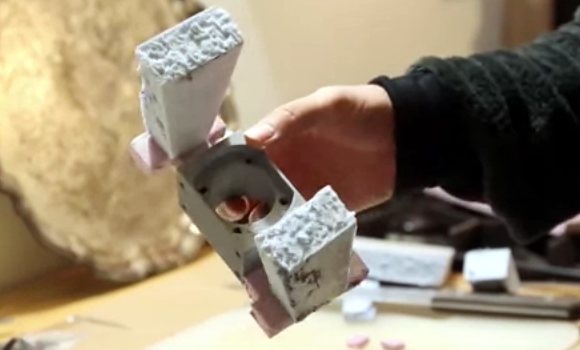
This is the second CNC machine he’s seen through from start to finish. It improves upon the knowledge he acquired when building his CNC mill. The frame is built from pine but also uses bits of plywood and MDF. It can move on the X and Y axes, using drawer sliders as bearings. The pair of blue stepper motors drive the threaded rods which move the platform and the laser mount. Just above the laser he included a small DC fan to keep it from burning up. The control circuitry is made up of an Arduino Nano and a stepper motor driver board. Catch a glimpse of the engraver cutting out some stencil material after the break.

There must be something about Spring that brings out the urge to work with laser diodes. We just saw a similar 1W cutter last week.

Continue reading “DVD Laser Diode Used To Build A Laser Engraver”

Tracking Ships Using Software-defined Radio (SDR)

tracking-ships-using-sdr

When we first started hearing about software-defined radio hacks (which often use USB dongles that ring it at under $20) we didn’t fully grasp the scope of that flexibility. But now we’ve seen several real-life examples that drive the concept home. For instance, did you know that SDR can be used to track ships? Ships large and small are required by may countries to use an Automatic Identification System (AIS) transponder. The protocol was originally developed to prevent collisions on large ships, but when the cost of the hardware became affordable the system was also brought to smaller vessels.

[Carl] wrote in to share his project (which is linked above). Just like the police scanner project from April this makes use of RTL-SDR in the form of a TV tuner dongle. He uses the SDRSharp software along with a Yagi-UDA. The captured data is then decoded and plotted on a map using ShipPlotter.

The First 3d Printed Gun Has Been Fired, And I Don’t Care.

3d-printed-gunSeveral people have sent us this story. I’ve seen it everywhere. A lot of people are upset, on several sides.  A gun has been 3d printed that can actually fire a round.

First, we have people scared that this will bring undetectable guns to people who wouldn’t have had access before. Then we have the gun fans that are reacting to the others with shouts of freedom and liberty and stuff.  The 3d printing community has had mixed reactions, but many are concerned that this will harm 3d printing in general.

I simply don’t care.

Continue reading “The First 3d Printed Gun Has Been Fired, And I Don’t Care.”

Update: Grow Controller Rebuilt To Last

new-grow-controller

[The Cheap Vegetable Gardener] assembled his first grow controller about three and a half years ago. He’s been very happy with it and knows that he’ll be using it for years, maybe even decades to come. He just finished overhauling the grow controller design to help make sure he doesn’t burn down his garage one day. You have to admit, without knowing anything about the project this rendition does look safer than his original offering.

Pictured above is the weather-proof enclosure he used to house four mains-rated solid state relays. This box is isolated from the control hardware, providing heavy-duty utility plugs to interface with the heater, lights, fan, and water pump.  He mounted the Arduino board which controls the relays to the outside of the box, using the Ethernet wire to switch the SSRs. It uses a manufactured shield he designed which will help ease the pain of fixing the system if parts ever go bad.

Later on in the build he shows the grow light and heaters used in his operation. The heaters simply screw into light sockets; something we’ve never come across before.

Hackaday Links: Sunday, May 5th, 2013

hackaday-links-chain

Let’s start off this weekend’s links post with some advertising. We like targeted ads (mostly because we don’t have pooping problems and are tired of hearing about Activia). So we applaud IBM for finding our number with this commercial which produces a stop-motion animation using single atoms as pixels. Wow! [via Reddit and Internet Evolution]

Speaking of commercials, here’s some snake-oil which lets you touch a boob without being in the same room with the person [Thanks Michael].

Moving right along we’ve got a trio of trackpad hacks. There’s one that lets you use the keyboard and trackpad of a MacBook as a standalone USB input device [via Reddit]. Or you could take a Toshiba laptop to the tablesaw to turn it into a USB trackpad. But maybe your Acer C7 Trackpad doesn’t work very well and you just need better grounding.

[Nick McGill] is a member of the team developing an upper body exoskeleton as an assistive technology. This made the rounds on tech websites but the lack of in-depth build info on the project site kept it from getting its own feature here.

If you have a router capable of running DD-WRT here’s a method of setting up a PPTP VPN for free.

And finally, you may remember hearing about the original Prince of Persia source code being discovered and released about a year ago. Well [Adam Green] figured out how to compile it into the original Apple II floppy disks. [Thanks Arthur]

MSP430 Touchscreen Piano

msp430-touchscreen-piano

[Rohit Gupta] wrote in to share this touchscreen piano project he built around the TI Launchpad. It provided a way for him to explore using a resistive digitizer found on a lot of mobile devices. These are simply stuck to the top of LCD screens and replacements are inexpensive, but salvaging one from old hardware is an option as well.

The first thing he did was to test the four outputs of the digitizer with his multimeter. Logging the changing resistance will help make sure you’re reading the correct wires and are able to zero in the settings before you start coding. [Rohit] uses the ADC on the MSP430 chip to read from the screen. He went with the algorithm from one of TI’s app notes to convert the readings in to X and Y coordinates.

He separated the screen into seven columns, each generating a different tone. Touching higher or lower on that column will alter the pitch of the note produced. You can hear an example of this in the demo after the jump.

Continue reading “MSP430 Touchscreen Piano”

Asteriods: The Belt Buckle

asteroids-video-game-belt-buckle

This is going to change the way you play with yourself. What if every time you got a little bored you reached for your belt rather than your smart phone? [Cunning_Fellow] may be doing that more often now that he finished this slick-looking video game belt buckle which plays the classic Asteroids game.

It isn’t just an intriguing concept. The build was pulled off at a very high level of quality… this thing should have no problem standing the test of time. First off he had to figure out if it was even possible to run the game at a respectable frame-rate. Cheap 320×240 LCD screens don’t have a frame marker (think of it as a vertical sync signal with can be used as an interrupt for the microcontroller). But he thought it was possible that the frame marker pin just wasn’t connected like on more expensive screens and he was right with at least one model he acquired.

With that out of the way he laid out and etched a beautiful double-sided board to house all of the electronics. But he still needed a case. To get a one-of-a-kind look he masked and etched a sheet of brass. Once cut out and folded ti gives a wonderful look and protects the electronics inside quite well.