General Purpose Robot Remote

[youtube=http://www.youtube.com/watch?v=uuwb3fn51r4]

[theGrue] has posted his Robot remote control project for us to gawk at. This box o’ buttons is a parallax propeller brain with some Xbee units for communication. Though it was designed to work with TOBI, his tool carrying robot, he made it so that he could control a multitude of robots with it by flipping some switches on the front of the remote.

[via Hacked Gadgets]
3D Printing With Chemicals

From the horse’s mouth,

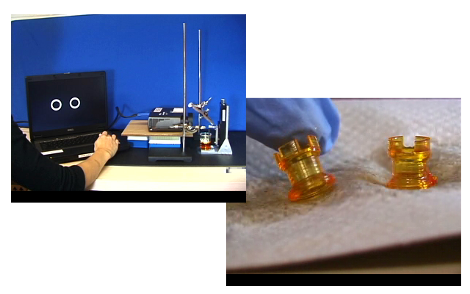
“In this lithography experiment light creates free radicals from phenylbis(2,4,6-trimethylbenzoyl)phosphine oxide which induce polymerization of 1,6-hexanediol diacrylate.”

Or for those without a Chemical Engineering degree, light from a (high resolution) projector interacts with a special liquid, producing a hard polymer on the surface. A platform within the liquid is lowered, taking the layer of polymer with it. Shine the projector again to produce another layer: lather, rinse, repeat. Long story short, an atypical 3D printer using light on a very small scale.

You get the chemicals and lab equipment, we’ll get the laptop and projector, and for goodness sake [Jimmie] stop bumping the table.

[Thanks Tomas]

Android Development 101 – Part 1:Hello World

This article will focus on developing a simple hello world program for android using Java. Google has recently released a “cute and fuzzy” programming environment for beginners to get into but I haven’t had the chance to try it, so we will be focusing on the Eclipse IDE here, which you should have set up in the last post.  When creating a text based project there are two very important items.  It will involve creating an android project, going through the necessary steps to complete both the (1) XML files and the (2) Java file and get this project ready for production and eventually deployment.  The requirements of this project are simple, know the basis of XML (for new comers if you don’t that’s OK too, you will learn) and know Java (very basic knowledge but you will learn as we go and we will modify a few parts of the java file today).

Continue reading “Android Development 101 – Part 1:Hello World” →

That Light Switch Is Disgusting!

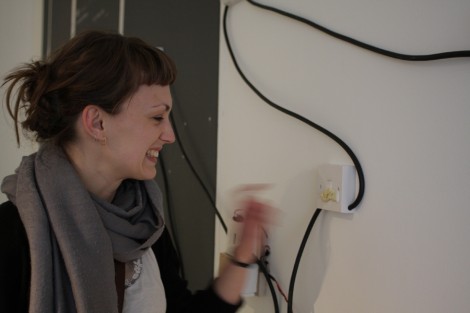
[Katrin Baumgarten] has fourteen switches that are made to gross you out. From a button that retreats into its hole as your finger approaches, to a mysterious goo-oozing faceplate, to a hairy housing that gets aroused as your try to flip it on, the intrigue is enough to get you to try out the next creepy node in the network. There’s a clip of several different switches after the break and if that’s not enough she’s got more on her Vimeo channel.

Continue reading “That Light Switch Is Disgusting!” →

Foam Board Servo Driven Arm

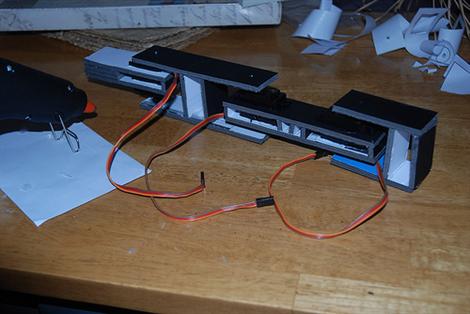
[Lucky Larry] posted some pictures to the Hack a Day flickr pool that caught our eye. He made a quick and cheap servo driven arm. Constructed from foam board and some hobby servos, he’s using an Arduino for the brains. You can download the pattern for the arm pieces as well as the code on his site.

He ultimately finds that he has positioning issues that he blames on the cheap servos. You can see in the video on his site that the circles it is drawing are drifting one direction.

Arduino Space Program

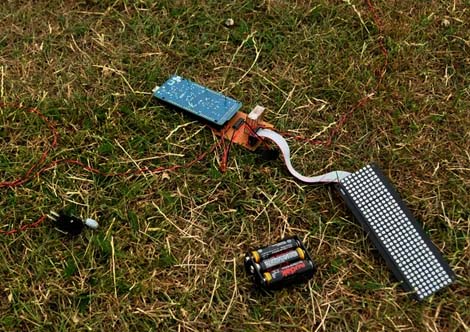
With the recently proposed cuts to NASA, our friends across the pond (in Northampton UK) decided to take action with a space program of their own… at least at a miniature scale. NortHACKton, a hackerspace in Northampton decided to host a rocketry day consisting of rockets powered by chemical reactions, pressurized water bottles, and even one that employed an Arduino controlled launch system, akin to a few we have seen in the past. It essentially consists of a countdown and automated ignition system. Schematics and source code are available for those adventurous enough to embark on missions of their own.

3 Camera Booms For Your Wednesday Afternoon

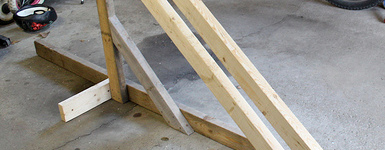
[Andrew] tipped us off about his Cable Cam built out of some lumber and clothes line. It is small enough to fit into a backpack,  includes a safety line and the camera can pan and tilt. A future version is planned with a small remote motor to move the trolley more effectively.

[Andrew] accidentally linked us to his other Camera Crane, taking the same ‘cheap yet effective’ approach as his Cable Cam. Once again, just some lumber and creative engineering are used to pull this one off.

For those without the ability to weld, check out [Bill Van Loo’s] all wood version of a Camera Crane. Same parallelogram design, without remote video output or central pivot.