Hacking Space Without Profit Or Secrecy

Reader [Jacob] tipped us off about a project the aims to make the final frontier open source. The mission of the Copenhagen Suborbitals is to launch a man into space. What they’re not interested in is turning a profit, carrying hazmat or weapons, or keeping what they learn to themselves.

Surprisingly enough, isn’t this the next logical step after hobbyists send cameras into space? This team thinks so and they’ve been hard at work building and testing rockets. With the last round of successful tests behind them, they’ve paved the way for a launch of the first round of the campaign on June first. Da duh daaaah da duh duh da daaaaa

Smart Flash Synchronization

[Max] designed this circuit to add smart flash synchronization to his photography arsenal. He did this because ‘dumb’ TTL based flashes won’t play nicely with more sophisticated systems like the Nikon Advanced Wireless Lighting. By building a microcontroller into the mechanism, he’s added functionality for several different scenarios, ensuring that he’ll never again have problems with early flash triggering. Now that the kinks have been ironed out in the prototype, the code and hardware can be migrated over to whatever microcontroller suits you.

Portable Squeezebox With Serial

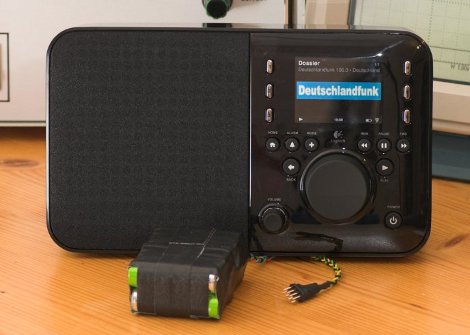
The Squeezbox media streaming systems are compact Linux WiFi enabled radios that let you stream your collection anywhere,so long as you have an AC or USB outlet nearby. But [Achim Sack] wanted to stream his collection from anywhere with no wires attached (translation). Some poking and prodding revealed a connector actually designed for a battery and serial, but no commercially available battery yet.

The system requires a temperature sensor and if you want serial, a USB converter, but overall a simple process that could be done in an afternoon. Giving your box ~10 hour of life and even fits inside of a back compartment.

[Thanks Thomas]

Steampunk Sequencer

[Moritz Wolpert] built this gem of Victorian hardware by hand. It is a sequencer and features beautiful detail work as shown in its MySpace gallery. Other than that we don’t know a lot about it. You can also take a look at [Moritz’s] main page, but prepare to be annoyed by the hideous web-styling that really undercuts the beauty of his physical product.

[Thanks Freax via Schaltzentrale]

Hacker Finds Better Use For A Windows Machine

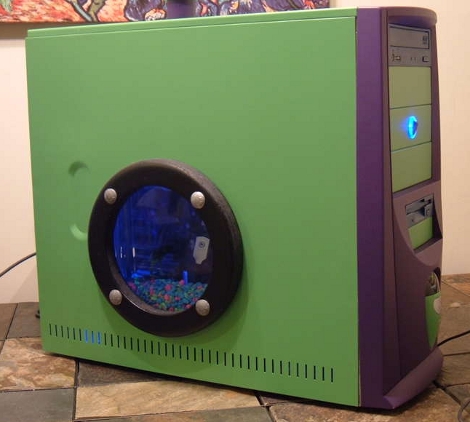
[Patrick Becker] had an ancient PC on his hands with a blown PSU. He converted this into a stylish home for his Betta splendens.

The aquarium itself is fashioned from a piece for construction glass block with the top cut off. This allows for a window that looks through the tank and shows off the motherboard on the other side. He patched into the AC connector so that the original power cord can be used to control the pump. A lighted pump button was added to the front panel and a fancy bezel fitted to the viewing portal in the side of the case. He finished off the project with a PVC pipe for air and food. His blue screen of death now features water and a real fish.

DoomBox: Classic Keys Meet Tiny Screen

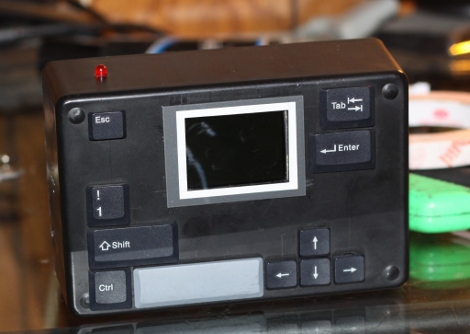
The doomBox is a dedicated gaming rig for lovers of ID Software’s classic title. [JJ] built this from an old Kodak DC290 camera that had a broken lens. Since this runs the Digita OS, he was able to use the Doom port that already exists. But the camera’s factory buttons were not well suited as controls. By whipping up his own button board, and using the traditional keyboard keys for the button caps, he achieved a much more comfortable (yet squint-inducing) gaming experience. The finished project resides in an all-too-familiar black project box. See him fire it up after the break.

The original Doom for Digita OS pages seem to be down so here’s an alternate if you’re interested.

Update: Looks like the original website is back up.

Continue reading “DoomBox: Classic Keys Meet Tiny Screen” →

Phone/webapp Written In Ploy To Appear More Popular

That title’s not really fair to [Evan], but he did write a cellphone tetris game that causes your handset to automatically telephone him if you win. He’s using two applications that we’re not very familiar with, Twilio and Tornado. The former handles control input from the cellphone via their simple API. The latter is a web server and web framework that runs the actual game.

If you’re interested in how he put the two together you can poke around in the code. If you really don’t care about how it is done, you might just want to win the game, automatically giving [Evan] a call, running up his wireless bill in the process.

Help us add some value to this article by leaving a comment.  We’d like to know how Twilio compares to Google Voice which doesn’t seem to have a published API (but there is some work in that area). We also think web-based cell phone interactivity, already popular in hacks, is just beginning to build some steam. What are the tools you use to make cellphone interfaces easier and quicker to implement?