HOPE 2008: Methods Of Copying High Security Keys


[Barry Wels] is well known for his lockpicking talks, but this year he wanted to talk about how he copies high security keys. If a key blank is available, you could make a copy just by viewing the original. High security keys generally have profiles with more side cuts, which means you can guess at how deep a specific pin is by observing how many cuts it crosses. He also showed that you could imprint your arm with the key and use that as a guide. If a blank isn’t available, you could fill a similar key with solder and file that down.

[Barry] showed two different kits for casting keys. The first used soft clay in a clam shell to make an imprint of the original key. The form is then filled with a low melting point alloy (probably Wood’s metal) to create the new key. A second style uses a metal form and two part silicone to create the mold. This method works for most high security keys, but will not work on keys with active elements like sliders or magnets.

Finally, [Barry] talked about his favorite method: impressioning. Unlike picking a lock, when you’re done impressioning you have a funtional key. You start with key blank and file off the top layer. Place the blank in the lock and turn it till it jams. Then, you rock the key up and down. Observing the key under light you’ll see a small mark where each pin is. File a bit where the marks appear and repeat the process. You can’t use too much force or you might break the blank. This also works on dimple keys and as this video shows, laser cut keys. [Barry] highly recommends the impressioning book by [Oliver Diederichsen].

[photo: Rija 2.0]

Behead Your Laptop


[Mark] sent in this nice trick for breathing new life into an old laptop. [Sarc] had a tibook with a broken LCD. It was still usable with an external monitor, so he simply removed the broken LCD. The tibook (and MacBook) uses a magnetic sensor to monitor the LCD position. To put the machine in the right mode, he taped a magnet in place to make the machine think that the display was in the closed position. To really clean things up, he mounted all the hardware under the desk and used a wireless keyboard and mouse with the machine.

Build A ROBONOVA-I


On the latest episode of Systm, they talk to [David Calkins], founder of the RoboGames competition, about humanoid robotics. The robots featured in the episode are Hitec’s ROBONOVA-I. The ROBONOVA is about a foot high and has 16 servos with support for up to 24, all connected to an Atmel controller. The episode is quite long: At around 15 minutes, they demonstrate the programming enviroment. You can program it traditionally or pose the bot to work out the motions. At 30 minutes, [David] mentions that next year’s competition will allow airsoft weapons to be attached, but bots have to be controlled from a first person perspective. If you’re interested in one of these kits, they have a ROBONOVA special of $900 or as low as $500 for educational institutions (that’s us, right?). Now is the perfect time to get one since you’ll have nearly a full year to prepare for RoboGames.

Related: You’ll hear builder [Matt Bauer]’s name mentioned several times.

[via BotJunkie]

DNS Exploit In The Wild


We’ve been tracking Metasploit commits since Matasano’s premature publication of [Dan Kaminsky]’s DNS cache poisoning flaw on Monday knowing full well that a functional exploit would be coming soon. Only two hours ago [HD Moore] and [I)ruid] added a module to the Metasploit Project that will let anyone test the vulnerability (with comment: “ZOMG. What is this? >:-)“). [HD] told Threat Level that it doesn’t work yet for domains that are already cached by the DNS server, but it will automatically wait for the cached entry to expire and then complete the attack. You can read more about the bailiwicked_host.rb module in CAU’s advisory. For a more detailed description of how the attack works, see this mirror of Matason’s post. You can check if the DNS server you are using is vulnerable by using the tool on [Dan]’s site.

[photo: mattdork]

Simple Tracking In 3D Space

[kylemcdonald] has posted this how to build a simple 3D tracking interface. Using 6 resisters, some wire, aluminum foil, an Arduino, and a cardboard box, he was able to do 3D capacitive sensing. Coupling that with Processing, he was able to overlay an interface using augmented reality. The video above shows a 3D tic tac toe application. While it seems less than perfect, its pretty amazing for how simple it is.

Seen anything similar to this out there? What applications would be fun with this?

Shih Chieh Huang’s Recycled Bots


We’re really sorry to have missed GLOW. It was a unique all-night art and music event that took place the evening of July 19, 2008, in Santa Monica, and lasted until dawn. We were most intrigued by [Shih Chieh Huang]’s haunting robotic sculptures. They were eerily beautiful, and appeared to be alive and “breathing”. He took some unusual materials – plastic bags and bottles, computer fans and circuit boards, among others, and combined them all to give the creatures otherworldly auras. Simultaneously familiar and strange, the sculptures are designed to evoke marine life, yet they’re completely different, in both materials and structure. More coverage and pictures of the event can be found at LAist, NOTCOT, and on Flickr.

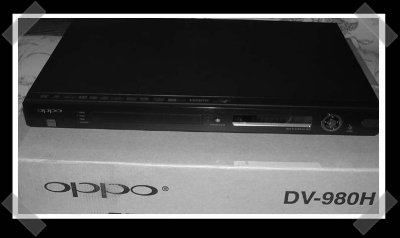
Modding The Oppo 980 For Better Audio Output


There’s an interesting thread discussing mods to improve the inexpensive Oppo 980 DVD player for better performance. The power supply, capacitors and opamps can benefit from some higher end components. [Occam] suggests several replacement opamps options for upgrading the audio output. The realatively low cost of Oppo gear makes it a better risk than modding a multi-thousand dollar DVD player.