Five Plugins And Tips To Secure Your WordPress Blog


How do you protect your own blog from getting hacked? There’s never a foolproof answer, but with some added tools and caution, you can make your website a little safer from getting into harm’s way. Cats Who Code has five plug-ins and tips you can use to protect your WordPress install. Some of the tips are common sense advice that can apply to anything related to technology – such as making backups often and using strong passwords. Others include suggested plugins that can help you verify whether your WordPress install has any security holes, or small tricks to hide the version of WordPress you’re using. Do you have any useful plugins or tricks to share to keep your blog safe from hackers?

[via Digg]
Honeybike: Bicycle Thief Honeypot


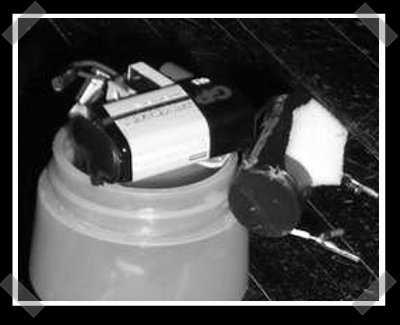
[liseman] decided to build a honeypot for bicycle thieves. He mounted a pay as you go cell phone and a gutted stun gun inside a water bottle. When the phone is dialed, the stun gun is activated thanks to a tap on the vibration motor inside the phone. He also installed some tracking software on the phone so the bike can be traced when stolen.
Location of the stun gun probes depends on certain assumptions: will the thief ride off on the bike, or simply toss it in the back of a truck. (Check your local laws if you’re contemplating doing this yourself.)

Surveillance As Art


The Target Project is a graduate project from the Royal College of Arts in London. It is designed to make us question our relationship with surveillance technology and CCTV. This is a particularly meaningful demonstration for a country like Britain which is said to contain up to 4.2 million CCTV cameras or roughly 1 for every 14 people.

This project has two demonstrations on their site. The first is dubbed the RTS-2 (Racial Targeting System). This system is essentially a camera which follows faces and is able to analyze and interpret the person’s race. The second is SOLA. This system is able to quickly scan someone and calculate their body mass index then publish this information to the web. Both systems achieve their goal by blatantly pointing out a line in which more surveillance does not equate to more security. They also show the wealth of personal data that can be obtained about a person by a simple camera.

[via we make money not art]

Predictive Blacklisting With DShield


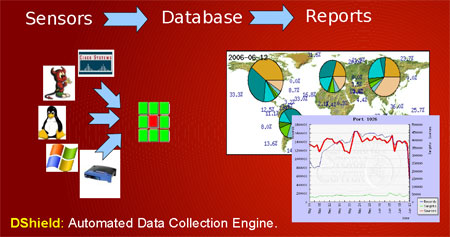
The DShield project is hoping to change how we protect our networks from malware with predictive blacklisting. Using a method similar to Google’s PageRank, DShield collects logs from network administrators to help develop a score based on maliciousness. They combine this score with information about where the malware has already hit to determine an overall threat level.

Similar to antivirus programs, the system still relies on networks being attacked to rate the threat level. They have shown though, that the predictive method is consistently more effective than manual blacklisting. The system has been available for free for the past year. Those utilizing the system have been reporting positive results. They do note that there are a few people whose network infrastructure doesn’t match up with the predictions very well. If you would like to participate, go to their site and sign up.

HOPE 2008: YouTomb, A Free Culture Hack


YouTomb is a research project designed by the MIT Free Culture group to track video take downs on YouTube. To succeed, the team needed to track every single video on YouTube… which is close to impossible. Instead, they built several “explorer” scripts to track what videos were interesting. One explorer tracks all of YouTube’s lists: recommended, featured, most active, and more. Another explorer picks up every video submitted to YouTube, and a third crawls Technorati.

The explorers just find the videos; a separate group of scanner scripts checks the current status of videos. It checks both the new videos and ones that have been killed to see if they return. YouTomb archives every video it finds. They display the thumbnail of the video under fair use, but they’re still determining whether they can display each video in full.

Continue reading “HOPE 2008: YouTomb, A Free Culture Hack” →