
Thanks to Star Wars, Plenty of people have built their own R2 units. Pixar’s next movie has been running trailers for a while, and there’s already a group(free membership required) devoted to building real versions of the SGI robot star: WALL-E. I guess I’ll have to call it reverse-forward engineering. WALL-E has some interesting design ideas – it compacts trash into cubes, but it can also retract its treads into the same compacting area. (Pictured is a WALL-E style waste cube, by [Jawa Lunk]) Thanks to [Shannon] deserves the credit for turning me onto this one.
Asus Eee PC Trace Hunting

There isn’t anything hacked into it yet, but [tnkgrl] spent some time hunting around her Eee PC for some handy hackable extras. I’d been ignoring them, but now I want one. Oh yes, I do. Hit the writeup for details, but [tnkgrl] identified some semi un-used USB connections, an accessible 5v supply and a spare mini-pcie slot that seems to disable the SSD when it’s in use. The currently unusable mini-pci slot is actually pretty intriguing.
Digital Geiger Counter

Worried about radiation levels? I’m not, but I still want to build one of these. Mr. Fission here was built by the same guy that’s behind the OpenTracker project. [Scott] based it on the Bargraph Geiger counter built by [Russel E. Cliff]. Both use a standard Geiger tube like the LND712. The tube works with high voltages – easy enough with older electronics, but it’s a slightly tougher challenge with todays low voltage gear. [Scott] used the high voltage power supply from the original project, and built the rest around a good ol’ Motorola HC86 series processor. [Scott]’s idea of using an inverter supply designed for a cold cathode lamp is definitely an interesting one.
Hackit: FRS/GMRS Portable Radios
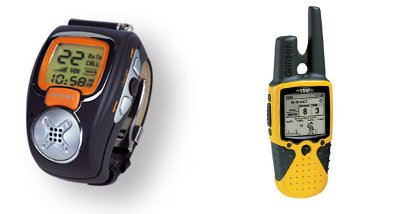
FRS and GMRS radios have the performance that we wished walkie talkies had when we were kids. I find them interesting because they aren’t quite as tied down as amateur radio bands. (They’re freaking cheap and you can give them to unlicensed users.) I’ve been surprised by the lack of hacks for these little guys. Garmin married them with a GPS unit to create a sort of hand held APRS device called the Rhino. Since I’ve got a couple of kids, I’m thinking that smacking a GPS into one of these little wrist radios with a modified opentracker (PIC based APRS encoder) would be great for tracking the family on hikes and ski/snowboard trips.
The response to Hackit has been fantastic! Each week I’m going to bring up some hardware. You guys get to pick your brains and suggest new, interesting projects. Look for a round-up and bounty post in the next week or so.
So, got a better idea? Let’s hear it!
Morse Code USB Slide Keyboard
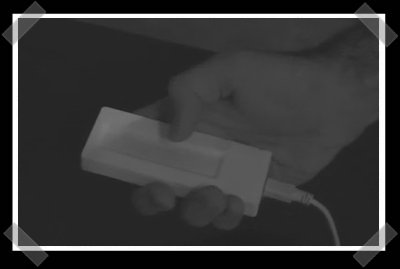
Today, I stumbled across this morse code keyboard. I couldn’t find any sign on the promised schematics or code, but I like the design. It’s not that hard to train yourself in Morse code, and it’s nearly impossible to send an erroneous code thanks to the unique slide=dash tap=dot physical interface.
Spread Spectrum Freq Hopping USB RF Modem
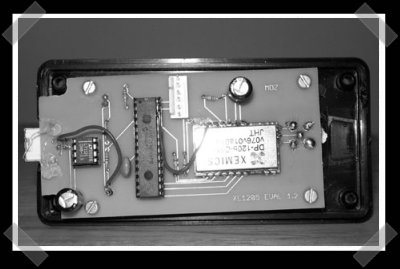
Since I mentioned Sparkfun electronics in the parts finding how-to, I started poking around their forums and stumbled across this interesting USB RF modem. It uses an off the shelf Semtec DP1205 RF module that’s controlled by a PIC 18F2550. The really interesting thing is that it uses spread spectrum frequency hopping – which means that by FCC rules, it can transmit up to 1 watt at 900Mhz.
Friday Night Pyro Extra

Well, not quite so much a pyro, but this setup rocks for cooking some good steaks.
[Tony] sent in this mp3 doorbell hack. I’m thinking… Star Wars theme song.
[Joey] let me know about this odd hack that adds guitar foot pedals to every button on a gameboy. (It makes sense if you remember that they’re popular for 8-bit sound production)
[Chris] sent in his wooden robot arm. It’s a simple servo based design, but it might be a good place to start if you’re leaning in that direction.
This already got plenty of attention, but [Billy] took his iPod apart and encased it in a block of resin. It’s still works, via a dock cable.
[D.G.] sent in this cheap ring-light tutorial. It’s based on a cheap LED light that’s got a set of ring mounted LEDs from the factory.
[Eliot] noted this interesting take on finding slingboxes using geographical IP addresses to set up your target search.
Finally, if you enjoyed [Eliot]’s visit to [Mr. Jalopy]’s garage, you might want to check out the video version on BoingBoingTV.