This excellent content from the Hackaday writing crew highlights recurring topics and popular series like Linux-Fu, 3D-Printering, Hackaday Links, This Week in Security, Inputs of Interest, Profiles in Science, Retrotechtacular, Ask Hackaday, Teardowns, Reviews, and many more.
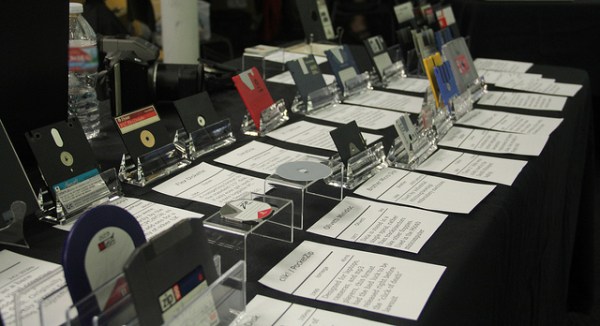
This past weekend, another smashing round of the Vintage Computer Festival was held at the Computer History Museum in Mountainview. As always, VCF West gathers the sages and lords of vintage computers onto a common ground to talk old-school hardware. It also draws in a collection of unique artifacts, many of which either still work, have been brought back to life, or have otherwise been reincarnated through a modern means. [Bil Herd] and I dropped in to join the crowd, and I snagged a few pics of some new faces and pieces that have been added to the experience since last year.
[Foone’s] Digital Media Archiving
Up first on our bucket list was [Foone], a librarian of digital media archiving. Outside of VCF, he runs a digital media backup gig to help folks backup their niche, often-failing, disk formats into something more modern. His drive for doing this backup features a special “reread” capability, where the file is actually reread dozens of time to validate that the right information was pulled from it.
It’s the middle of August, and that means all the hackers are back from DEF CON, safe in their hoodies, with memories of smoke-filled casinos, interesting talks, and, most importantly, crypto challenges.
This year was an ‘off’ year for DEF CON. There was an official badge, but it wasn’t electronic (which no one expected), and there was no crypto challenge (which no one saw coming). Nevertheless, there was already a vibrant community of badge builders, and the crypto nerds of DEF CON were satisfied by PCB locks from the Crypto and Privacy village, Benders, and Darknet phone dials this year.
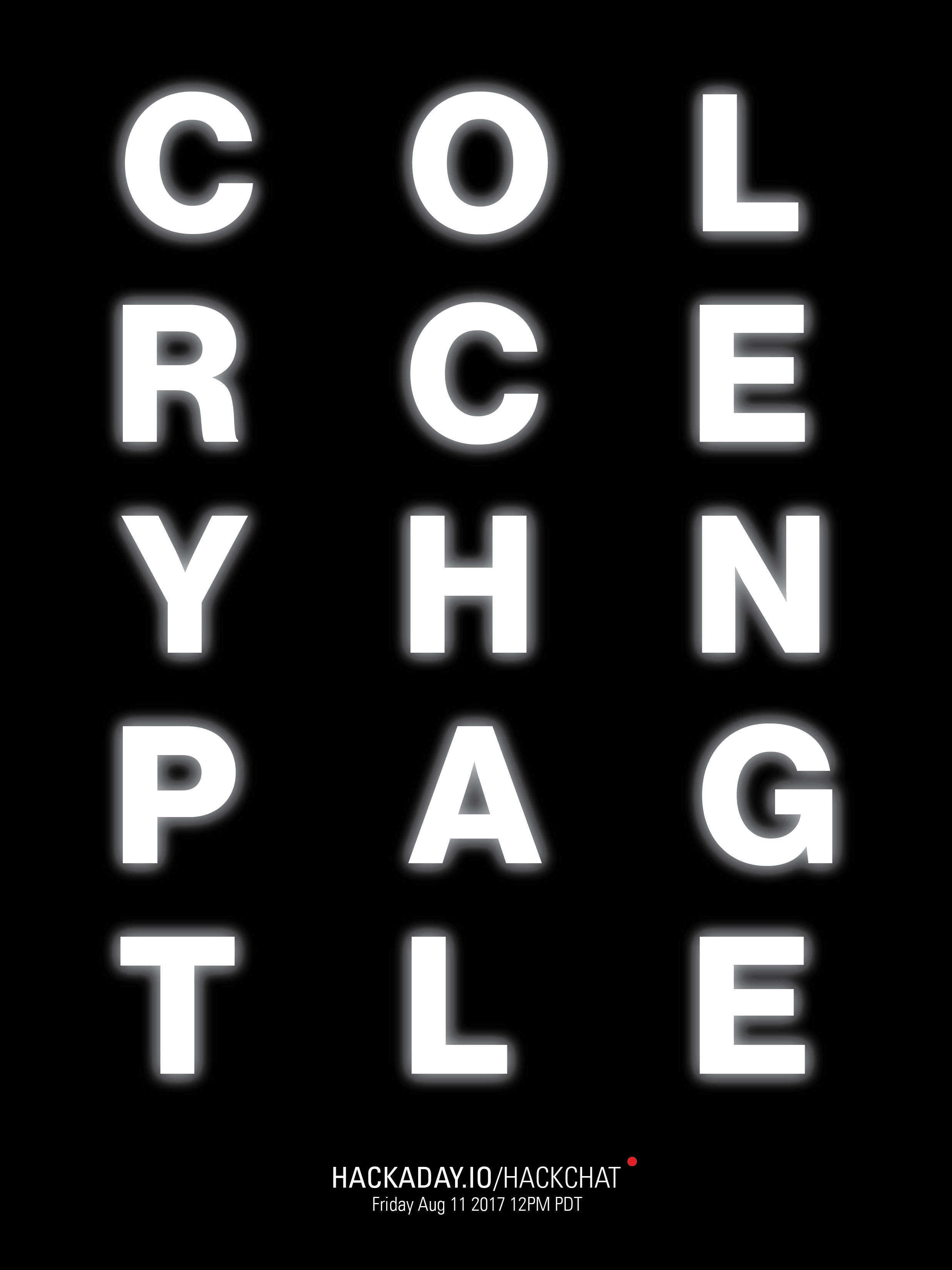
How were these crypto challenges constructed? That’s the subject of this week’s Hack Chat. This Friday, we’re going to be sitting down with a member of DEF CON’s Crypto and Privacy village on how these curious codes are constructed, how a winner is determined, and the techniques used to solve these challenges.
This week, we’ll be talking about how crypto challenges actually work, how to put crypto in firmware, on laser-engraved acrylic plates, and in silkscreen on a PCB. We’ll be talking about how crypto challenges are created, and how you solve them. Special attention will be paid to testing a crypto challenge; that is, how do you make sure it’s solvable when you already know how to solve it?
Although this Hack Chat is only going to last an hour, there’s no possible way we could cover all the tips, tricks, and techniques of creating a crypto challenge in that time. If you’d like some further reading, [L0sT] showed up at our 10th anniversary party to tell us he created the puzzles for DEF CON over the last few years.
Here’s How To Take Part:
Our Hack Chats are live community events on the Hackaday.io Hack Chat group messaging. This Hack Chat will take place at noon Pacific time on Friday, August 11th. Don’t know when the Earth’s sun will be directly overhead? Here’s a time and date converter!
Log into Hackaday.io, visit that page, and look for the ‘Join this Project’ Button. Once you’re part of the project, the button will change to ‘Team Messaging’, which takes you directly to the Hack Chat.
You don’t have to wait until Friday; join whenever you want and you can see what the community is talking about.
For those of a certain vintage, no better day at school could be had than the days when the teacher decided to take it easy and put on a film. The familiar green-blue Bell+Howell 16mm projector in the center of the classroom, the dimmed lights, the chance to spend an hour doing something other than the normal drudgery — it all contributed to a palpable excitement, no matter what the content on that reel of film.
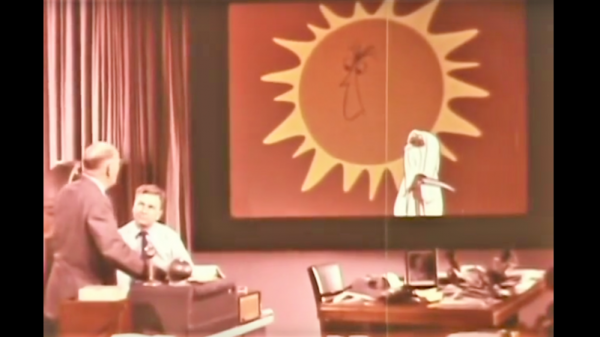
But the best days of all (at least for me) were when one of the Bell Laboratory Science Series films was queued up. The films may look a bit schlocky to the 21st-century eye, but they were groundbreaking at the time. Produced as TV specials to be aired during the “family hour,” each film is a combination of live-action for the grown-ups and animation for the kiddies that covers a specific scientific topic ranging from solar physics with the series premiere Our Mr. Sun to human psychology in Gateways to the Mind. The series even took a stab at explaining genetics with Thread of Life in 1960, an ambitious effort given that Watson and Crick had only published their model of DNA in 1953 and were still two years shy of their Nobel Prize.
Produced between 1956 and 1964, the series enlisted some really big Hollywood names. Frank Capra, director of Christmas staple It’s a Wonderful Life, helmed the first four films. The series featured exposition by “Dr. Research,” played by Dr. Frank Baxter, an English professor. His sidekick was usually referred to as “Mr. Fiction Writer” and first played by Eddie Albert of Green Acres fame. A list of voice actors and animators for the series reads like a who’s who of the golden age of animation: Daws Butler, Hans Conried, Sterling Halloway, Chuck Jones, Maurice Noble, Bob McKimson, Friz Freleng, and queen and king themselves, June Foray and Mel Blanc. Later films were produced by Warner Brothers and Walt Disney Studios, with Disney starring in the final film. The combined star power really helped propel the films and help Bell Labs deliver their message.
We get a lot of Kickstarter pitches in our email, but this one is different. First of all, it’s over. No biggie there. Secondly, it’s a laser-cut hurdy gurdy. What’s a hurdy gurdy? It’s a musical instrument that uses a wheel to vibrate strings. It has drone strings and a rudimentary keyboard for the melody. Think of it as ‘string bagpipes’ and you’re not that far off. This means you can laser cut (or 3D print, someone get on it) a hurdy gurdy, and that’s just awesome.
I wrote the previous paragraph without referencing Donovan. You’re welcome, Internet.
[Spencer] found a few very small seven-segment flip display units. This, of course, meant he had to build a clock. Right now [Spencer] is in the PCB design stage of the project, with the hope of finishing it before school starts. There is still an open question here: where do you get really tiny flip segment displays?
Perhaps we’ve said too much about the number one badge at this year’s DEF CON, but this is really the project that just keeps giving. [Hyr0n] thought it would be a great idea to have a shirt printed with the design of this year’s official Hackaday DEF CON badge. This seemed simple enough — all he needed to do was send the design off to a custom printed t-shirt place on the Internet and wait a week or two. This is where things got a little nuts. [Hyr0n] stole my intellectual property. My very intellectual property. Here’s a great tip for when a t-shirt place puts your order on hold because of a copyright: just say it’s creative commons, they’ll send it right on through.
The DIY-VT100 is a miniature VT100 (and VT102) terminal, because sometimes you need a standalone serial terminal. Soon, it’s going to be a Crowd Supply campaign. Who’s going to be the first to 3D print a look-alike VT100 enclosure for this little thing? Where can you get pre-bromiated filament?
We all know what the Atari 2600 is, but what is the Atari 2700? It’s an exceptionally rare prototype that used wireless controllers. One was found in a thrift store recently. [L064N] bought it for $30, and sold it on eBay for $3000.
Here’s a weird thing [Yann] sent in. The Rise mP6 was a non-Intel, non-AMD, non-Cyrix, non-VIA, x86 compatible CPU sold in the late 90s. What’s cool about it? Three parallel MMX instructions, and an easter egg hidden in the microcode. The principal engineer on the project, [Chris Norrie], decided he wanted to hide his name in the CPU, and managed to do it without anyone else catching on. If you put ‘NZ’ into eAX and execute CPUID, it returns “* Chris Norrie *”. That’s a hack, and it’s amazing.
Imagine a fire hydrant being lifted high into the air by a large helium balloon. It goes higher and higher, but suddenly gas starts to leak out of the nozzle, which makes it sound like it’s trying to talk… but with a distinct lisp. A colorful bumblebee then lands on the balloon, licks it, and says “really yum!” Then the bee takes out its stinger and bores on to the balloon. It pops, causing the fire hydrant to come crashing down. It smashes into a military jeep causing a massive explosion… as if it had been destroyed by a car bomb. Fortunately, the owner of the jeep, a general, was out on his rowing boat at the time. He likes to row his boat at night, and is known as the “night-rowing general” around the base. He was rowing with a bit more exertion than usual, and had to don an oxygen mask to help him breath. But the mask was full of fluoride, which turned his teeth bright neon colors.
You’re probably wondering what the hell you just read. Maybe you’re thinking the author had a stroke. Has the site been hacked? Maybe it’s a prank? What if I told you that you’ve just memorized the first 10 elements of the periodic table.
Much of your memory is stored in the form of associations. Encoding things you need to remember into a silly story takes advantage of this fact. The memory of a ‘night-rowing-general’ is already in your head. You can see him in the theater of your mind… rowing his boat under a black sky… the silver stars on his green hat reflecting the moonlight. Associating this visual representation of the night-rowing-general with the term ‘Nitrogen’ is very easy for your brain to do.
You’re probably already familiar with this type of learning. Does “Bad Boys Run Over Yellow Gardenias Behind Victory Garden Walls” ring a bell? It’s nothing new. In fact, storing memories in the form of mental images was the preferred memorization method of the scholars in ancient times. Today, it has allowed people to perform staggering feats of memorization. Want to know how [Akira Haraguchi] was able to memorize 111,700 digits of Pi?
There’s a world of difference between building one of something and building multiples of something. The effort that goes into manufacturing does not scale linearly, and manufacturing is a skill in itself. This Friday, we’re going to be talking all about PCB manufacturing and assembly over on Hackaday.io
On deck for this Hack Chat will be [Jonathan Hirschman], the brains behind PCB:NG, a turnkey electronics manufacturing startup based around NYC. Jonathan is a self-taught hardware guy, proficient in PCB layout, 3D CAD, and manufacturing tech. PCB:NG is, essentially, taking oldskool manufacturing and making it into more of a digital process. PCB:NG makes it easy for anyone to get their designs manufactured, and to do it in the most cost-effective manner.
What is this Hack Chat going to be about? We’re going to talk about how to get started in PCB creation. What is the the best tool for the job? What is the best tool that doesn’t cost as much as a car? What are the pros and cons of each tool, and what should you know about RF before designing a board that blinks a LED?
This isn’t a Hack Chat that’s just about PCBs, though. We’re also going to be talking about manufacturing. Specifically, design for manufacturing, how to panelize boards, what happens when you forget fiducials, how to keep your designs cheap to manufacture, what happens when you put SMD components on both sides of a board.
We’re taking questions from everyone, so feel free to add something to the question sheet for the discussion.
We’re Looking For Hack Chat Hosts!
If PCB manufacturing and design isn’t your thing — or even if it is — we’re on the lookout for Hack Chat hosts. If you have some expertise in an area, give us a ring. We’ve already had a few chats with Raspberry Pi engineers, one of the brilliant people behind the ESP32, a talk on ASIC design for mixed signal oscilloscopes, and high-end audio amplifiers. We’re taking all callers, and if you have something you’d like to share with the community, send us an email. I would like to mention that it’s Burner season, and a few chats with the artists on the playa would be great, especially if they can tell us how to move the fuselage of a 747 a few hundred miles.
Here’s How To Take Part:
Our Hack Chats are live community events on the Hackaday.io Hack Chat group messaging. This Hack Chat will take place at noon Pacific time on Friday, August 4th. Confused about where and when ‘noon’ is? Here’s a time and date converter!
Log into Hackaday.io, visit that page, and look for the ‘Join this Project’ Button. Once you’re part of the project, the button will change to ‘Team Messaging’, which takes you directly to the Hack Chat.
You don’t have to wait until Friday; join whenever you want and you can see what the community is talking about.
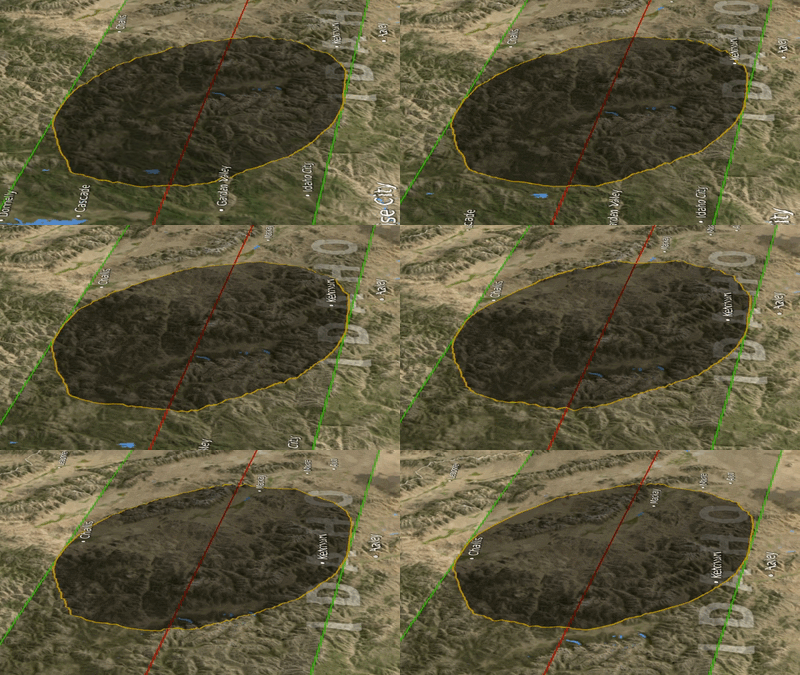
In less than a month, on August 21, 2017, the Moon will cast its shadow upon the Earth, a relative pinprick at only 60 miles across. The shadow will begin in the Pacific Ocean off North America, make landfall south of Portland, Oregon, and rake diagonally across the United States. Charging southeastward at about 2000 miles an hour, the path of totality will touch 12 states before racing off into the Atlantic Ocean around Charleston, South Carolina.
Those are the dry facts of the eclipse, the wheres and the whens of an event that hasn’t been visible to a majority of the US population in 47 years. But beyond the science and the natural wonder of the celestial alignment lies a simple question: Where will you be when the sun goes away?
An Eclipse from a Volcano
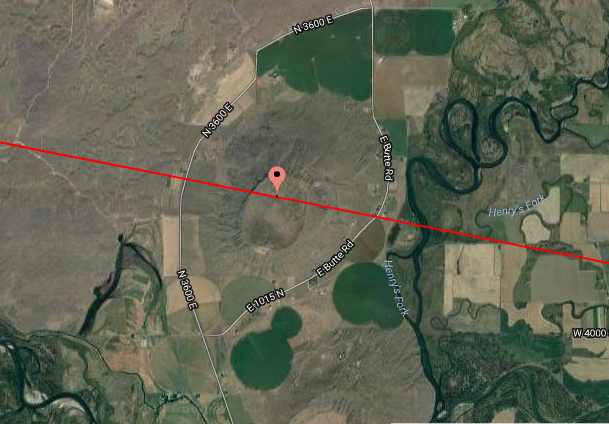
Bullseye! The center of totality passes right through North Menan Butte in Rexburg, ID.
For me, the answer is simple: I’ll be smack dab in the middle of totality on top of an extinct volcano in eastern Idaho. To see an eclipse is pretty cool; to watch the mechanics of the heavens work above you while standing in a unique geological feature will be far cooler.
It will take me eight hours to drive to Menan Buttes with my family from our home in the Panhandle; Idaho is an enormous state. We’ll be camping on private land outside the southern butte, probably in pretty rustic conditions and without a lot of rough camping experience. OK, none. But I don’t care because I want to see totality, and the 92% totality we’d see if we stayed home just won’t cut it.
While most people will likely have their eyes cast heavenward with their cheap cardboard and plastic eclipse glasses or shade 14 welding lens when the big moment arrives, my eyes will be locked on the ground to the west of our vantage point. Menan Butte stands about 500′ above the flat, featureless Snake River plain, and I intend to watch the moon’s shadow racing across the planet toward us. That’s the draw for me, and I hope I get to see it.
That’s not to say I won’t look skyward once the shadow is upon us, gazing in wide wonder at the incandescent dance of our sun’s atmosphere against the suddenly dark sky. I’ll bask in the unnatural twilight, listen to the gasps and cheers of my fellow watchers, and feel the sudden temperature drop, which should be quite marked in the east Idaho drylands. We’ll have about two minutes of totality before the shadow races east toward the vast majority of the US population, and I plan to enjoy every second of it.
Hackaday Eclipse Meetups
Aside from just watching the eclipse, there’s plenty else to do. Hackaday.io members across the country are hosting Hackaday Eclipse Meetups, where like minded folks can mix and mingle before the eclipse. If you know where you’ll be to watch the eclipse — like an extinct volcano, for instance — and you don’t mind sharing the experience with some of your fellow enthusiasts, be sure to post a meetup on the Eclipse Meetups page. Make your event page and we’ll send you some eclipse glasses with the Jolly Wrencher on the side of them for you and your guests.
Have you started thinking of what you’re going to bring with you to the viewing? There are a lot of eclipse projects, from pinhole cameras to watch the eclipse safely, to the Ham operators who will be taking advantage of localized ionospheric changes to make long-distance contacts. Those of us with telescopes might want to build a low-cost solar filter. Someone will likely be trying to prove General Relativity somewhere along the path of totality, and we’d love to see the rig for that. And there will no doubt be petabytes of photographs and videos taken with everything ranging from smartphones to professional cinematic cameras. We’d love to hear what you’re planning and see your setups. And even if you’ve got something cool that’s not eclipse related, bring it along. It’s always a good time to talk shop for hackers.