
Electronic Diaper Bag Reminds You To Pack Everything But The Baby

lilypad_diaperbag

[jnorby] knows what it’s like to leave the house with her baby in tow, only to realize that she has left something she needs at home. Instead of relying on a paper checklist, she decided to craft her own diaper bag that alerted her if she had forgotten to pack a particular item.

She built her bag from scratch, wiring small circuits into each of the pockets she created on the inside of the bag. Wires were run to each half of a snap fastener, so that they would complete the circuit when the snaps touch. The LEDs and snaps were then connected to a LilyPad Arduino, which checks the status of the snap circuits, lighting the appropriate LED once the proper item has been packed.

While we like the idea of a bag that uses functional indicators that remind you to pack items, we do think that the use of the Arduino, or any microprocessor for that matter, is massive overkill. We would ditch the LilyPad and snap fasteners for reed switches or perhaps normally closed micro leaf switches that turn the LEDs off once the proper item has been packed, rather than the other way around.

Arduino Sip N Puff Switch

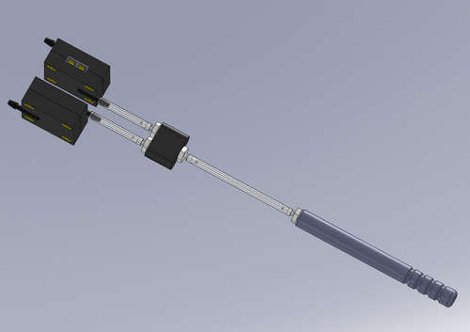
[kayakdiver] is developing a SIP and PUFF controlled kayak, but in order to start you first need a SIP and PUFF switch. These devices allow the user to lightly sip or puff into a tube to control switches or sensors, and are sometimes mounted in joysticks for control of a computer, or wheelchair, etc, but finding the cost prohibitive the next best thing was to whip up their own.

The design is clean and direct featuring off the shelf tubing and fittings, 2 pressure/vacuum switches, and an Arduino. Each one of the switches can detect pressure or vacuum, so one switch set to each is fed though a Y and up to the mouthpiece, since everything is sealed this has the advantage of only needing pressure and not airflow making it more comfortable for the user over long periods, and keeps down on humidity in the tubes.

Fixing The Future

[iFixit] (who we’ve posted about many times before) has launched a passionate manifesto promoting the skills and knowledge of repair as a solution to technological consumerism and waste. They use powerful footage of electronic waste dumps in Ghana to make the point that we must collectively change the way we use and relate to our high technology–take a look after the break.

The manifesto rallies against the practice of withholding repair knowledge such as manuals, error codes and schematics–putting responsibility in the hands of manufacturers–but also makes it clear that it is up to every one of us to inform ourselves and to value functionality over novelty.

Considering the many-faceted resource crisis that we are headed towards, any efforts to push our behavior towards a sustainable and considerate way of life should be considered. As hackers we repair, reuse and rethink technology as part of our craft–but we are also privileged by our enthusiasm for technical challenges. The real battle is to disseminate the kind of knowledge and skills we possess into the general population. This is where the heart of [ifixit]’s message comes into play: the creation of an open, editable online repair manual for every electronic device. If you have something to teach, why not pop over and help expand their database?

Continue reading “Fixing The Future”

DTG Using A Stock Printer

[youtube=http://www.youtube.com/watch?v=qc3OrrsnMHs]

Here’s a Direct-to-Garment device that uses a stock printer. [Jeff German] used an Epson R1900 with the stock firmware to get the results seen in the video. His hardware modifications involve adding two buttons to the printer’s circuit board. For DTG beginners this certainly lowers some of the obstacles to getting started. [Jeff] is working on detailed instructions but for now take a look at our own How-to for building a DTG printer.

Thermos Temperature Meter

[youtube=http://www.youtube.com/watch?v=UXsxtEmKgbw]

We’re always a little surprised by how well a vacuum thermos works, but eventually the contents will cool down (or warm up depending on what’s in there). [Gamesh_] added a temperature meter to his thermos using an Arduino and a temperature sensor. The original post is in Portuguese but [Bruno] republished it in English.

The temperature sensor has been repurposed from a digital thermometer meant for taking your temperature. Holes for the LEDs making up the indicator bar were melted in the side of the plastic housing. When the hot liquid is poured out at about 0:45 into the video you can glimpse the Arduino hanging our on the other side of the pot and a power cord running off behind the laptop. It would be nice to see this migrated over to a less powerful chip and run from a small coin cell, but we like the concept.

One Minute Review Of Your Wasted Time

[youtube=http://www.youtube.com/watch?v=GuvR98k5KBU]

It’s easy to throw around the accusation that you waste time throughout the day. Now you can prove it by reviewing everything you did on your computer, all in just one minute. [Dan Paluska] ground out some code to take screenshots and assemble them into a video.

His script ties together the open source tools FFmpeg, ImageMagick, and scrot. It takes a snap every 15 seconds in a 10 hour period for a total of 2400 frames. He even outlines the process to automatically upload these clips to YouTube. Just remember, if you’re doing something naughty, there’ll be a record of it.