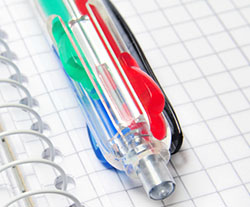
The Scribble Pen, you may remember, is a project by bay area startup Scribble Technology that puts a color sensor and multiple ink reservoirs in a pen. We’ve talked about it before, right after they cancelled their Kickstarter campaign after netting 366% of their original goal.
Yes, they cancelled their campaign after being successfully funded. To Kickstarter’s credit, the Scribble team was asked to provide a better video of the pen demonstrating its capabilities. The team pulled the plug on the campaign, saying they’ll be back soon.
Here is the new campaign. The attentive reader will notice the new campaign is not a Kickstarter project; instead, it is a Tilt campaign. What is Tilt? It’s a platform that allows for crowdfunding, fundraising, pooling, and other ‘many wallets into one’ Internet-based projects. It’s actually not a bad idea if you’re raising funds for a charity or the Jamaican bobsled team. For crowdfunded product development, caveat emptor doesn’t quite cover it.
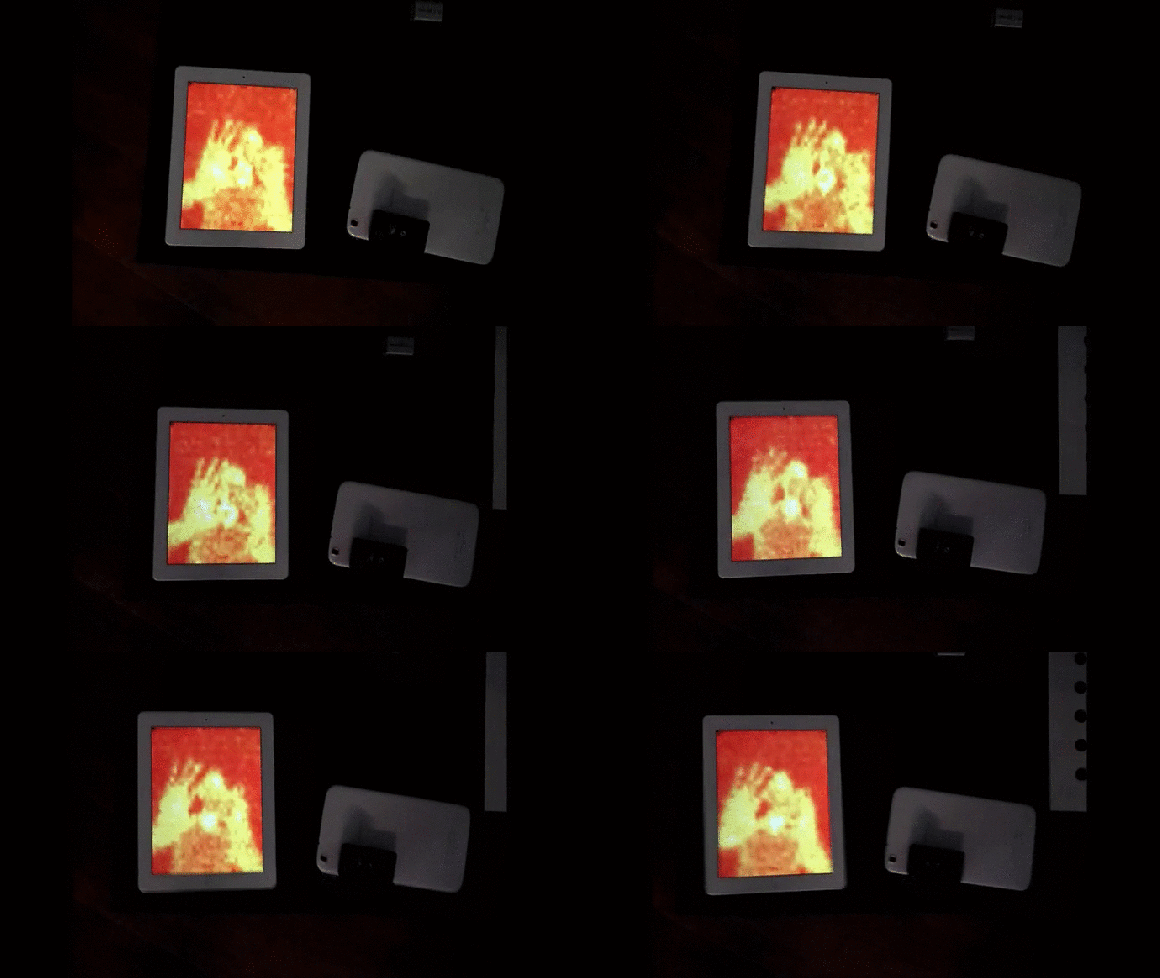
With more than $200,000 in the bank, you would think the questions asked in many comments on the old Kickstarter would be answered. They were. Scribble put up a new video showing the pen drawing different colors of ink on a piece of paper. This video was faked. [Ch00f] at Drop Kicker took apart the new video frame by frame and found these – ahem – scribbles were inserted in post production. The video has since been replaced on the Tilt campaign page, but evidence of Scribble deleting comments questioning this exists.
Any idea of the Scribble pen being real has been put to bed. Kickstarter threatened to remove the campaign if a better video could not be produced within 24 hours. The Scribble team cancelled their campaign to regroup and put together a better video. In two weeks, the team was only able to produce a faked video. The Scribble pen does not exist.
Case closed, you might think. Digging into videos frame by frame will tell you a lot, but it won’t give you the full picture. We know what happened with the Scribble pen, but very little about the who, why, and how this huge, glaringly obvious fraud occurred. Before we get to that, hold on to your hats – it only gets shadier from here on out.
Continue reading “Scribble And The Failings Of Tech Journalism”
 First rule of reading anything: if a headline is an interrogative, the answer is a resounding ‘no’. This might be the one exception to that rule.
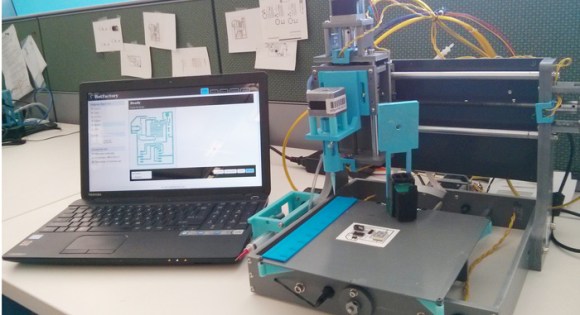
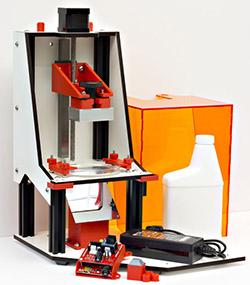 Over the last few years, a few resin / stereolithography printers have been made a few headlines due to print quality that cannot be matched by the usual RepRap style filament printers. These used to be extremely expensive machines, but lately there have been a few newcomers to the field.
 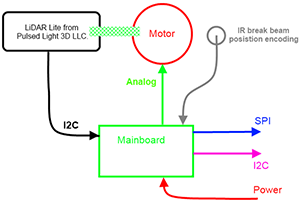 [Patrick] has spent a lot of time around ground and aerial based autonomous robots, and over the last few years, he’s noticed a particular need for teams in robotics competitions to break through the ‘sensory bottleneck’ and get good data of the surrounding environment for navigational algorithms. The most well-funded teams in autonomous robotics competitions use LIDARs to scan the environment, but these are astonishingly expensive. With that, [Patrick] set out to create a cheaper solution.